
Renaissance Center
400 E Jefferson Avenue Detroit, Michigan 48243
-Closed to the public January 12th, 2026
|High Resolution page|
Locate it!
History of Renaissance Center
The Renaissance Center built between 1973 and 1977 and was part of a larger Urban Renewal program to replace what was then still a largely abandoned industrialized Detroit Riverfront, it was envisioned as a "city-within-a-city," and was meant to anchor a wider redevelopment of the then declining city of Detroit. It was designed by architect John C. Portman which had a large influence on his hometown of Atlanta GA. The basis for the Renaissance Center was the Westin Peachtree Plaza Hotel in Atlanta also built by Portman, Peachtree was built just before the Renaissance Center and serves as a exact build of the Central tower of the renaissance center in Detroit. Furthermore the sky bridges connecting the Renaissance Center to the locations such as the Millender Center are identical to the sky bridges connecting the Peachtree Center Complex in Atlanta. While the exteriors of each of the towers are the same between the Peachtree and the Renaissance Center they both have wildly different interiors from each other. Upon Completion the Renaissance Center was the tallest building in Michigan and the tallest hotel in the Western Hemisphere until 2017. The top three floors of the hotel hosted an upscale restaurant, The Summit, that rotated to allow a 360 degree view of Detroit that later closed in the early 2000s. In 1981 the final two towers being Towers 500 and 600 were finished, this would complete the 7 tower layout of the Renaissance Center, with One large center tower followed by 4 towers 100-400 surrounding the Center Tower. Towers 500 and 600 were built off to the side. While the Renaissance Center was to meant to revive the downtown space of Detroit, it largely killed it due to tenants moving into the Renaissance Center’s new complex, leaving many older skyscrapers largely vacant and abandoned shortly after, one by one, a problem that wouldn’t be fixed largely until the 2010s. For the tower’s first 19 years, Ford Motor Co. occupied one of the office towers. But owned all 4 of the main towers excluding the Center one owned by Marriott. In 1996, Ford sold the building to GM with plans for GM to make the Renaissance Center their new World Headquarters moving from the historic Cadillac Place in New Center. Between 1996 and 2004 the Renaissance Center was renovated by GM, this renovation would add the last major part of the Renaissance Center being the Wintergarden retail atrium completed in late 2001. This addition opened up the fortress like building to the public, and would be expanded on with the Detroit Riverwalk funded largely by GM and beginning at the Renaissance Center when it opened in 2007. Additional features for the public in the Wintergarden saw 150,000 square feet (14,000 m2) of retail space and 40,000 square feet (3,700 m2) of contiguous main floor exhibit space which was used by the media during Super Bowl XL of 2006. Along with this a 20,000 sf space on Level 2 of Tower 300 for executive meetings and conferences was built. However this renovation was not all good as it killed one of the staples of the tower being the Summit restaurant on the top floors of the Central Tower, a staple of the Renaissance Center since opening, when Summit was replaced in 2004 by another restaurant called Coach Insignia. While the Coach Insignia was a upscale and well liked restaurant it was largely not seen as better then The Summit due to the choice to remove the 360 degree rotating view. For over 20 years the Renaissance Center saw new additions in the image of cars, GM would display its new cars in the first floor of the Renaissance Center, eventuality leading to the creation of GM World a exhibit that showcased the history of GM cars from prototypes to fan favorites. However though the car scene was nice the closing of Coach Insignia was not, visitors of the Renaissance Center would no longer be able to see or dine on the upper floors of the Renaissance Center without buying a room in the hotel. Furthermore the wake of the COVID-19 Pandemic cut foot traffic in the Renaissance Center due to stay at home orders. This caused many workers that once worked in the towers to go remote, killing business and the city within a city atmosphere from the shops in the Renaissance Center to the Food Court once staples of the Center, are largely closed up, a far cry from what was once the grand staple of Detroit, even in Detroit’s hardest time. By 2022 the Renaissance Center contributed to 53 percent of downtown Detroit’s overall office vacancy. Between 2018 and 2023 GM had began downsizing its operations by 50% inside the Renaissance Center. In April 2024 GM announced it would leave the Renaissance Center for Bedrock Detroit's new Hudson Building located in the heart of Downtown Detroit. When asked by the press in May of 2024 about Demolition of the Renaissance Center it was not ruled out by GM CEO Mary Barra. she is quoted with saying “We’re first looking at what can be done, and what would be the appropriate use for the business. We’ve got a year to do that, so (finding a new use for the building is) where we’re focused,” Barra said. By November a plan had been submitted that saw very public opposition, the demolition of towers 300 and 400. These would be the towers facing the river a rendering showcased a more open backside of the building with the demolition of the two towers and allowing a expansion to the building with the riverwalk. Many have said it would be similar to Navy Pier in Chicago. On March 25, 2025, mayor of Detroit Mike Duggan explained in large detail why the towers couldn’t be saved in the sense the public thought it could. Some major points included the concrete layers that would have to be demolished to make sense of apartments in the building, and utilities that would have to be put in for each unit making it impractical. Another public backlash came when it was announced the taxpayers would have to contribute to the already very unpopular revision of Michigan’s largest building. It was stated Bedrock has committed $1 billion toward the $1.6 billion vision, with GM expected to contribute $250 million. The remaining $250 million would come from public funding (Taxpayers). Bedrock said the plan was contingent on that public money being made available. On January 12th, 2026 GM officially moved into the Hudson’s building completing a 2 years plan in the making. This move saw the closing of the Renaissance Center to the public, on visit January 14th a security guard at the Renaissance Center noted GM World had been removed from the Renaissance Center the same day the move happened. Signs have been posted at entrances of the building stating the building is not open to the public and is only to be used by Hotel guests and Employees of the remaining tenants inside the Renaissance Center.
Statement from AbandonedCommercial Detroit
It is a true Tragedy of what GM has let the Renaissance Center become, the staple of the Detroit Skyline soon to be destroyed in a very unpopular move. While the Renaissance Center is aged it has been renovated many times beforehand. If you going to make a statement that you are a foundational pillar of Detroit you should stick to that, instead of transforming a landmark of a city you claim as you own, into a very publicly disliked design. Again and again you chose to stab the residents of Metro Detroit and with the closing of the Renaissance Center to the public you say one final Fuck You to the city and everyone that once saw you as a staple of this city we call home.
As noted the Renaissance Center is now closed to the public following GM’s departure from the building on January 12th, 2026, only Hotel Guests and employees of the remaining tenants are allowed in the building now. These series of photos taken by author of AbandonedCommercialDetroit were taken all on November 20th, 2025 at night as a fun side project never to be seen on the website however, are now being released as the Renaissance Center closes to the public, while not abandoned these photos show a very empty Renaissance Center largely killed off by GM in recent years. This paired with the closing of the building to the public allows fans of the building to see the building as they want it to be remembered as.
Main entrance to the Renaissance Center from the front
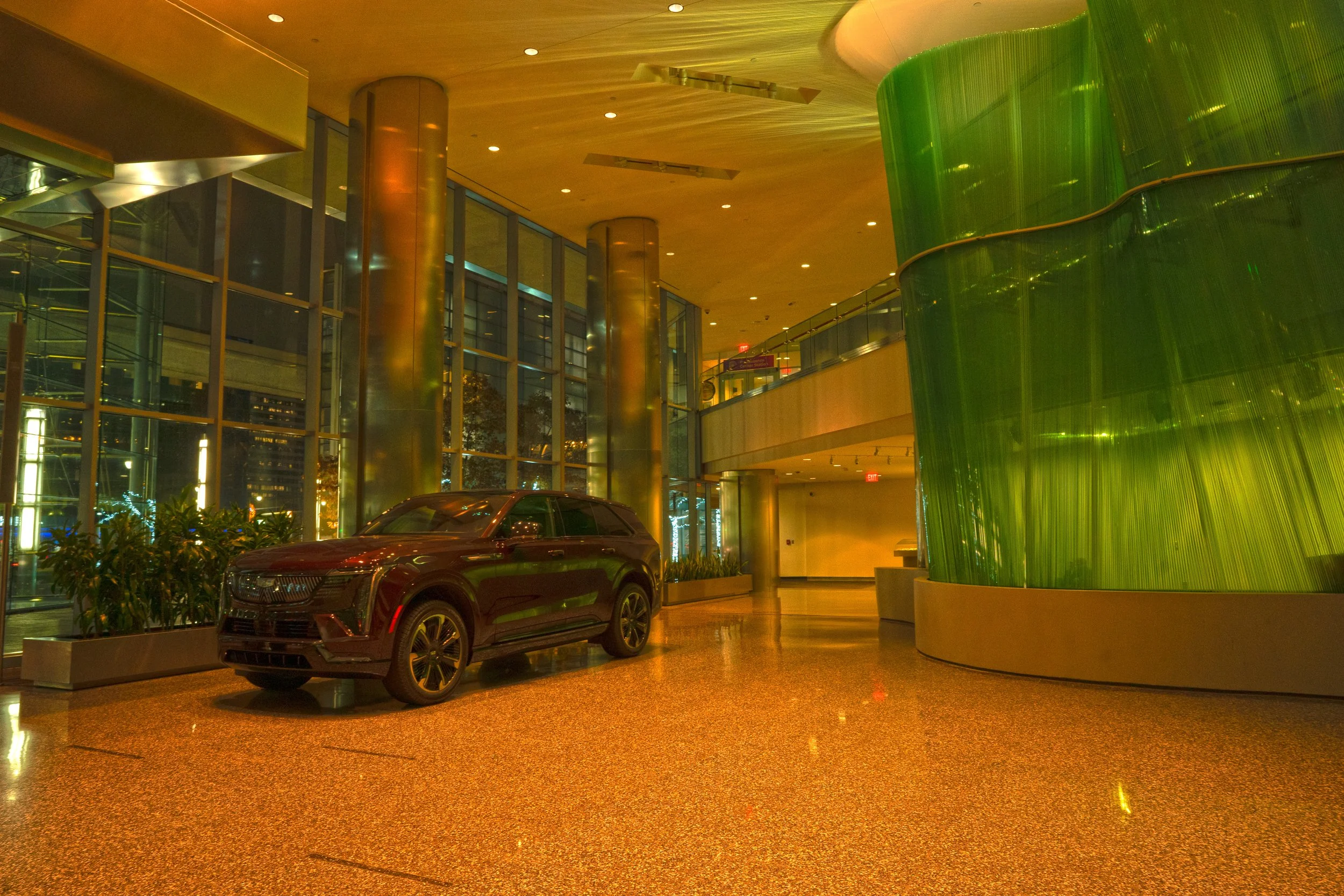
Cars staged in front of the building at the entrance
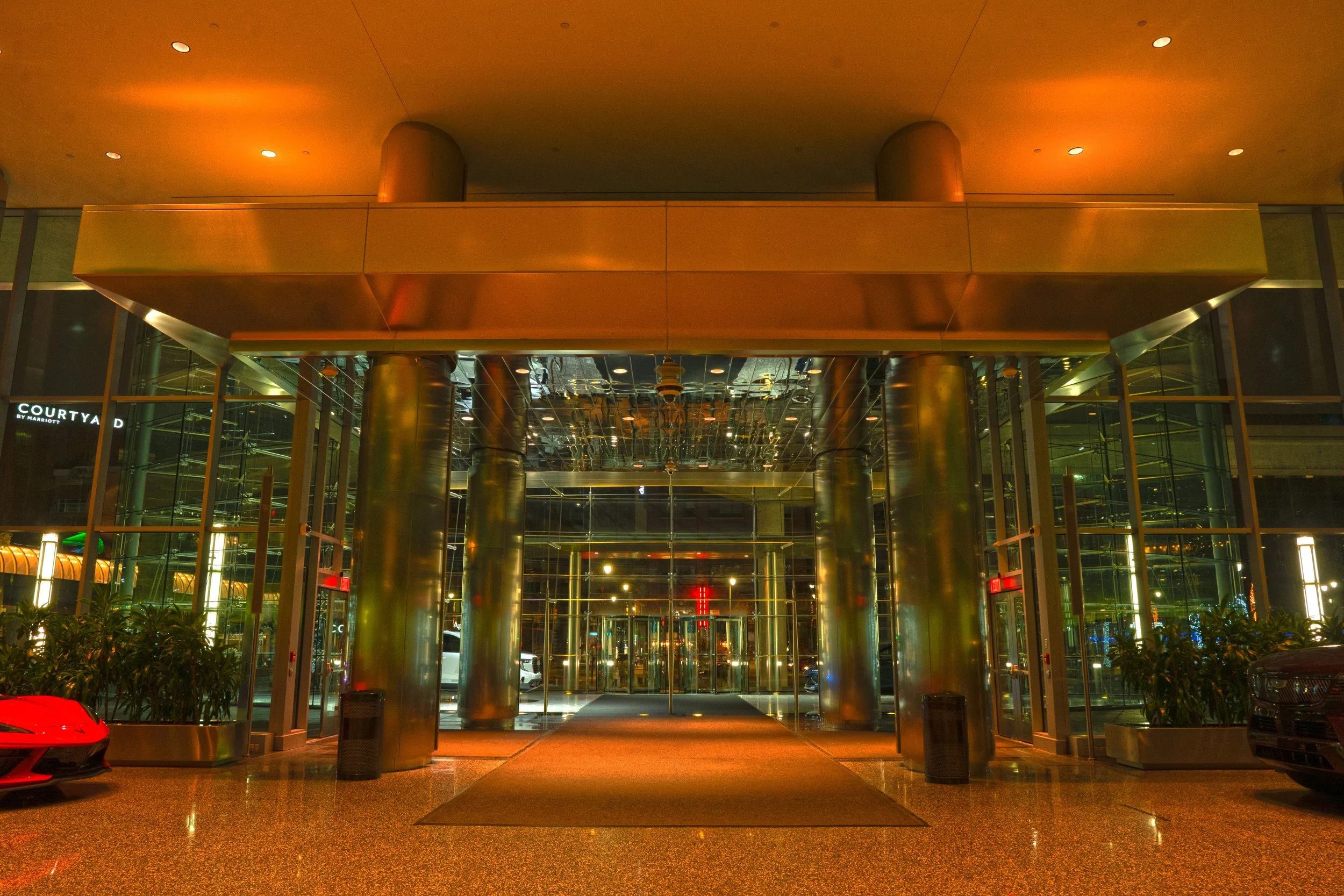
The main glass entrance to the building facing Jefferson Ave
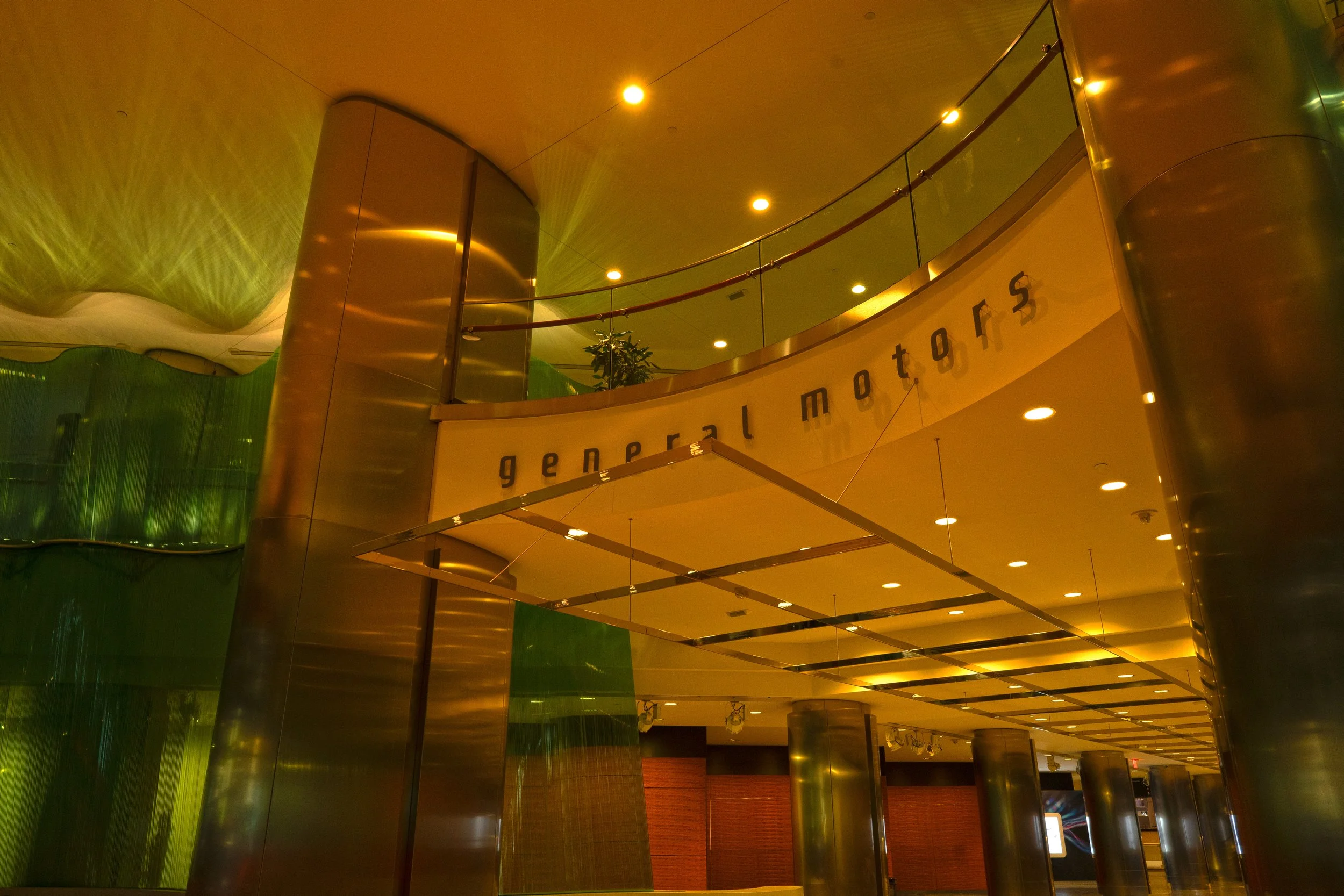
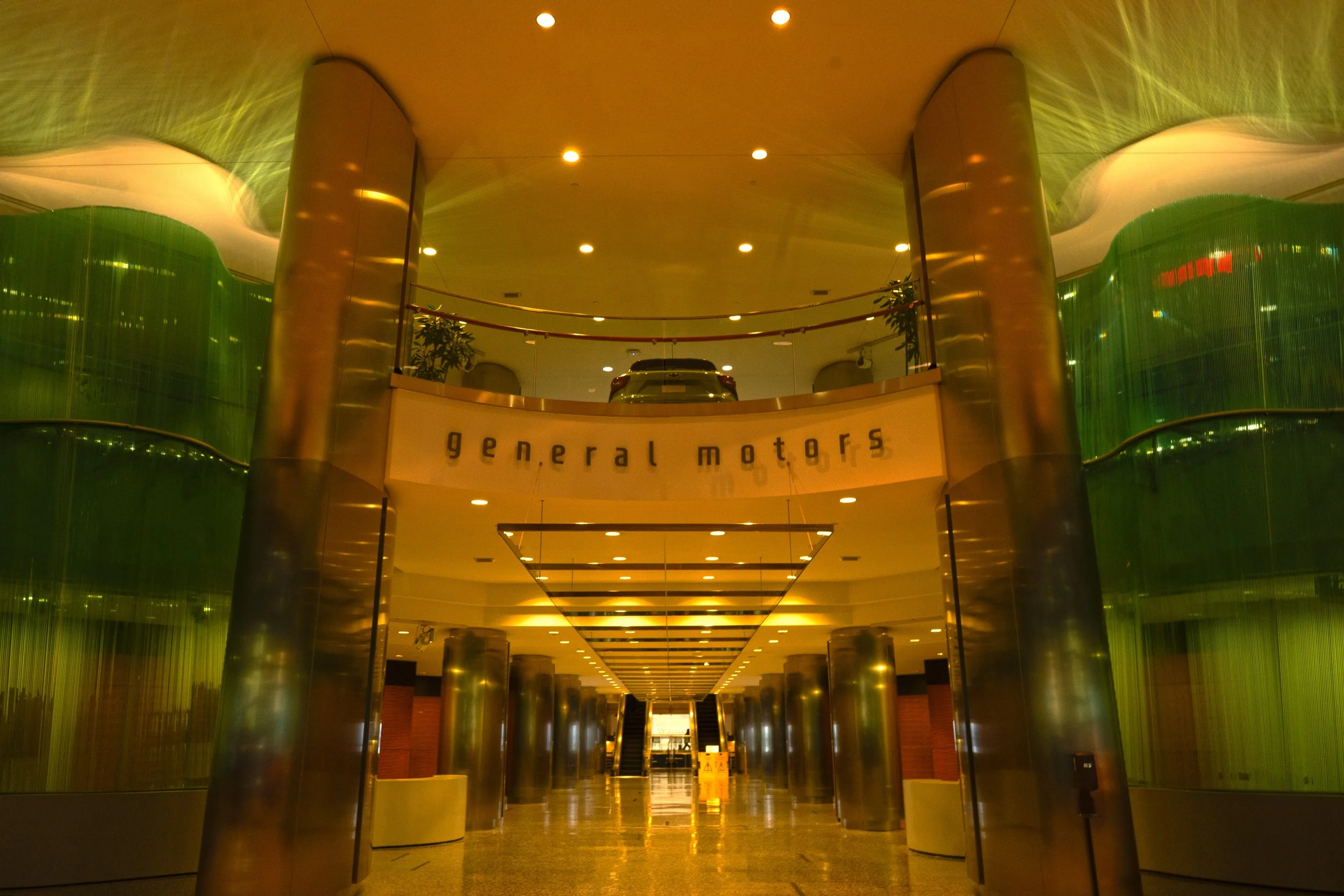
A facade that states "general motors"
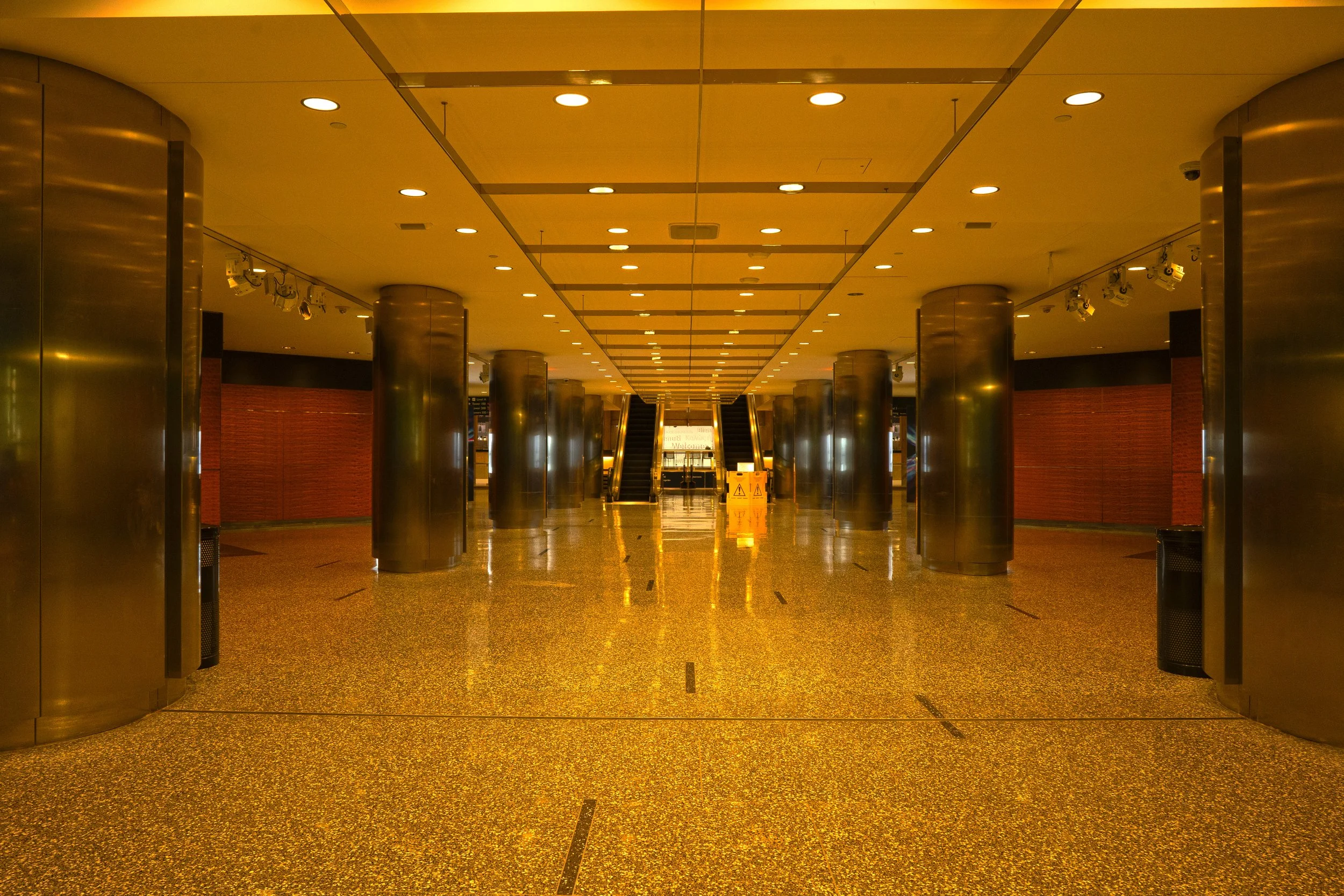
Main walkway to the Center Tower of the Renaissance Center
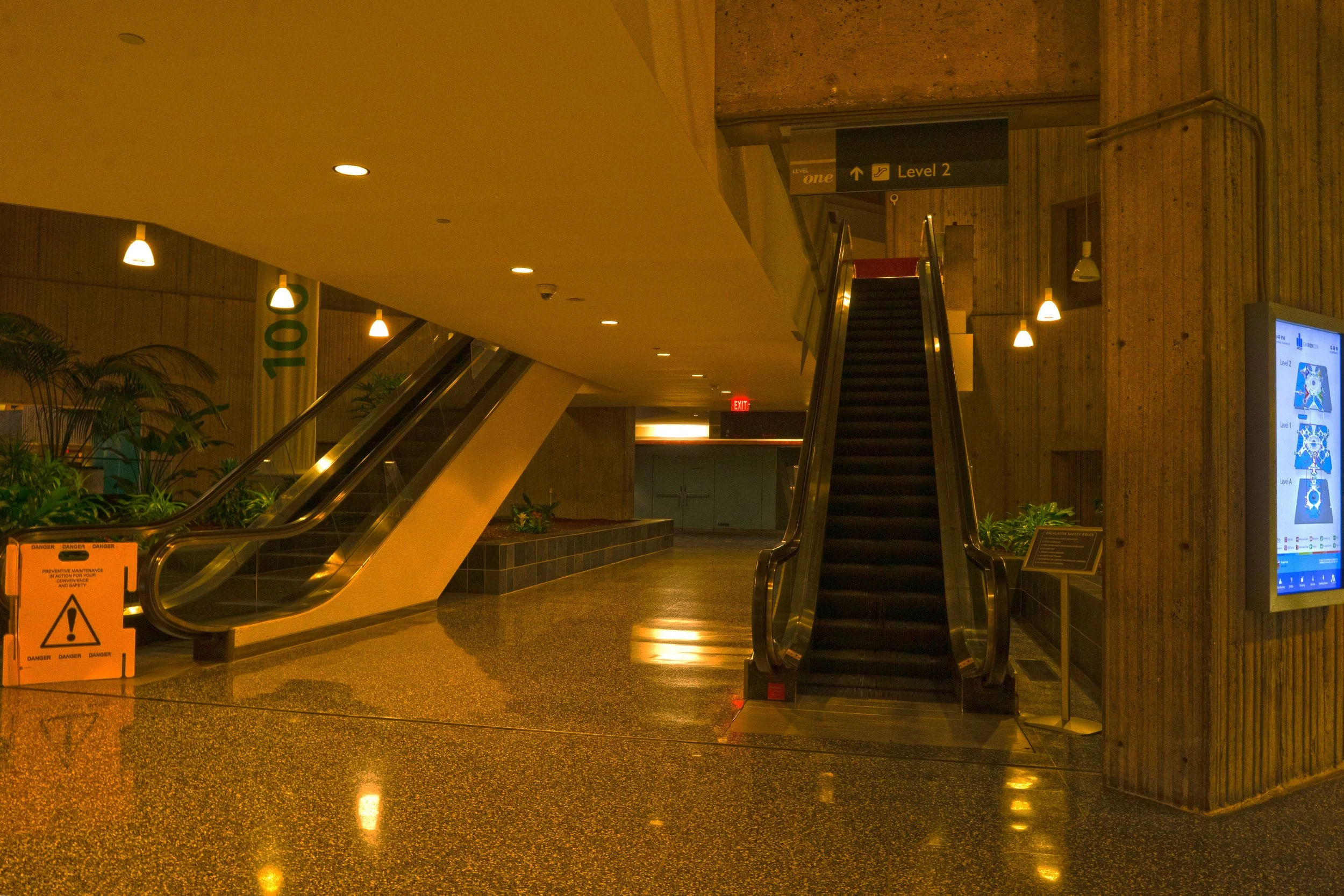
Escalators to the side of the main walkway that lead to the 2nd floor
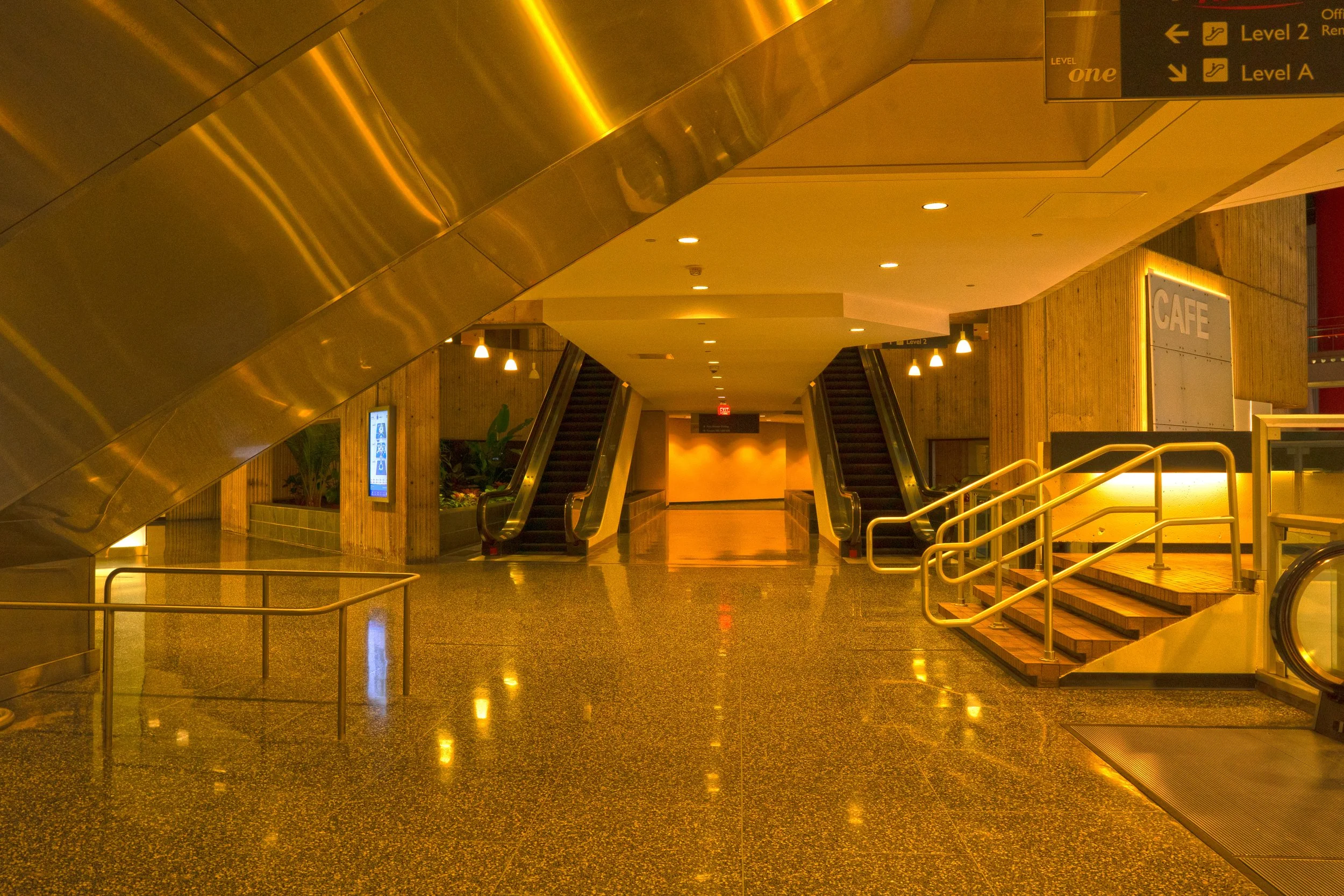
To the right the stairs lead to the Central Exhibit of cars along with the Elevators for the Hotel while escalators bring you to upper floors with a separate 2nd walkway above the stair entrance
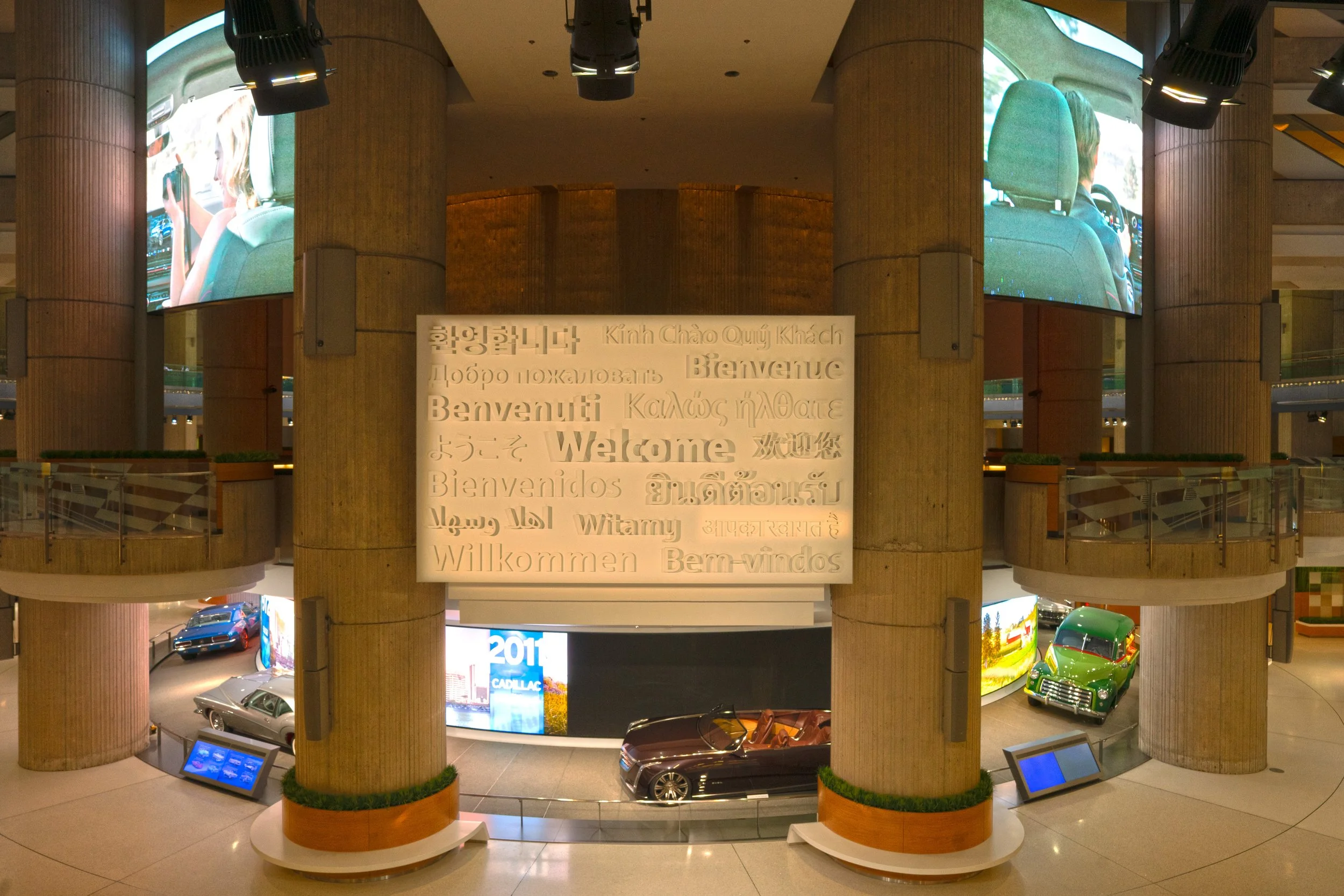
Walking up the stairs you are lead to the once grand GM World Exhibit
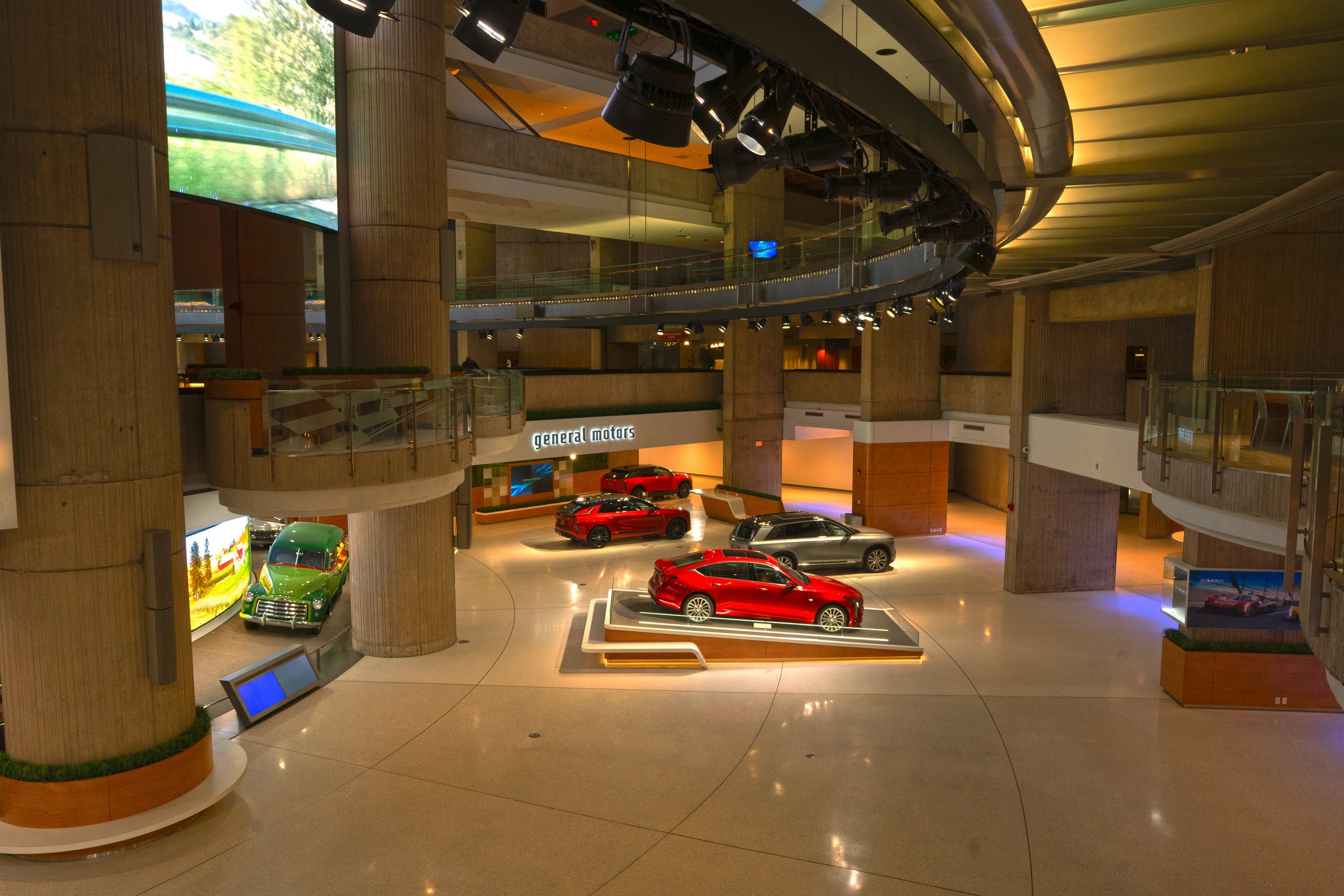
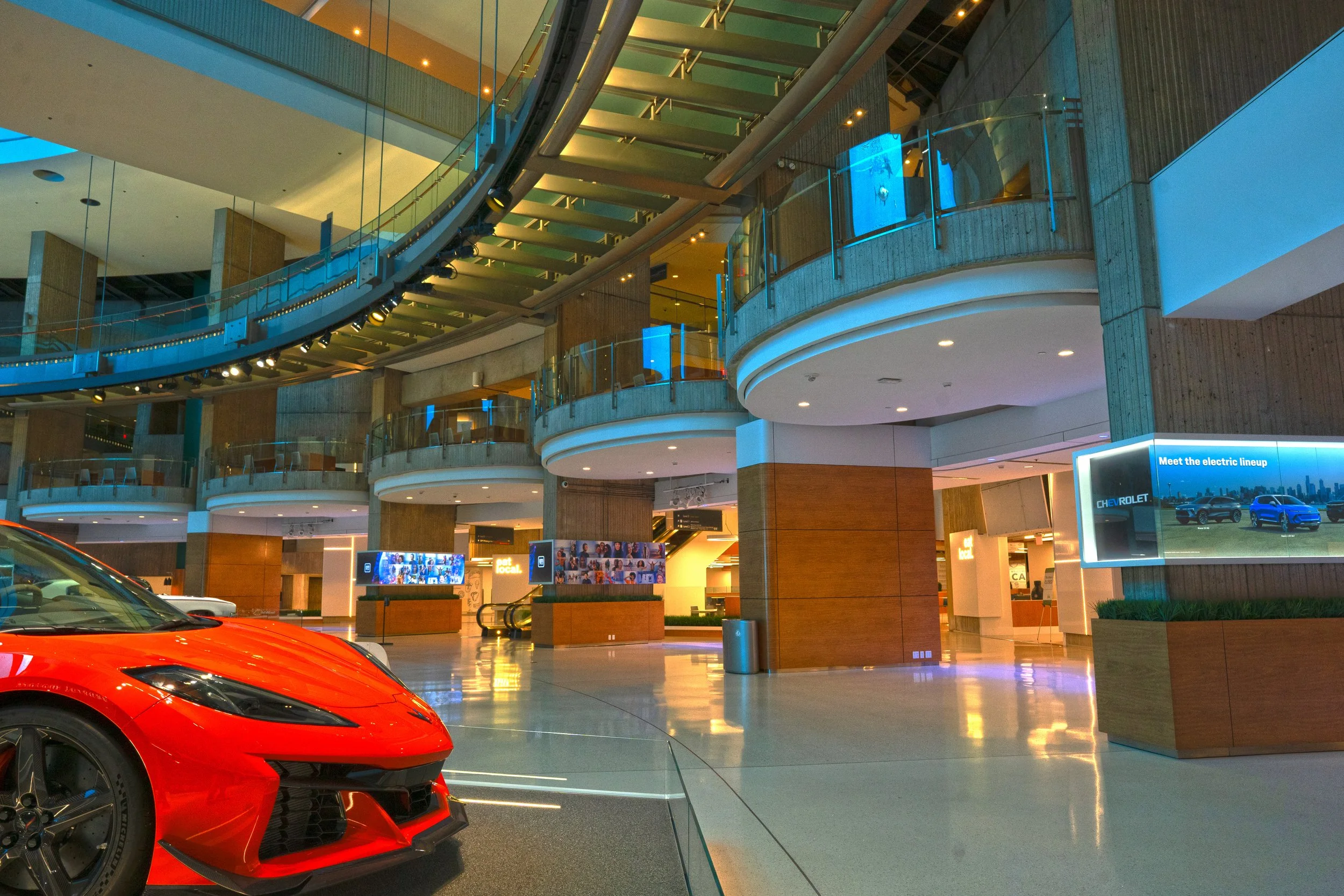
Many cars line the circle around the exhibit and have been a staple since GM took over the Renaissance Center
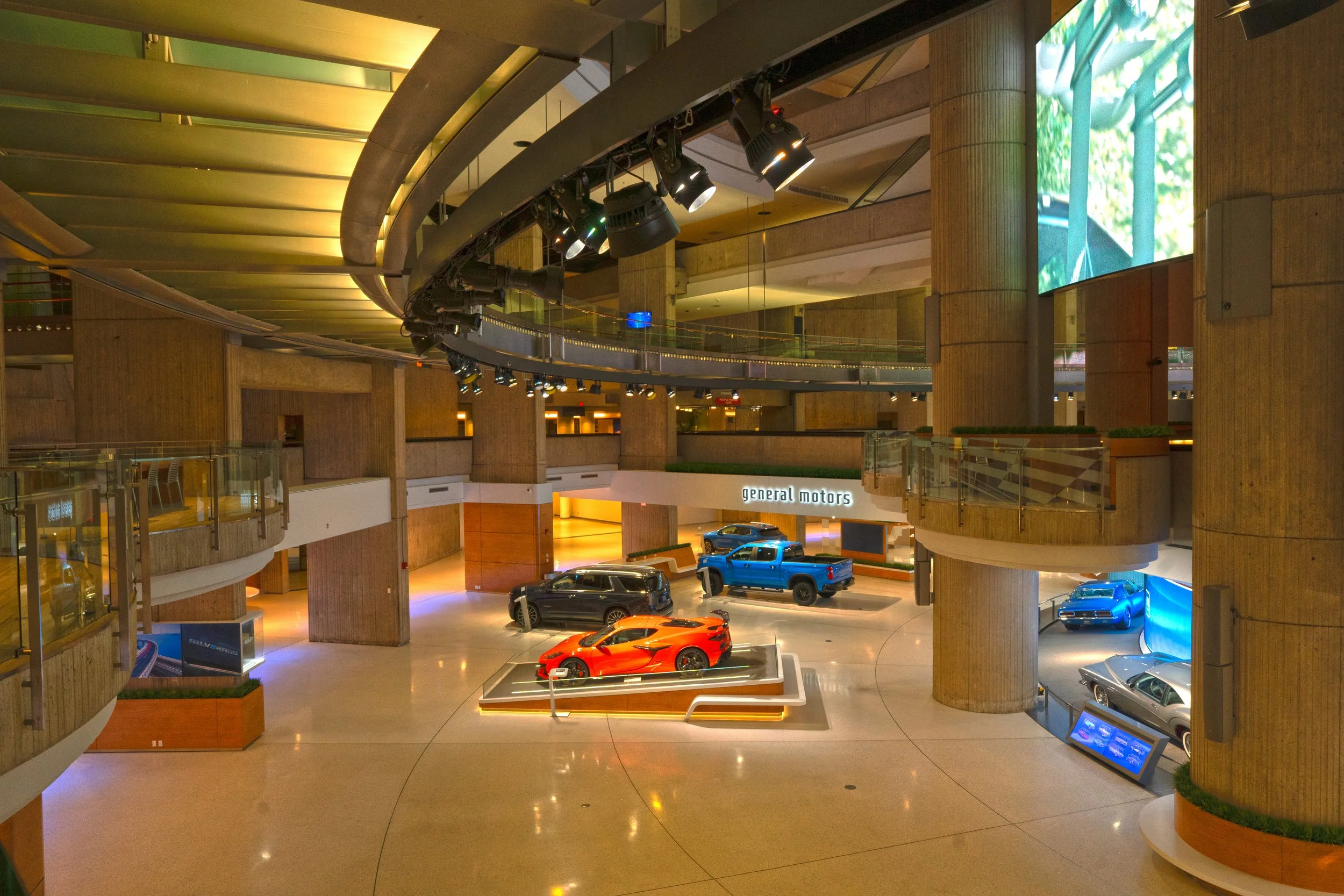
The 3 floors can be clearly seen here, below is a up close with the cars and the official GM World exhibit, followed by a more casual walkway on the 2nd floor with more seating for casuals, the 3rd floor is a standard walkway with more fast paced walking with minimal seating.
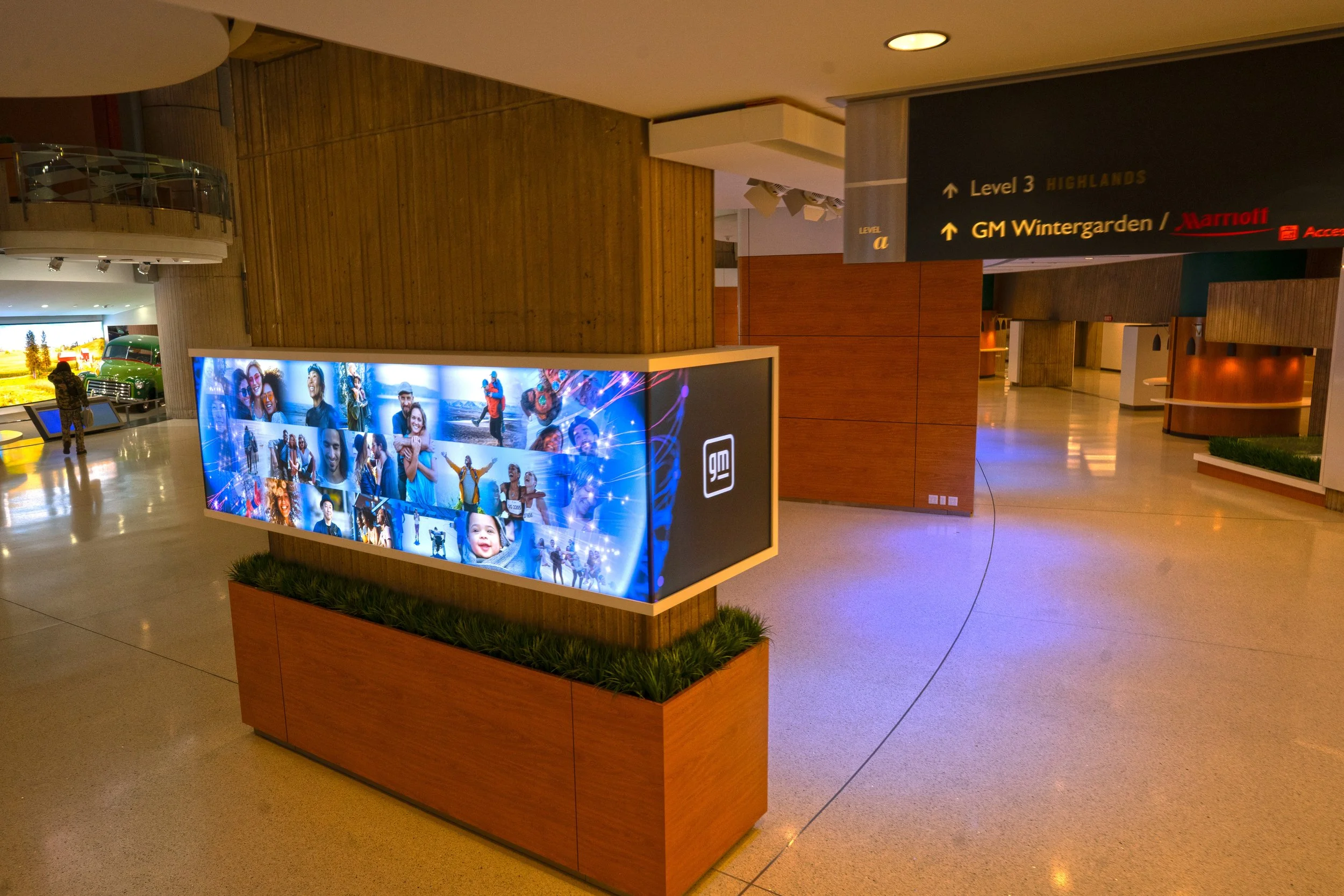
Many pillars feature GM Ads
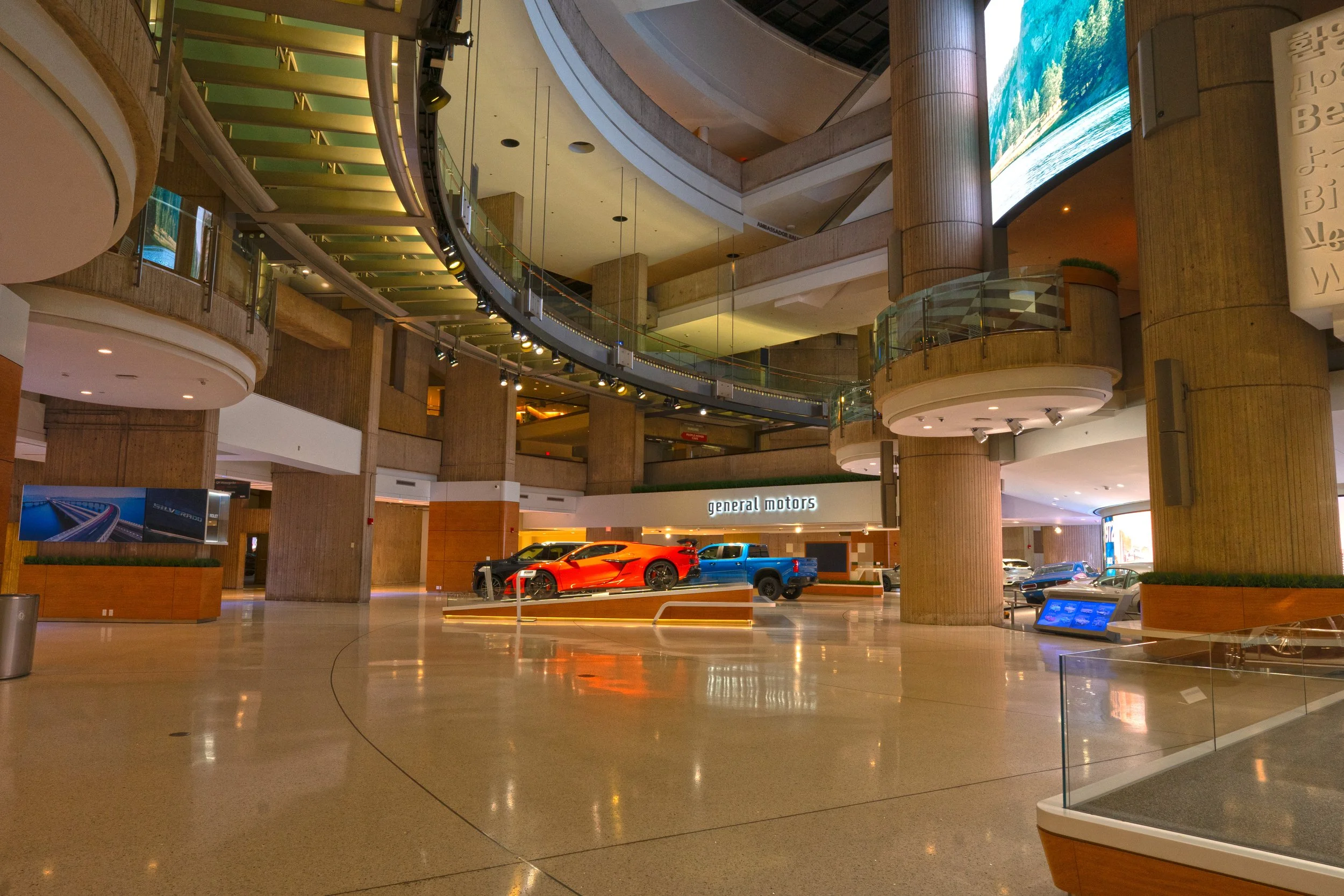
The 1st floor
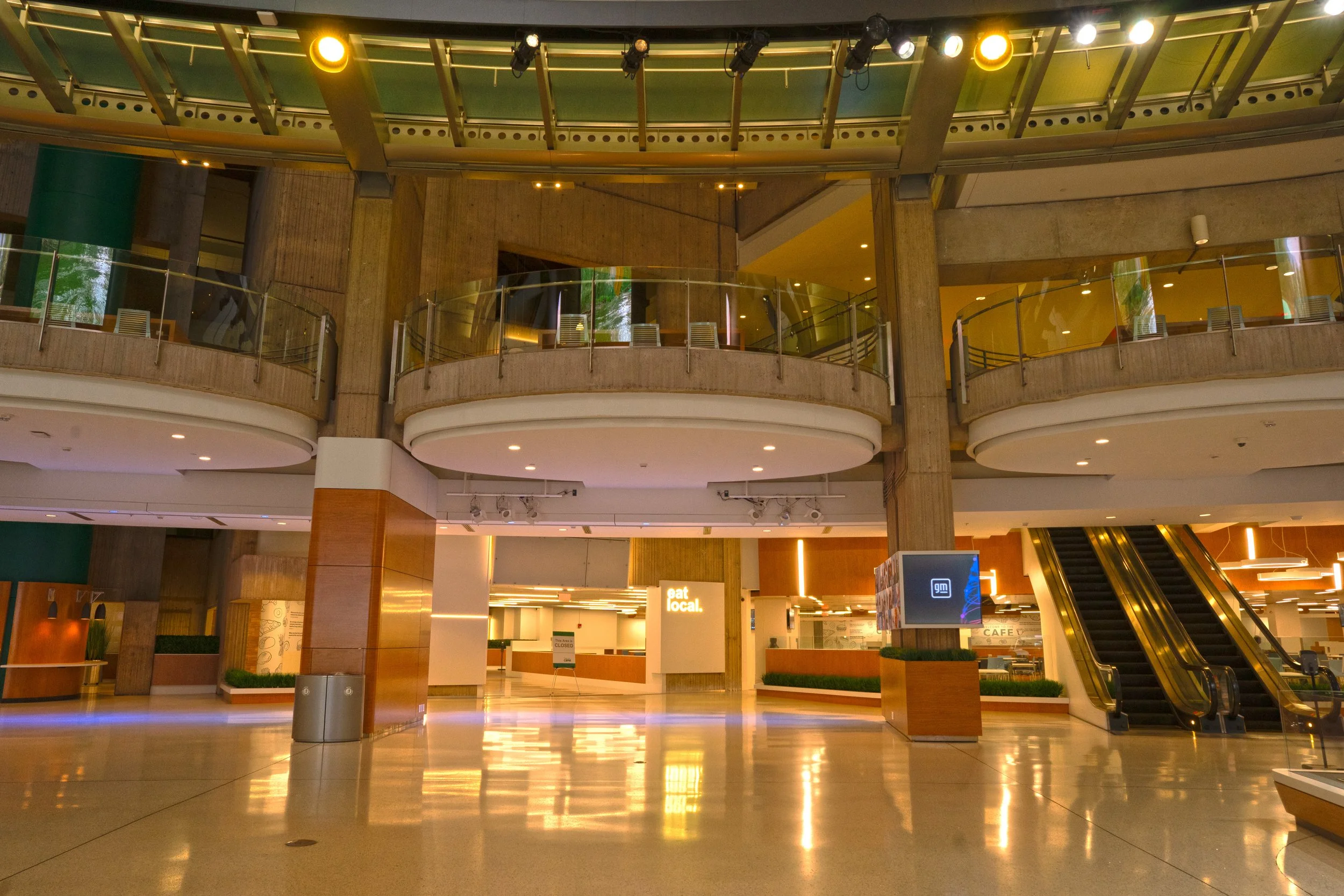
looking up from the 1st floor seating can be seen on the 2nd floor with the 3rd floor walkway seen above
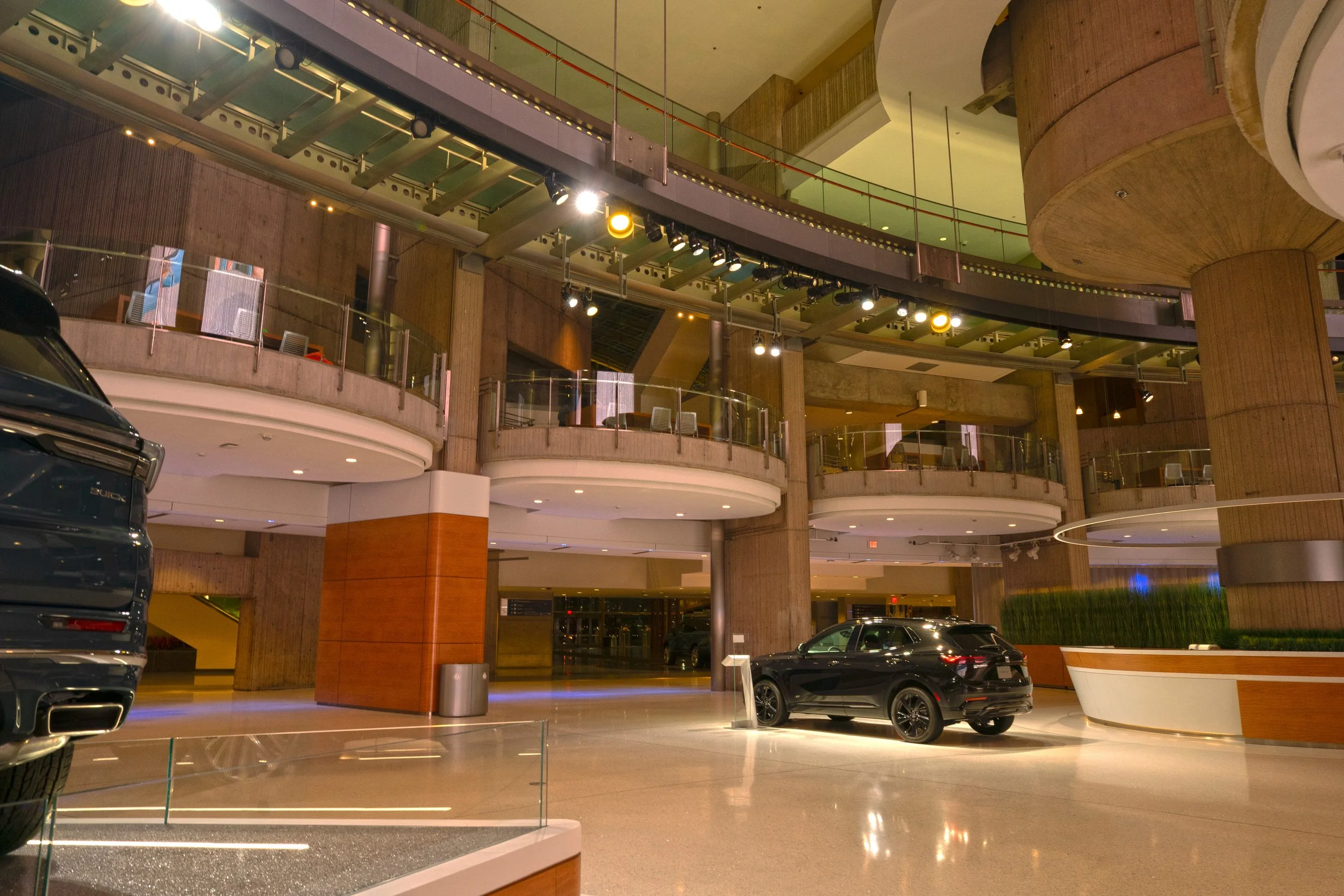
A clear view of all 3 floors
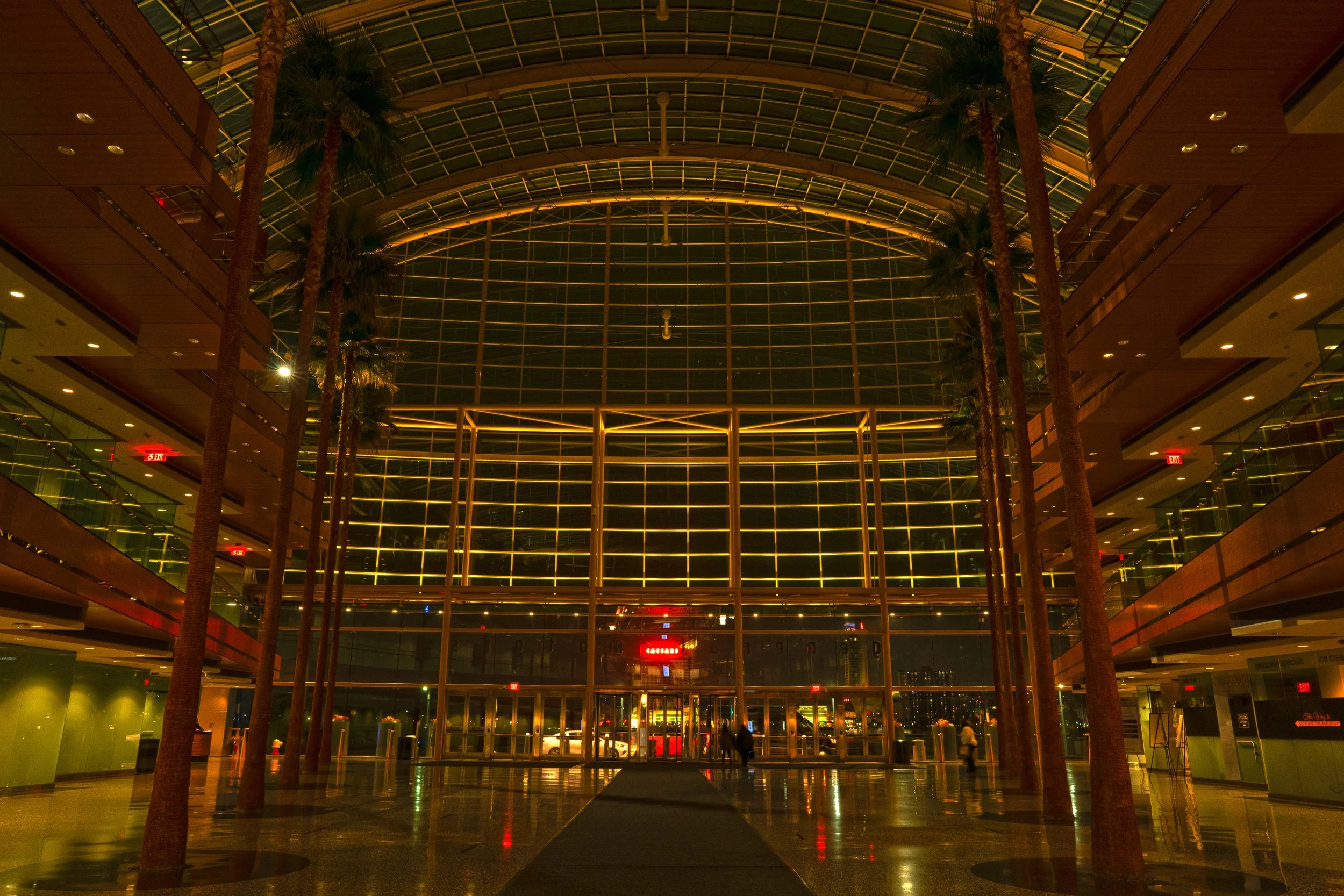
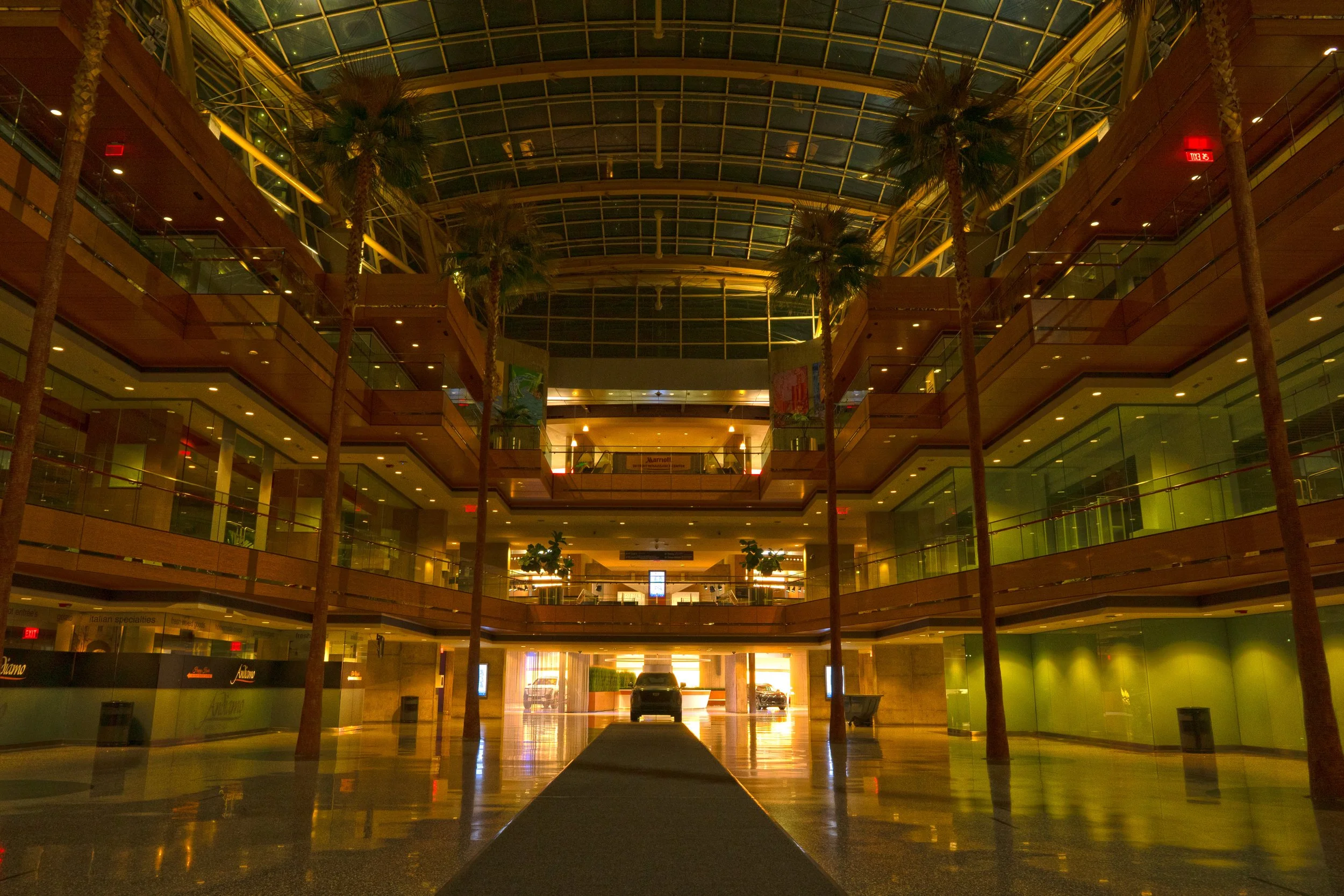
The Wintergarden a section of the built by GM that has largely been killed by the company that created it
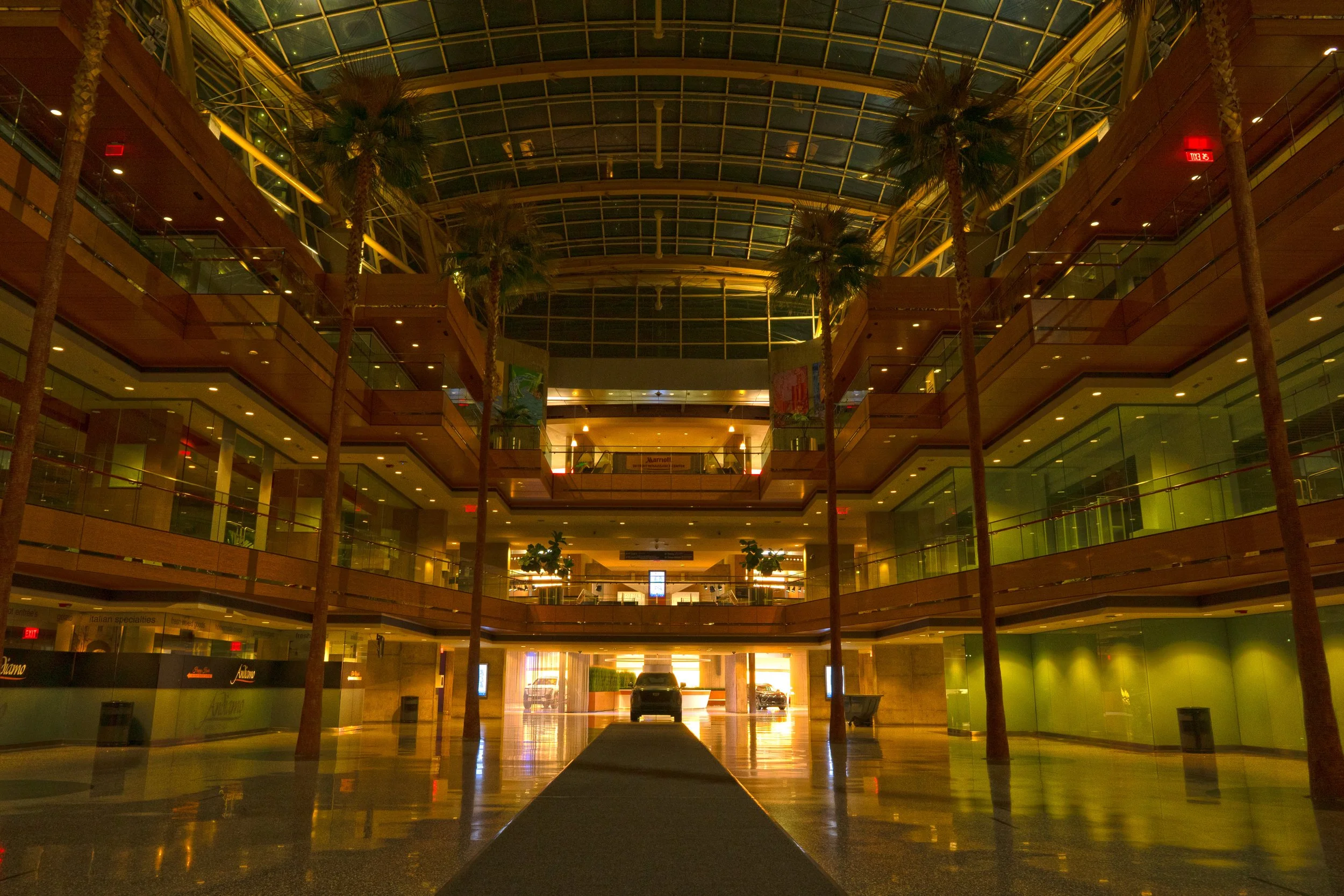
The Wintergarden is a 5 story space that once hosted 150,000 square feet of retail space and 40,000 square feet of contiguous main floor exhibit space
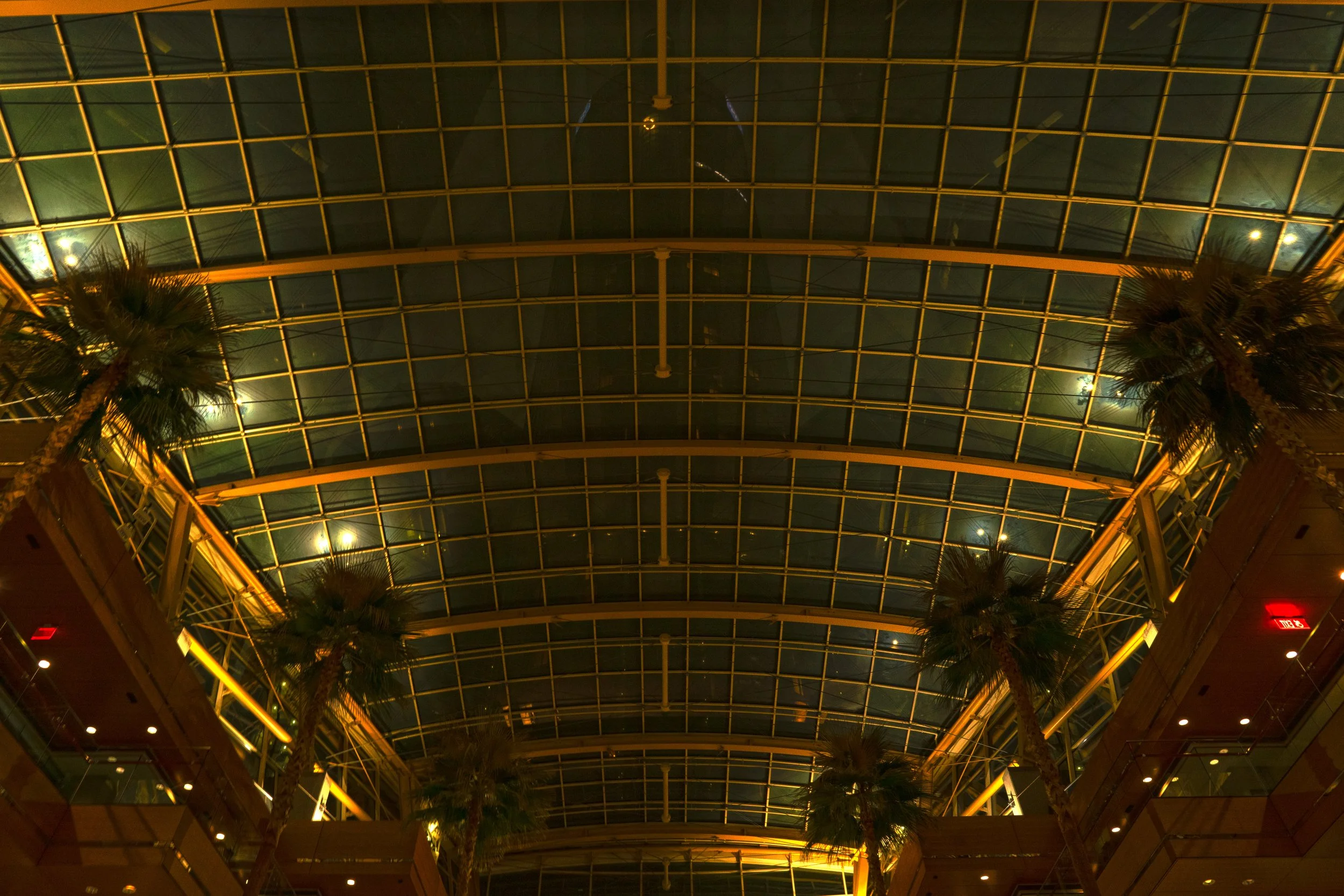
The roof of the Wintergarden the Center tower of the Renaissance Center can be seen in the shadows
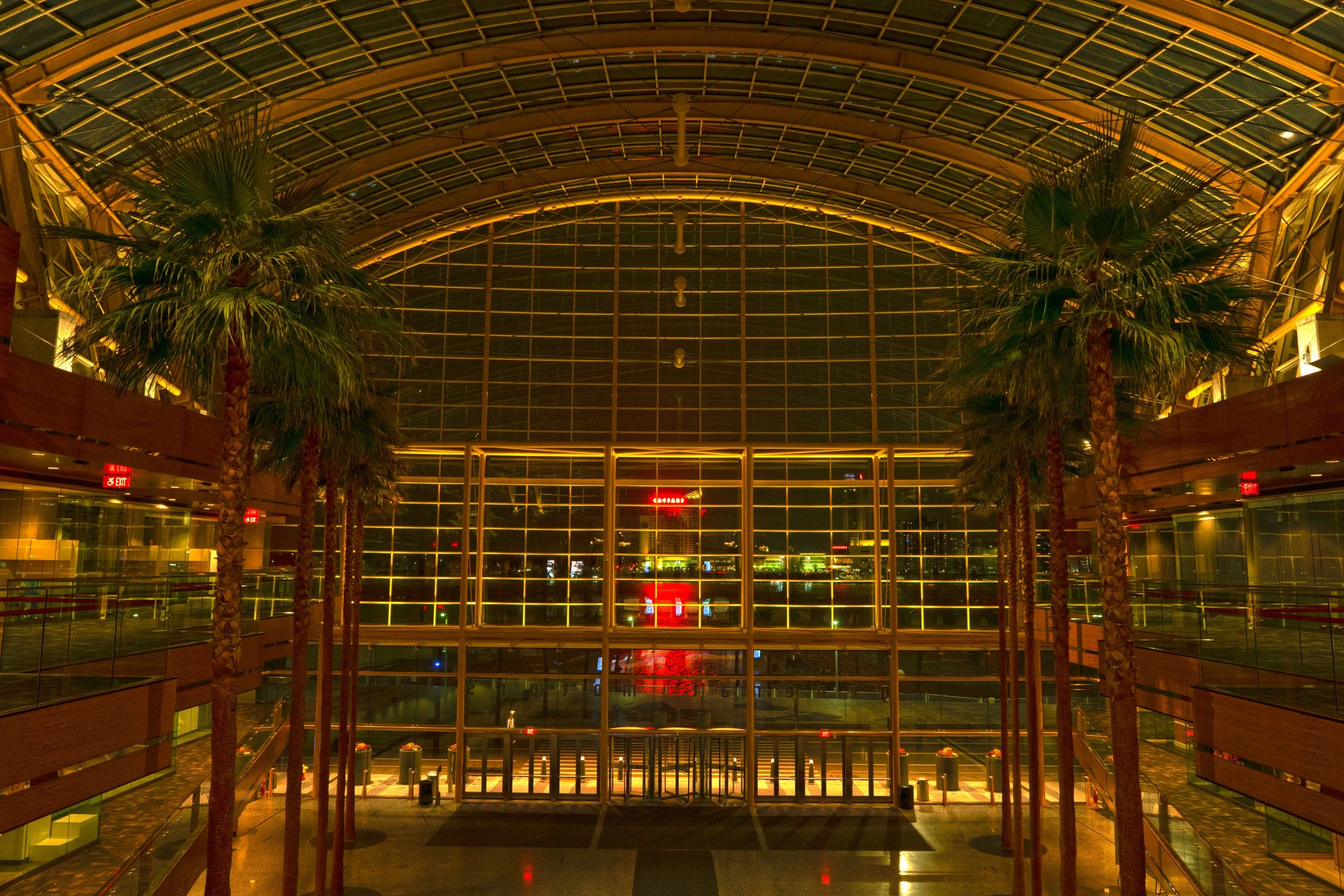
The Wintergarden as seen from a upper floor
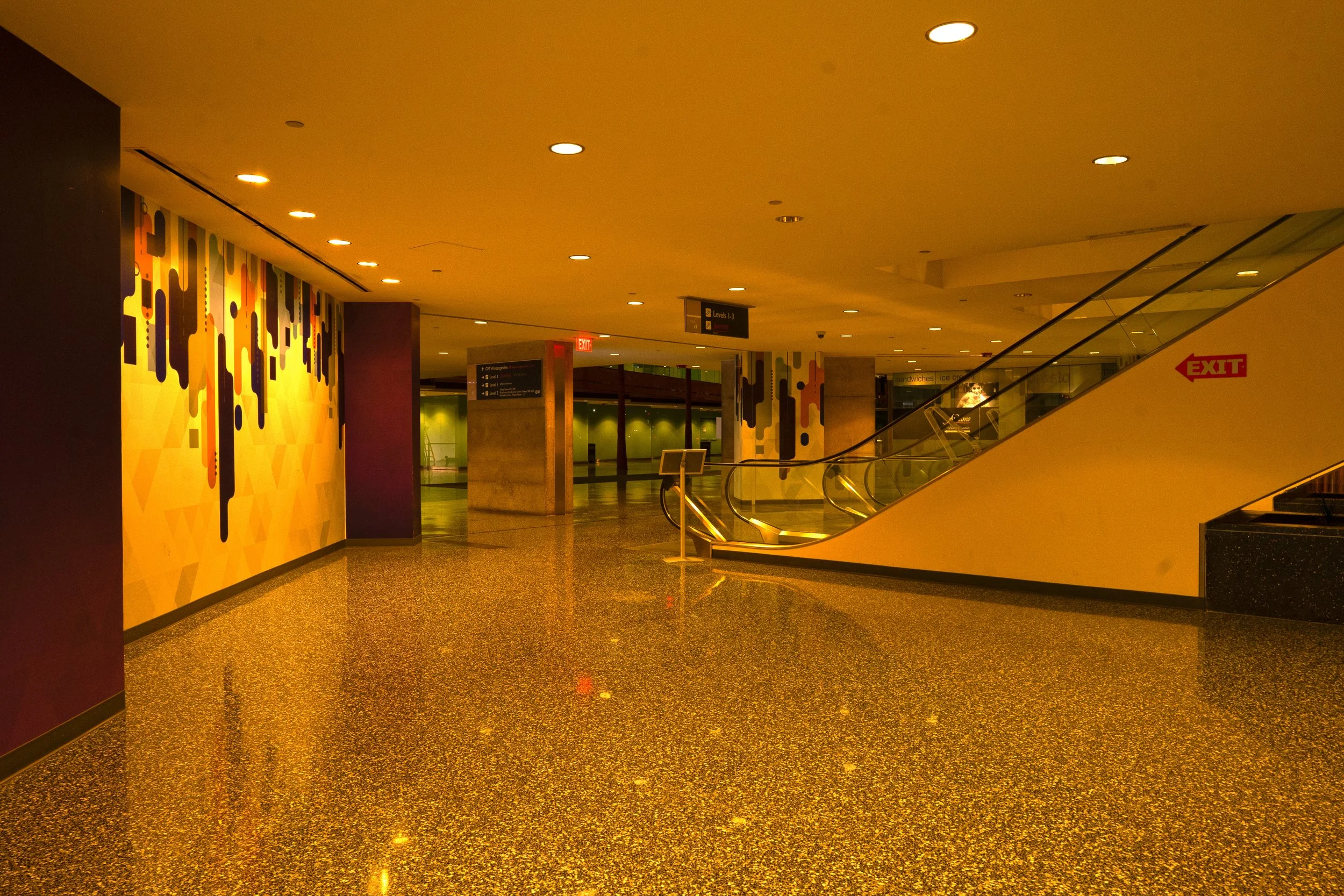
Another set of escalators in the Renaissance Center the building is known for its abundance of escalators
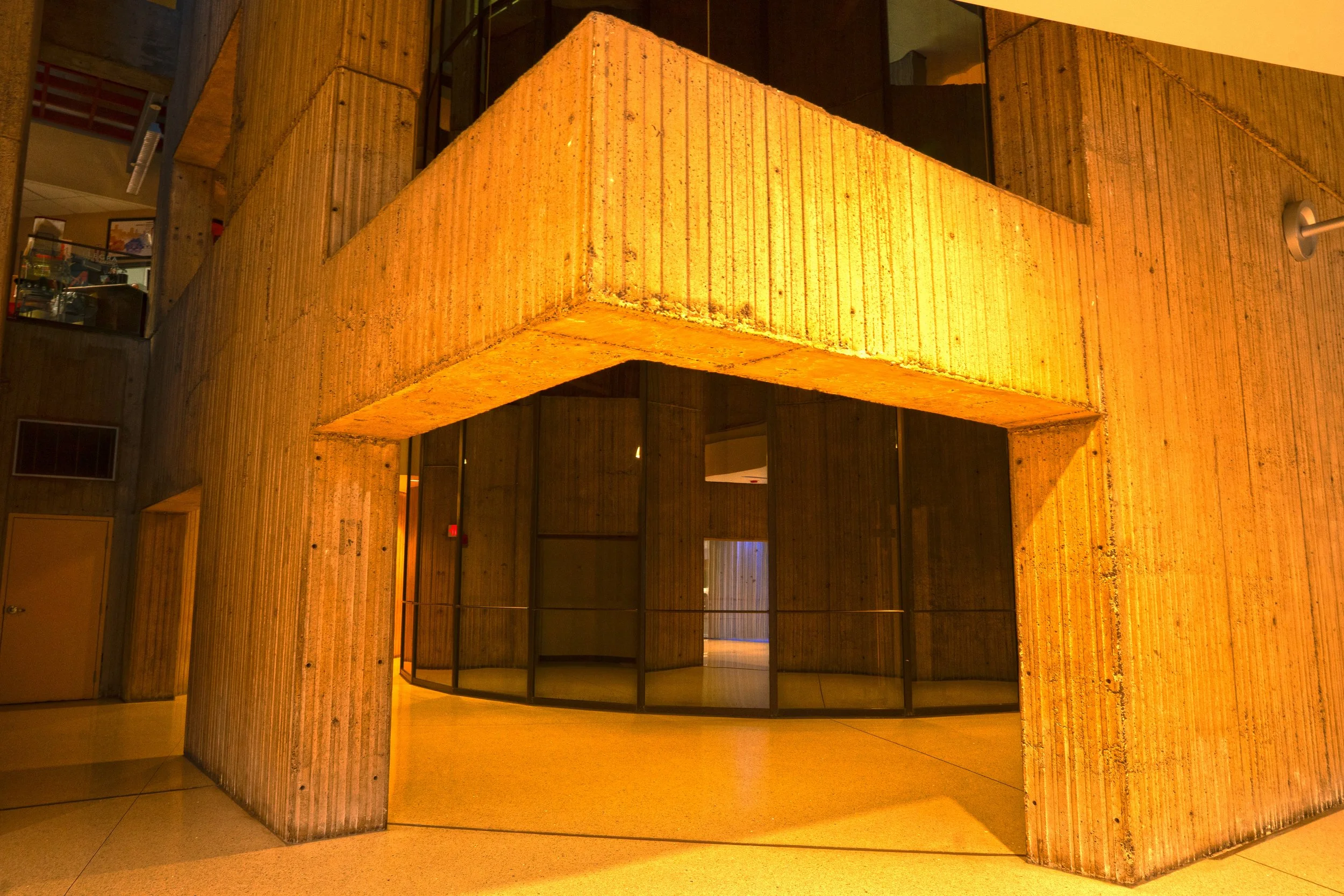
One of the side sections of the building on the 1st floor
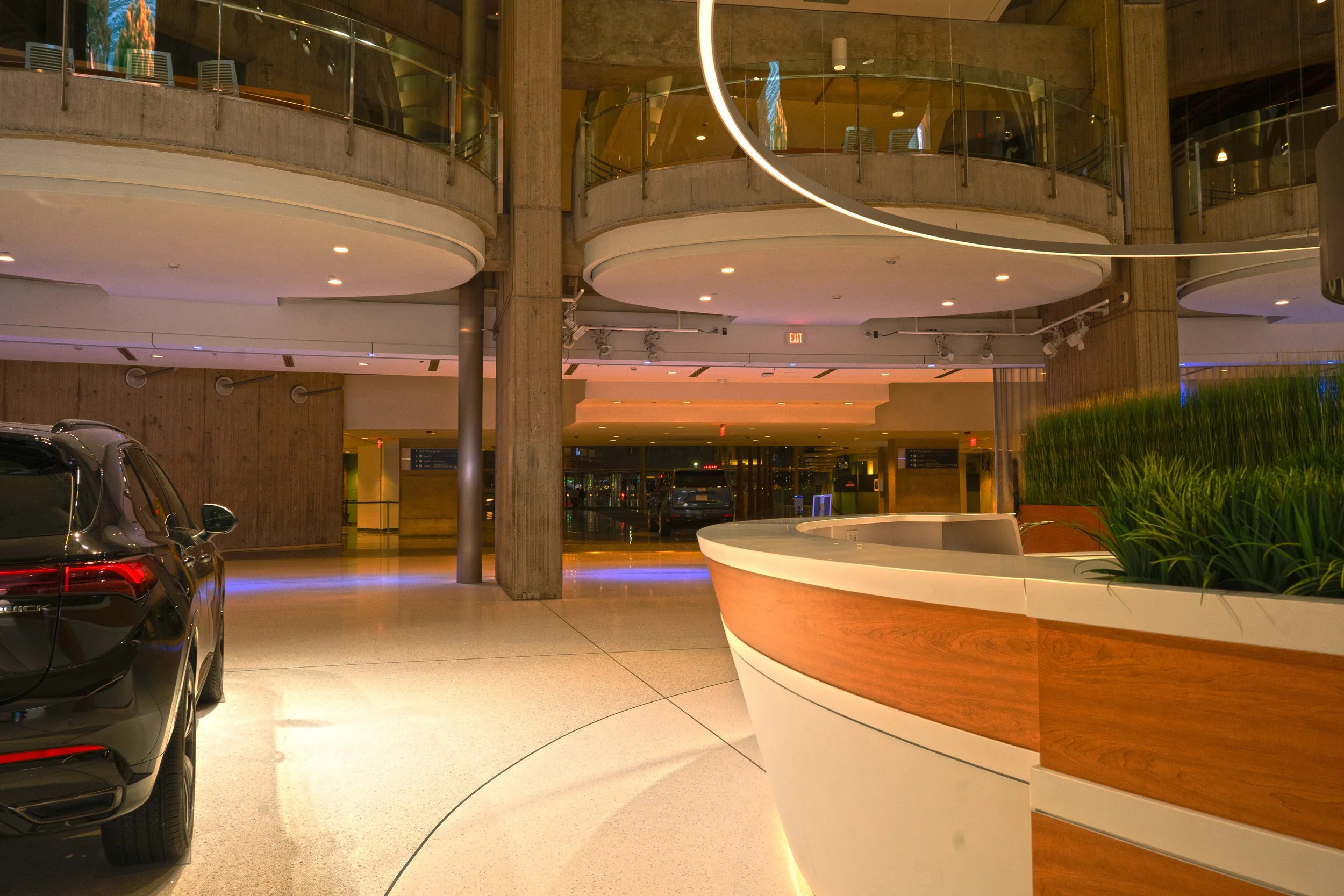
1st floor nearby GM World Exhibit shot 1
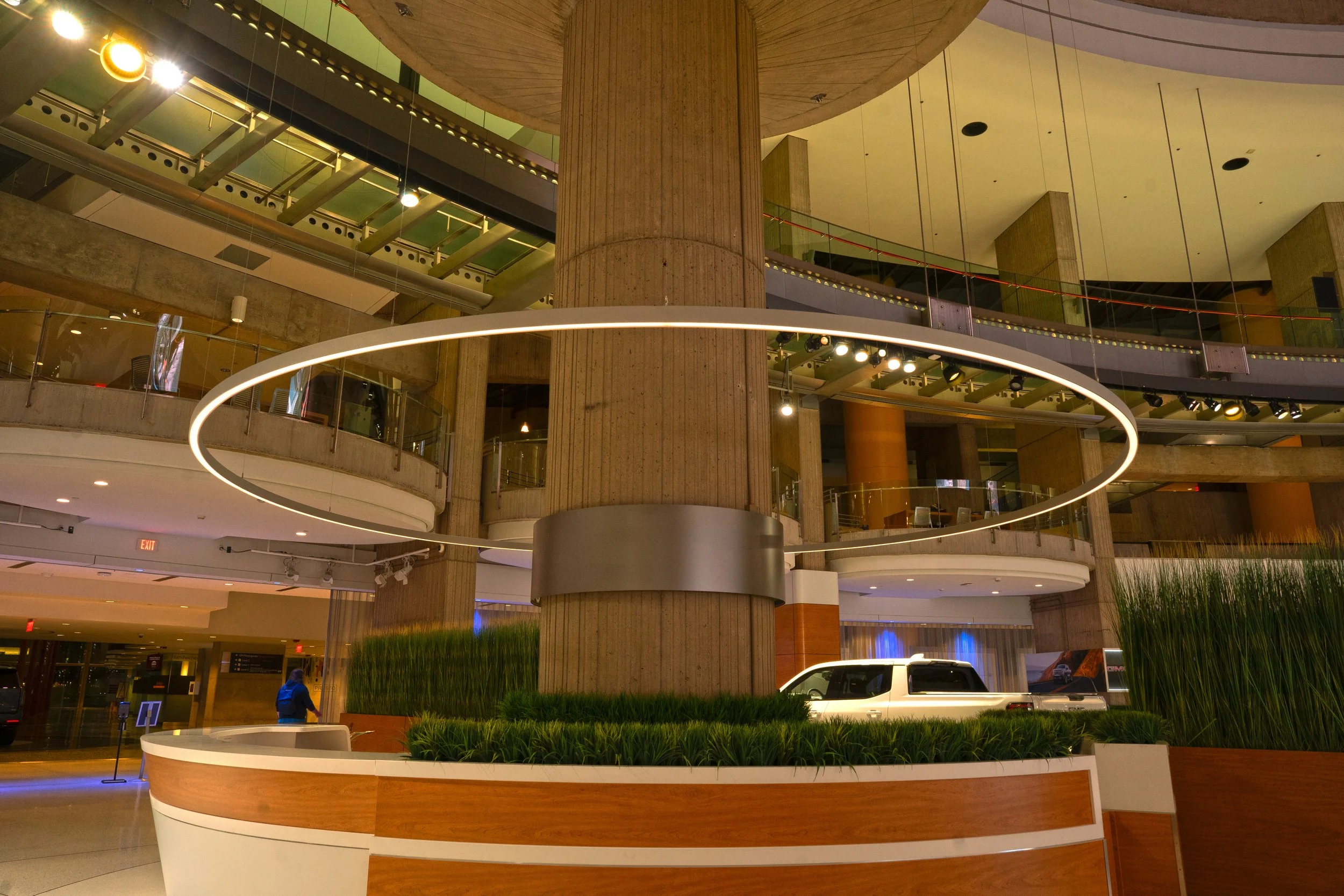
1st floor nearby GM World Exhibit shot 2
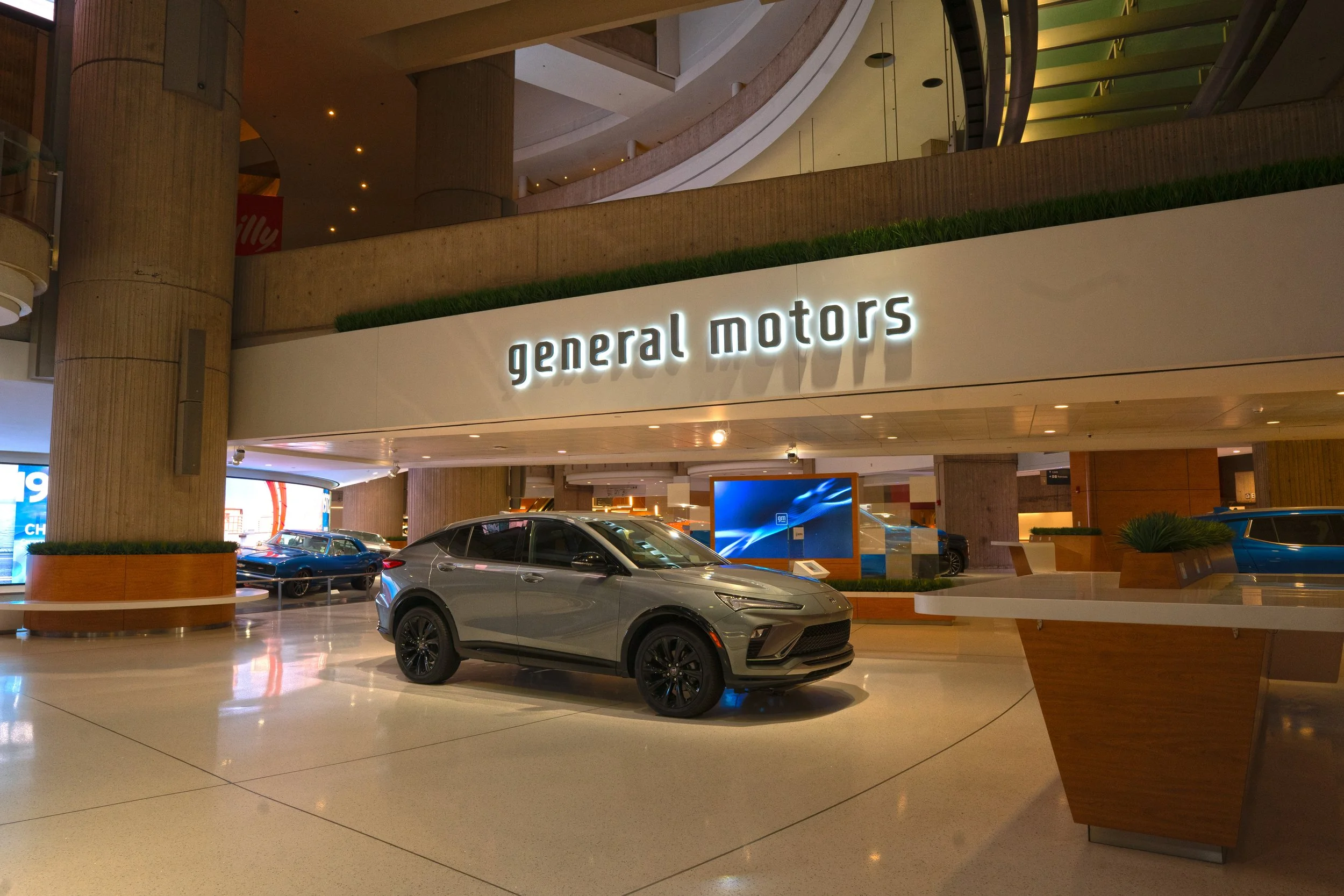
1st floor nearby GM World Exhibit shot 3
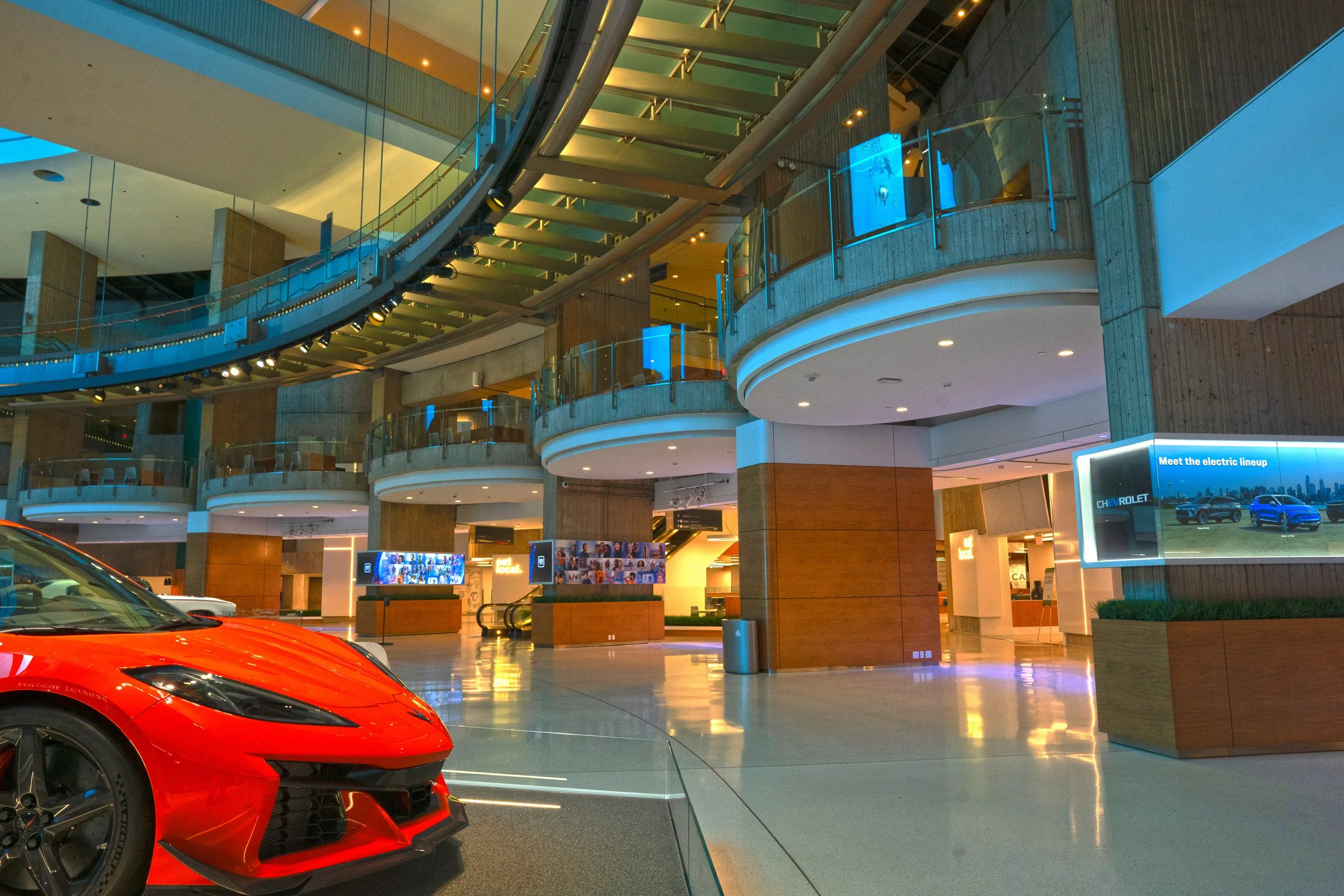
1st floor nearby GM World Exhibit shot 4
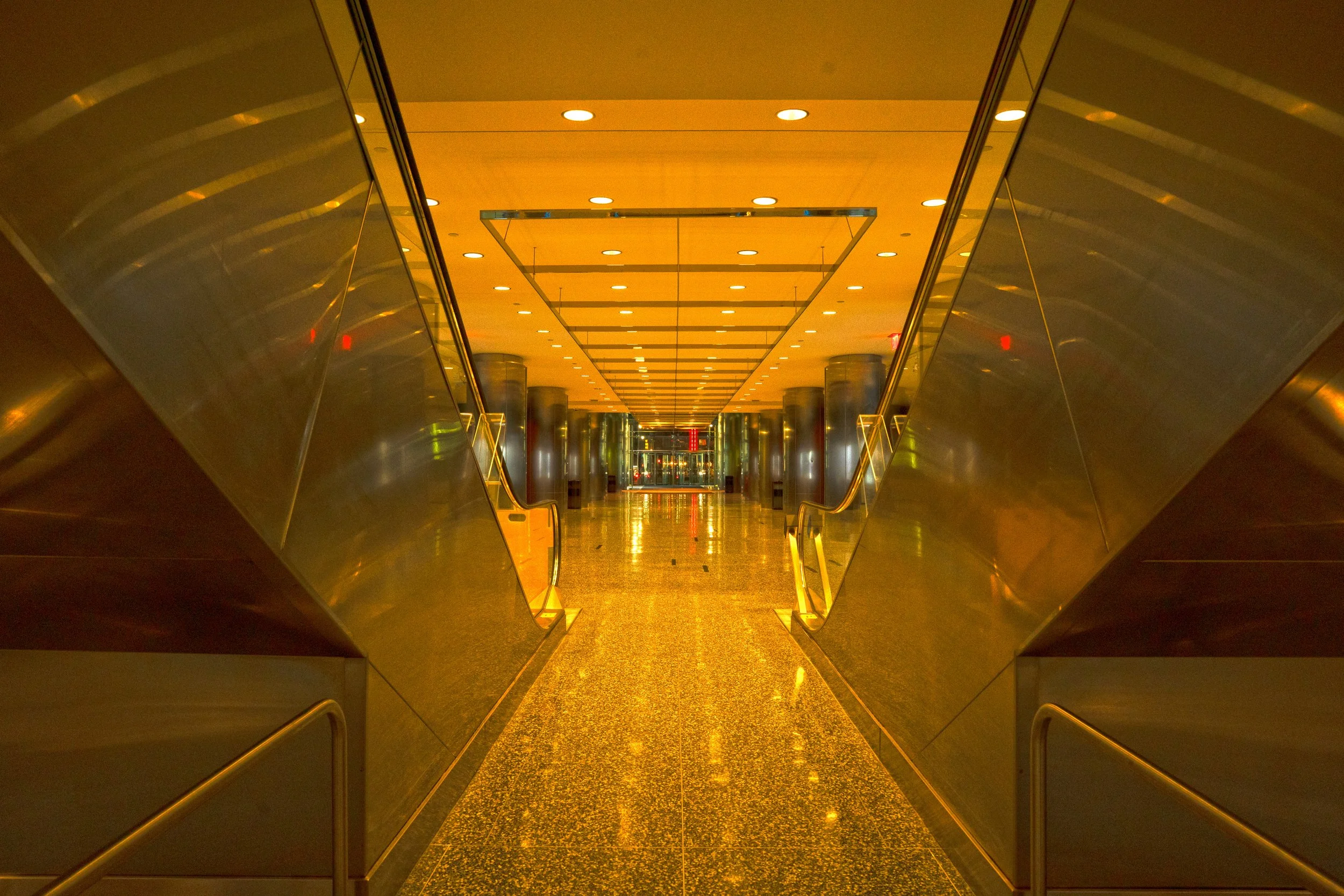
Looking towards the main entrance with the two escalators in the foreground
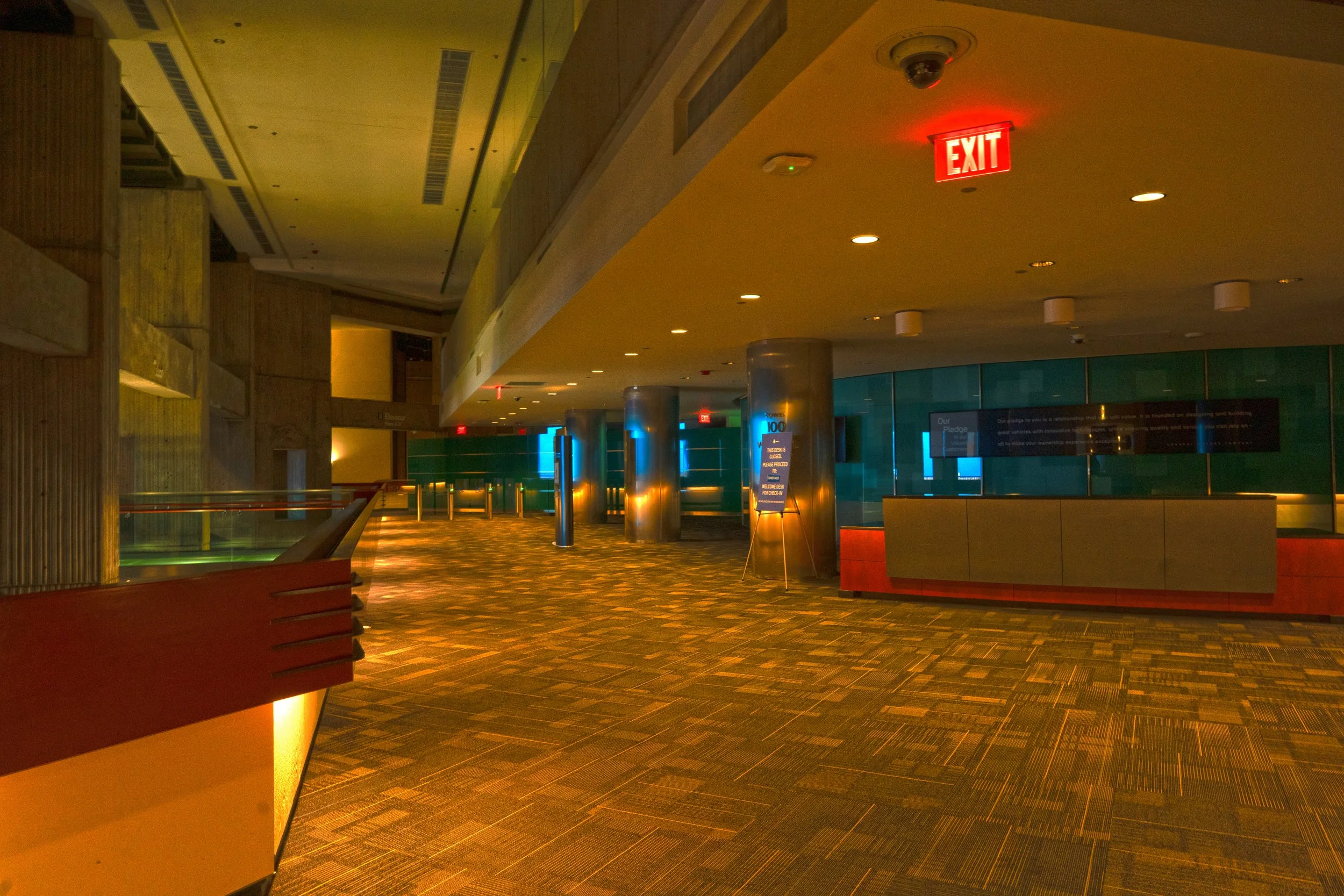
One of the tower sections that was accessible to the public before closing
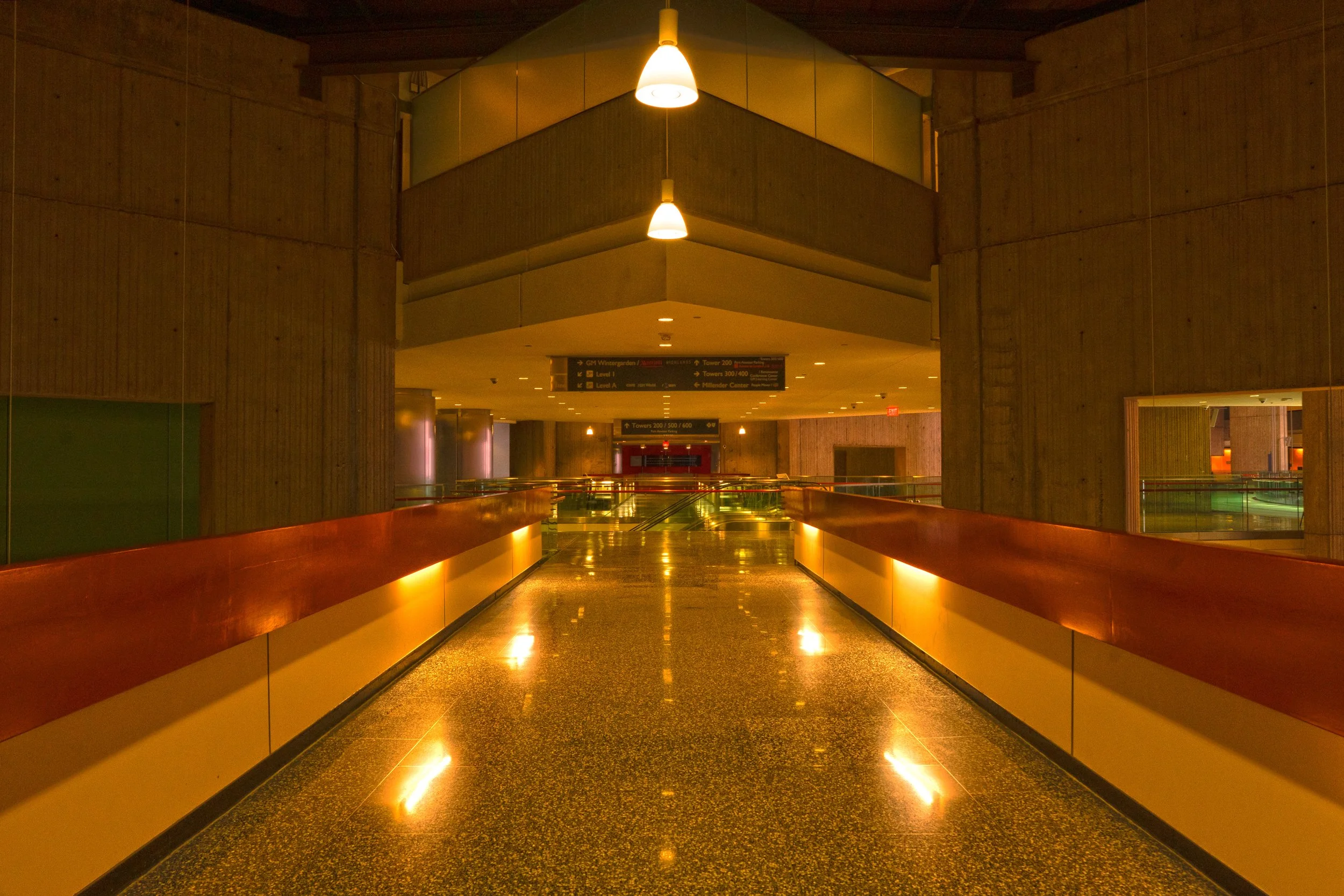
A walkway section that leads to additional towers
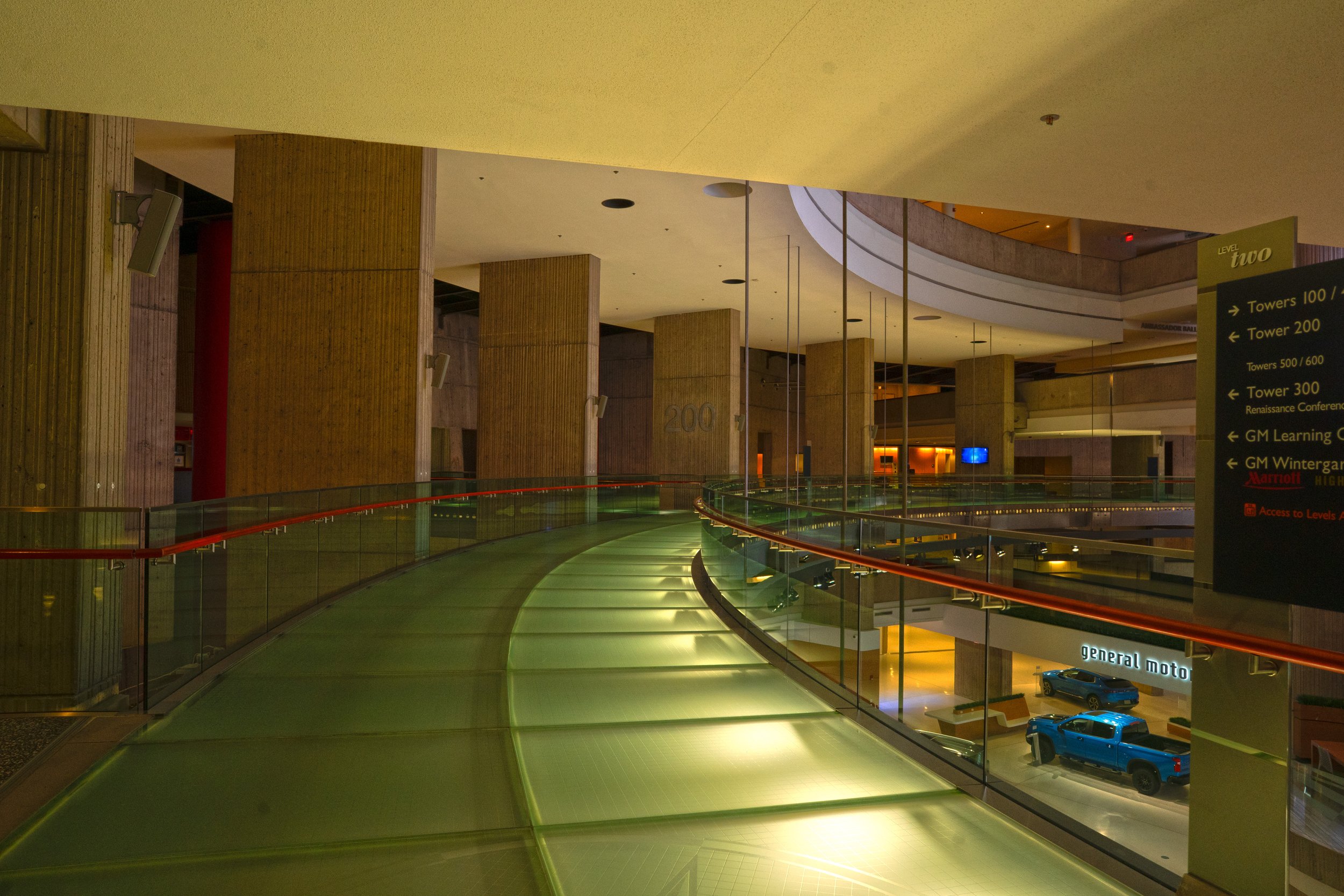
3rd floor walkway
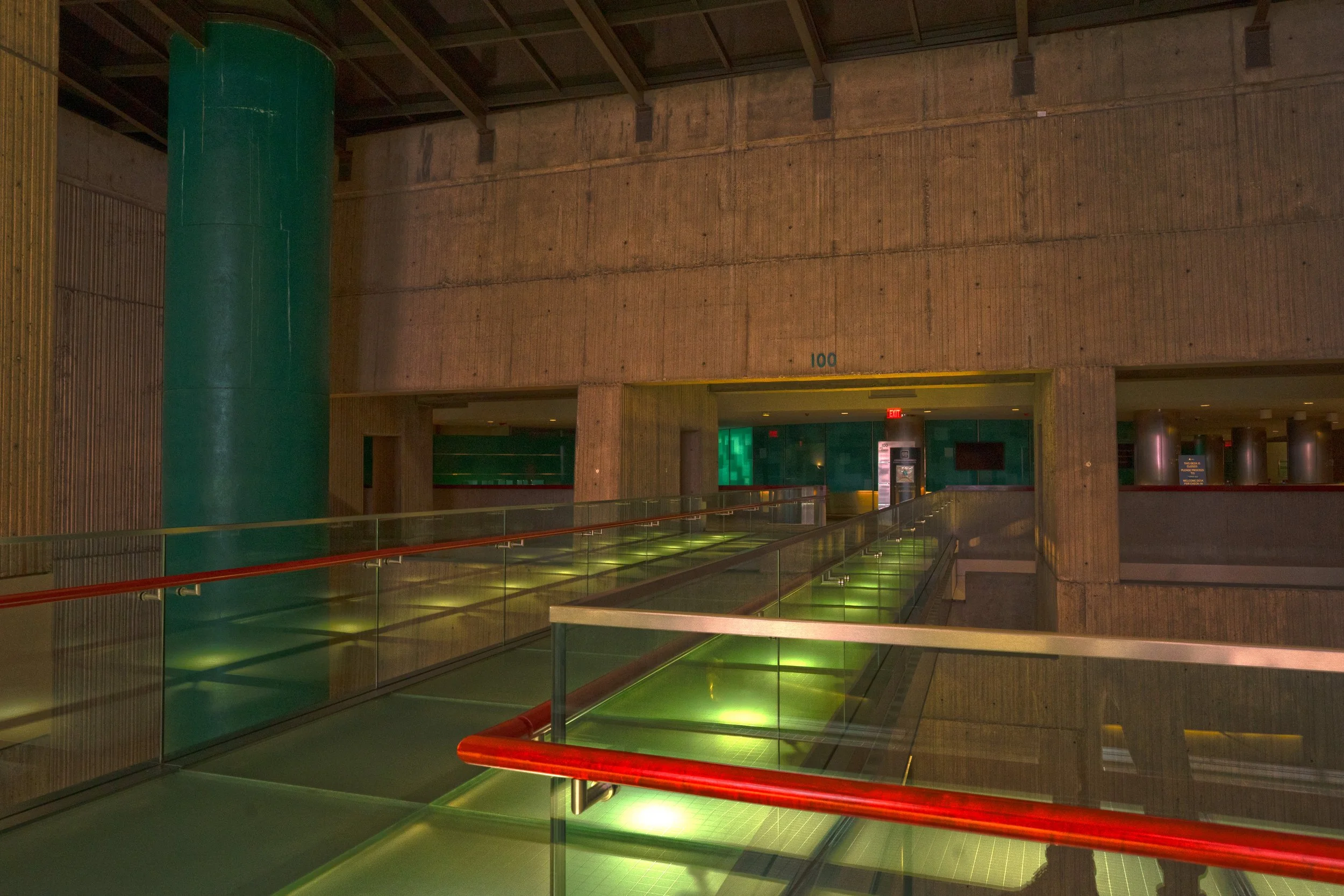
3rd floor walkway leading to tower 100
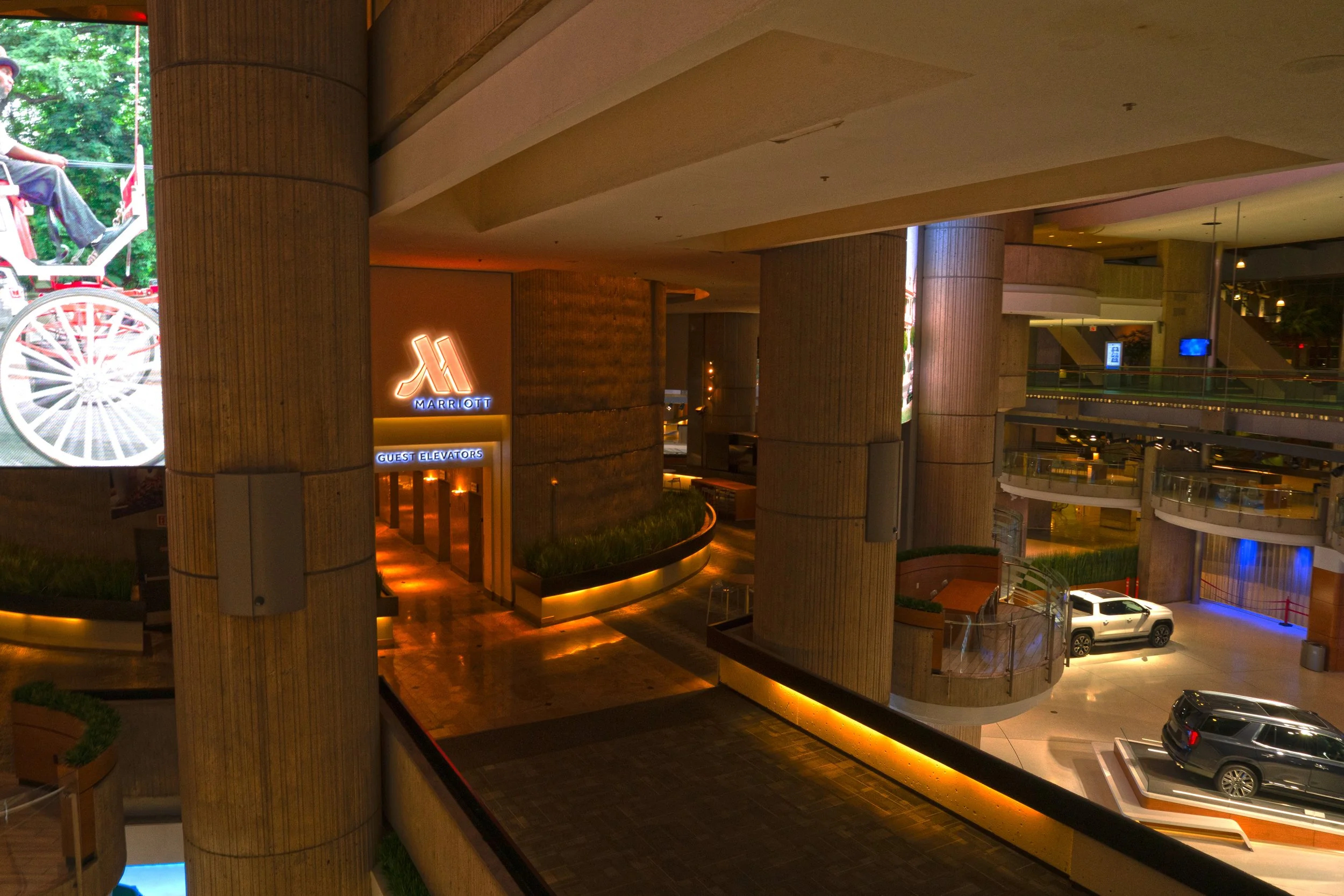
Main elevators as seen from 3rd floor walkway
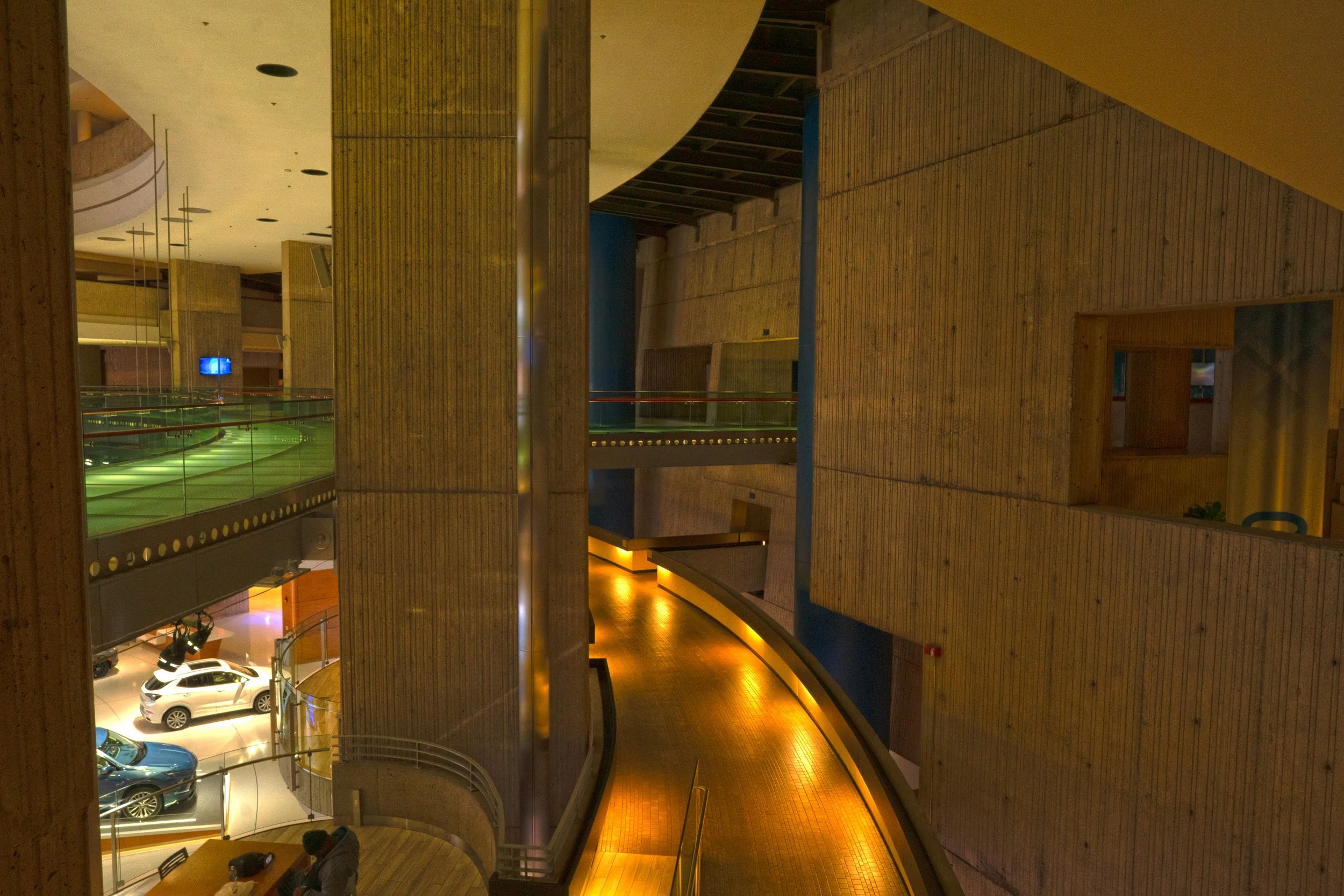
A side section leading to one of the towers shows a great shot of the 2nd floor walkway
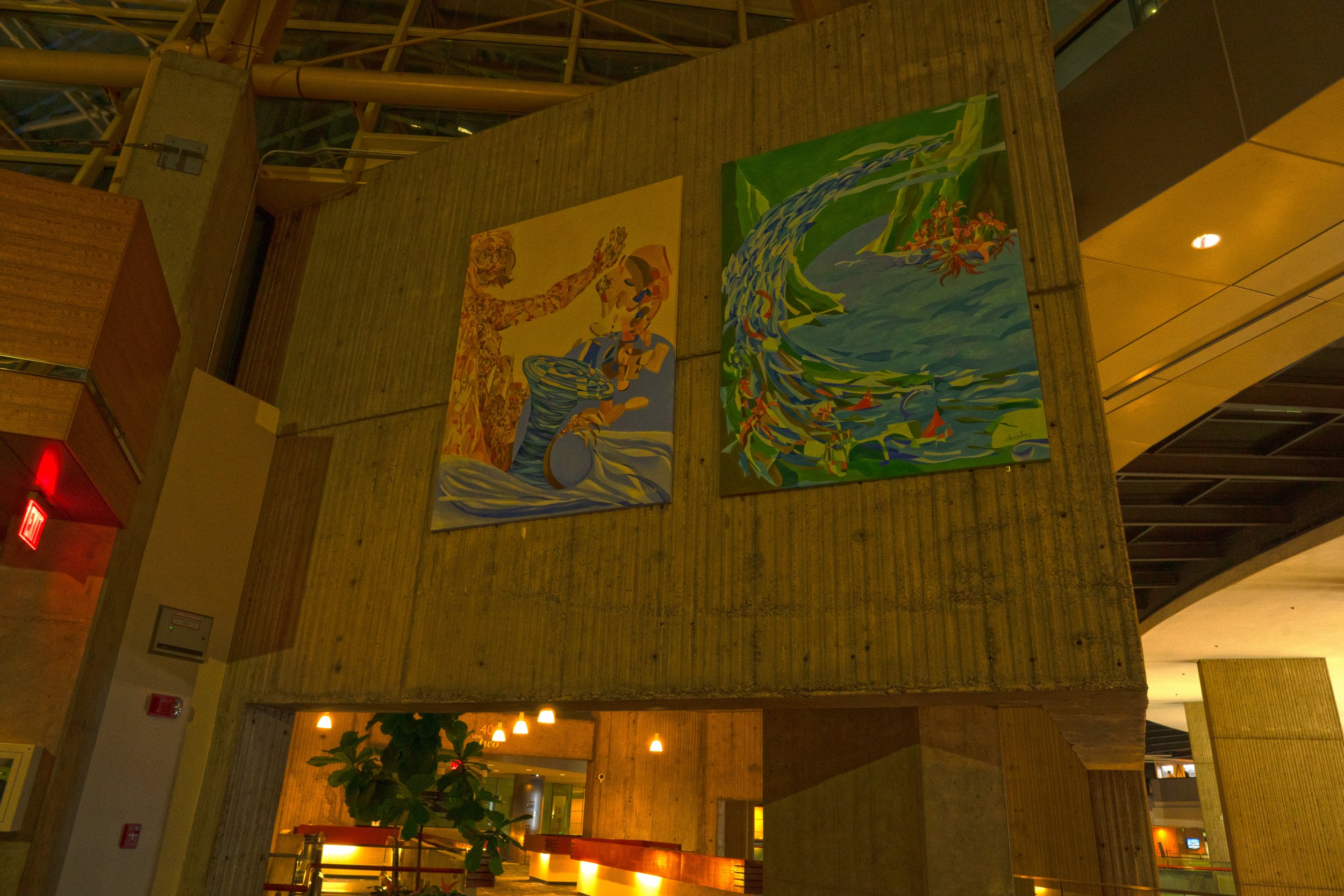
Murals nearby the middle of the building
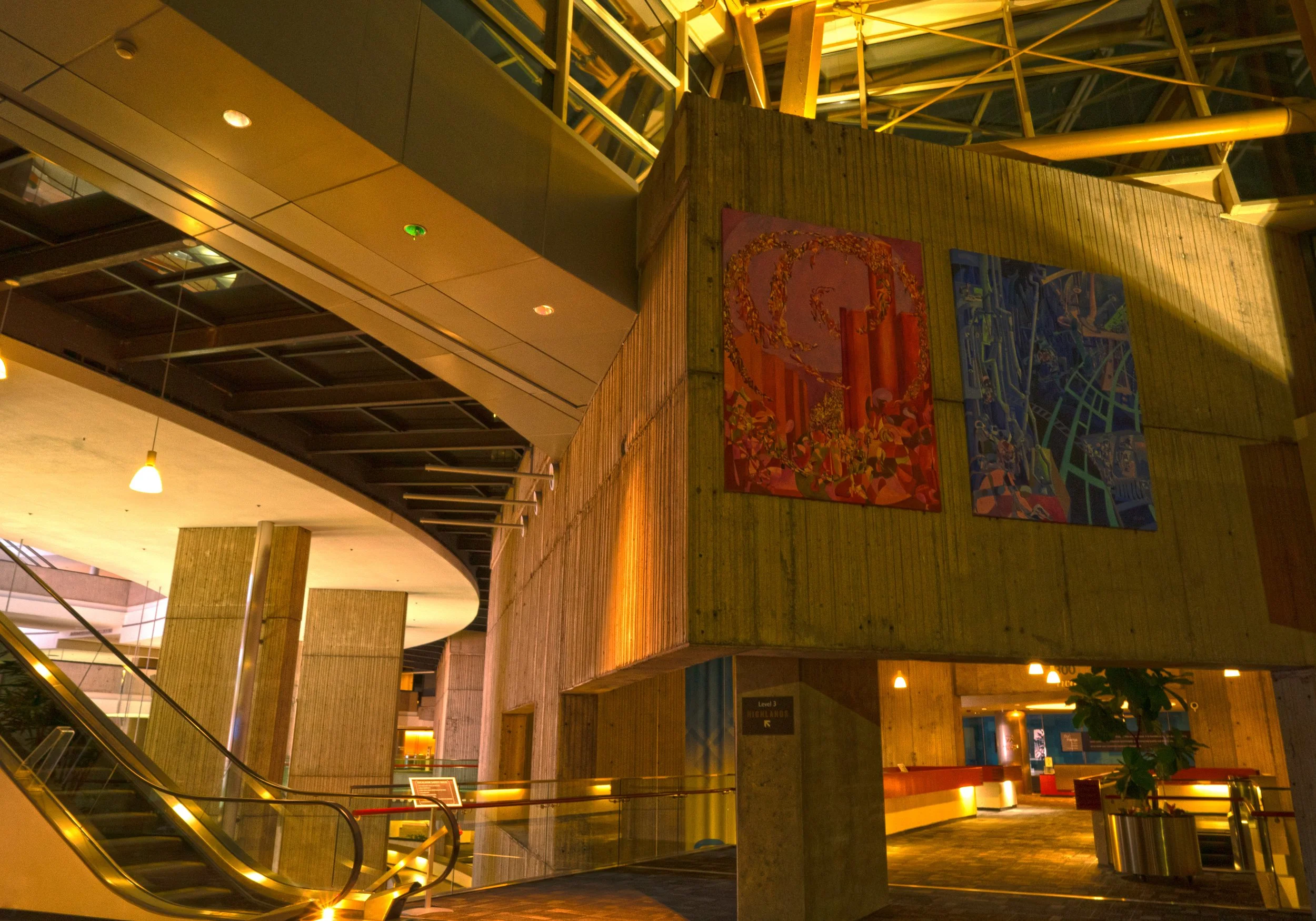
Murals on the opposite wall of the previous murals
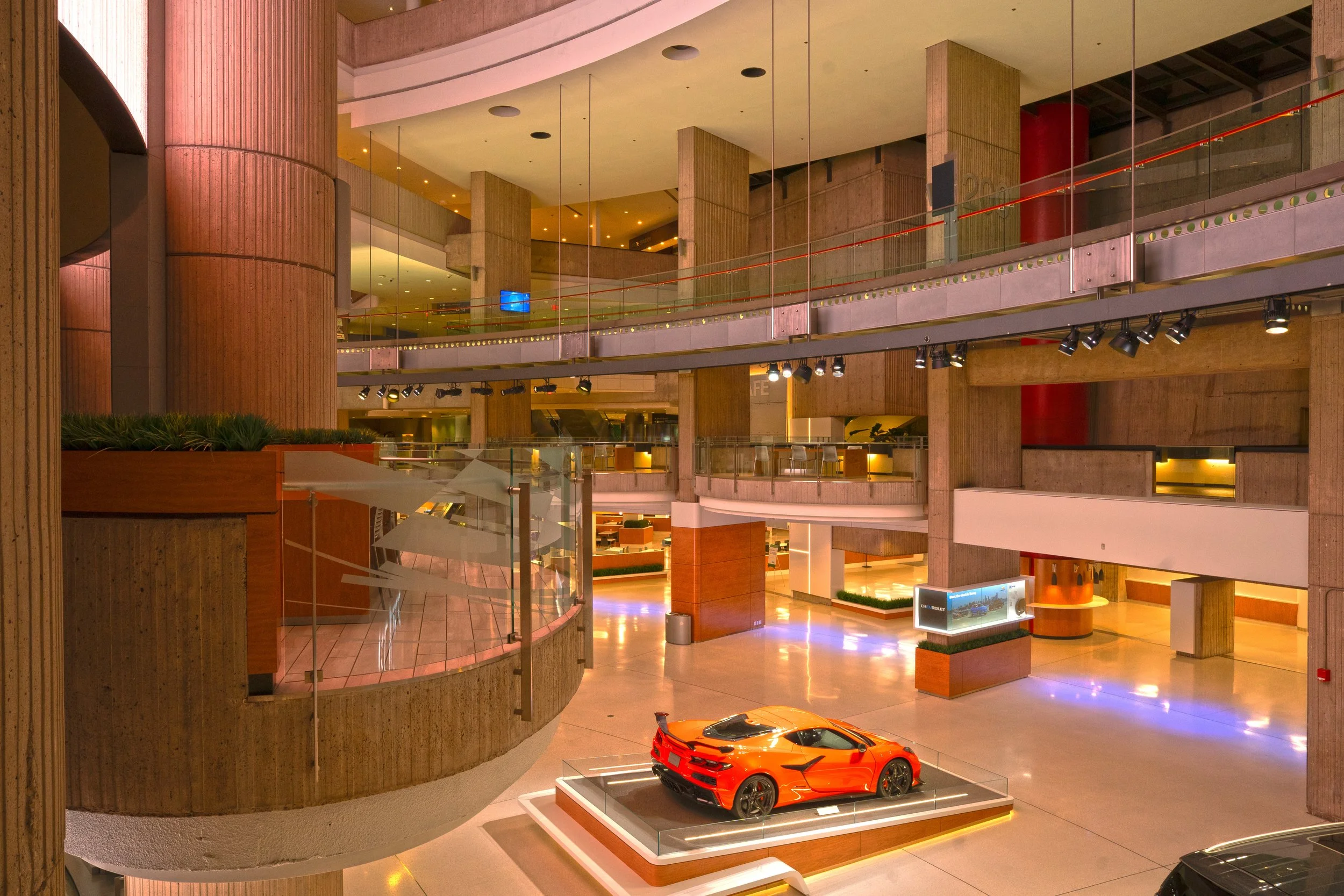
A once publicly accessible area shows the GM World exhibit from a middle section close to the elevators of the hotel
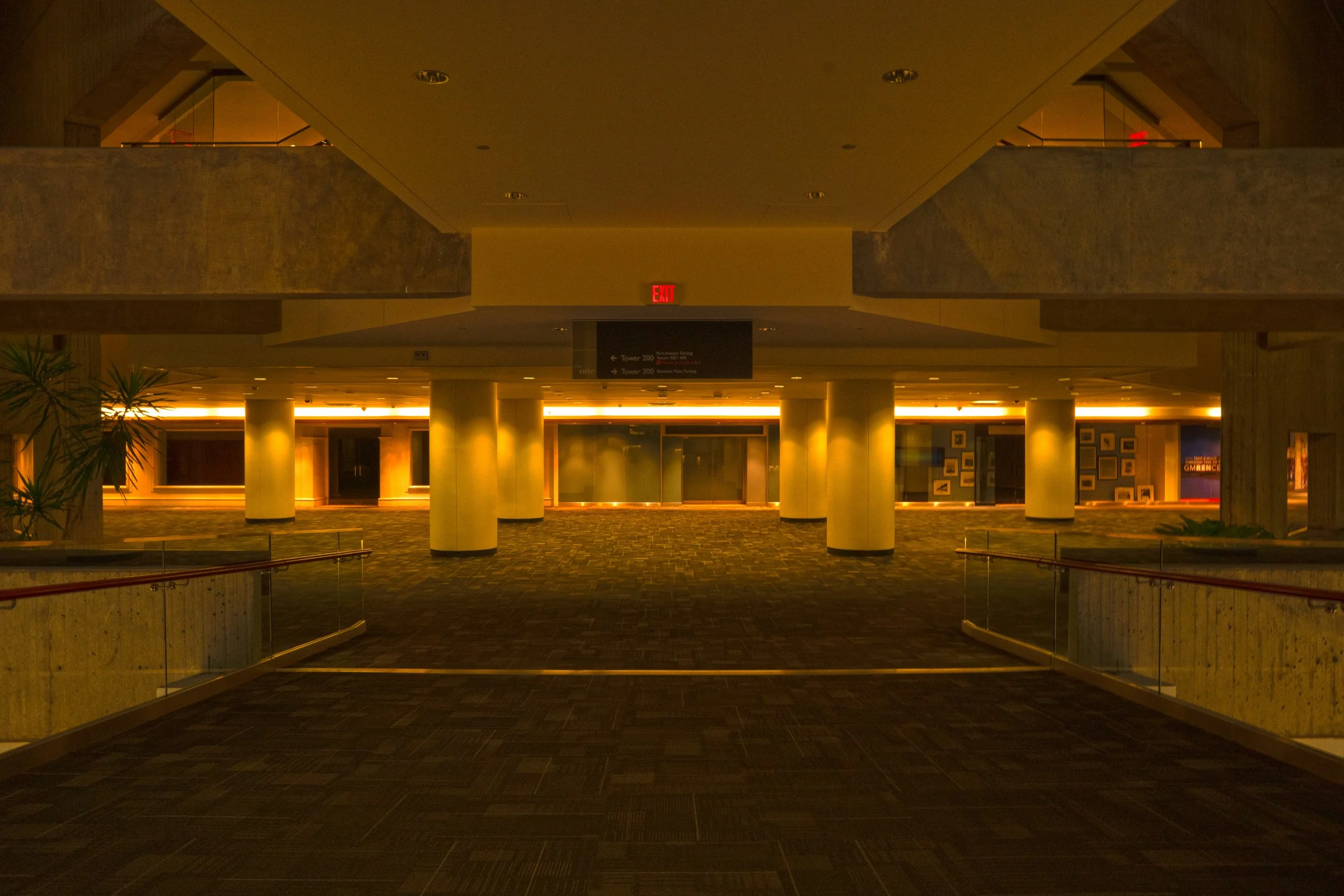
A largely vacant section of the Renaissance Center office space
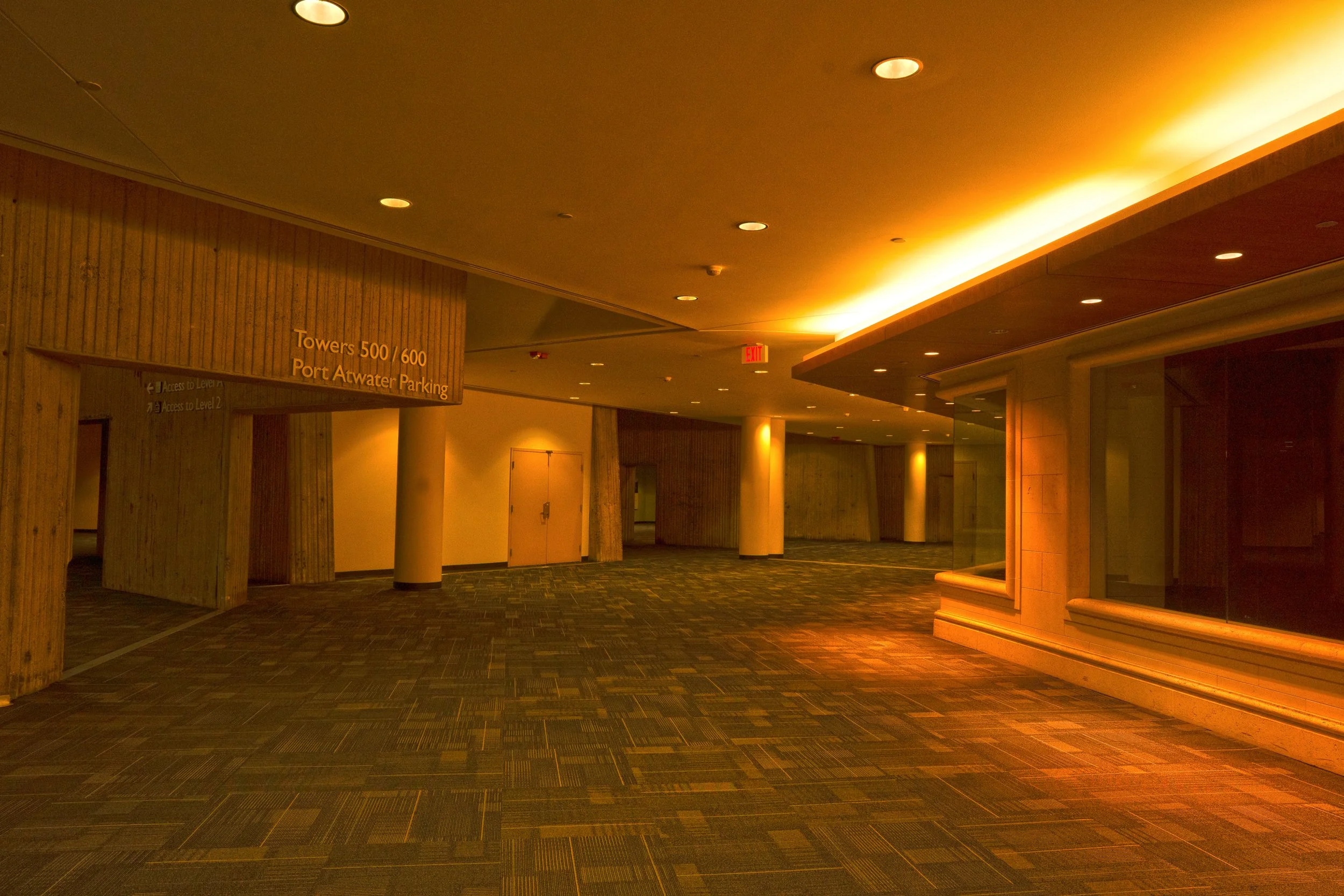
Entrance to towers 500 and 600 and Port Atwater Parking, the remaining section is very quiet
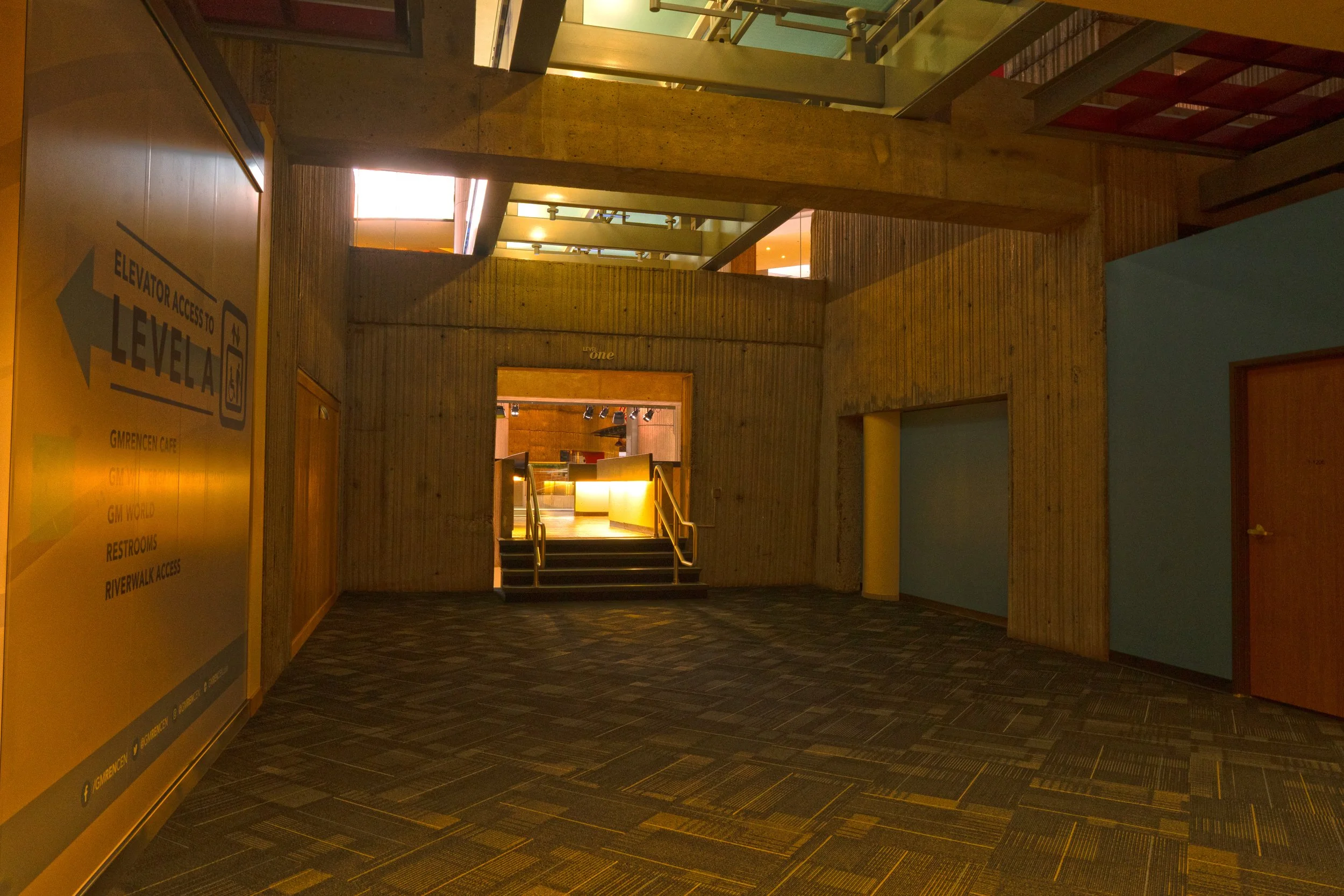
Stairs leading back to 2nd floor walkway
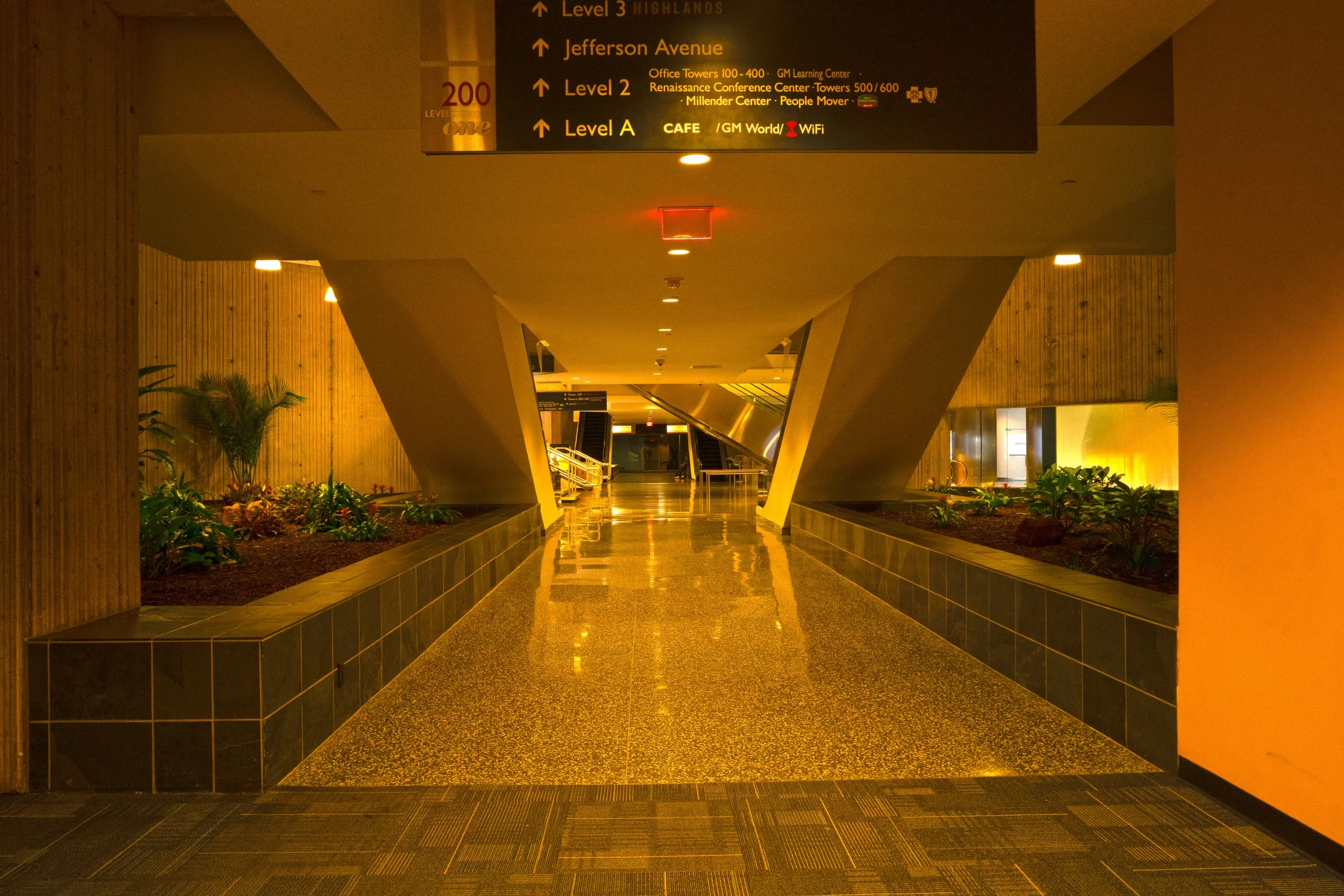
A last look of the maze of escalators inside the Renaissance Center