
Pulaski Elementary/ Middle School
19725 Strasburg St, Detroit, MI 48205
-Abandoned 2020
|High Resolution page|
Locate it!
History of Pulaski Elementary/ Middle School
Pulaski Elementary-Middle School was a school built in 1944 and opened in 1947. The schools name Pulaski comes from Casimir Pulaski a notable Polish and American military nobleman, soldier, and military commander that died in 1779 at the Siege of Savannah. The name was chosen to honor polish heritage, at the time of Pulaski’s construction in 1944 a second wave of Polish Immigrants were moving into the northeast sections of the city, after neighborhoods known for early Polish settlement became crowded, such as Poletown and Poletown East. Much of the new Polish population settled nearby to where Pulaski would be built, and population would grow fast, receiving a total of two addition additions in 1950 and 1955 following the baby boom of the late 40s and into the 50s. The final 1955 addition brought the Auditorium and Gymnasium, alongside classrooms and other small spaces, the finished school had a capacity of 955, and a square footage of 62,000. When it was finished the school had been constructed in a finger plan layout maximizing natural light, and separating the elementary and middle school sections of the school. Until the late 1960s the neighborhood around Pulaski was 99% white largely due to resistance to allowing black families to moving in the neighborhood, a problem not solved until 1968 with the Fair Housing Act which outlawed this practice. Following 1968 the school began to see its demographic change, as the polish population moved to suburbs most commonly Warren, St Clair Shores, and Sterling Heights into the 1970s in just over 10 years a nearly complete change of demographics had occurred at the school, going into the 80s with a predominantly black student body at the school, with the neighborhood becoming a large and strong population of working and middle class African Americans. However later in the decade, following a declining job market in the city, many families would move elsewhere and would leave the neighborhood, leaving a economically challenged remainder of the population. By the 2000s Pulaski was labeled as a Title I school showing a low income level from families that had students at Pulaski. In 2011 the school had been identified as a priority school by the Michigan Department of Education falling in the bottom 5% of schools in Michigan, triggering mandatory intervention under state law. The district selected a transformation model, seeing the principal and over 50% of the school staff replaced, with all staff receiving professional development. Part of this redevelopment included going over strengths and weaknesses of MEAP Test results, along with a 50 minute extra school day and updating internet based learning resources. In order to answer the low income families the school noted it would bring in on site services for things such as dentists, workshops for students, and vision and hearing screenings for students every year. While Pulaski suffered in education its enrollment was on par with many schools that remained opened at around 50%, leading to it not to close despite the education program shortfalls. By 2017 issues in the school had been identified and was not up to building code, the cost of renovation was not worth the cost of enrollment at only about half of capacity. It was found cheaper to repurpose the former Gabriel Richard Elementary which had been renovated in 2010 and always shared a strong tie to Pulaski during the 20th century with many students in the neighborhood attending both schools. In 2019 the adult education program that was hosted in Gabriel Richard was moved to the Frederick Douglass Academy. While Gabriel Richard was a older school built in 1929, it had been brought up to code. In the fall of 2020 the school’s program was moved leaving the former Pulaski school abandoned, however giving the students a more modern up to date learning experience. Pulaski remains one of the best condition abandoned schools of Detroit, largely due to its closing being so recent.
Recollection from the author
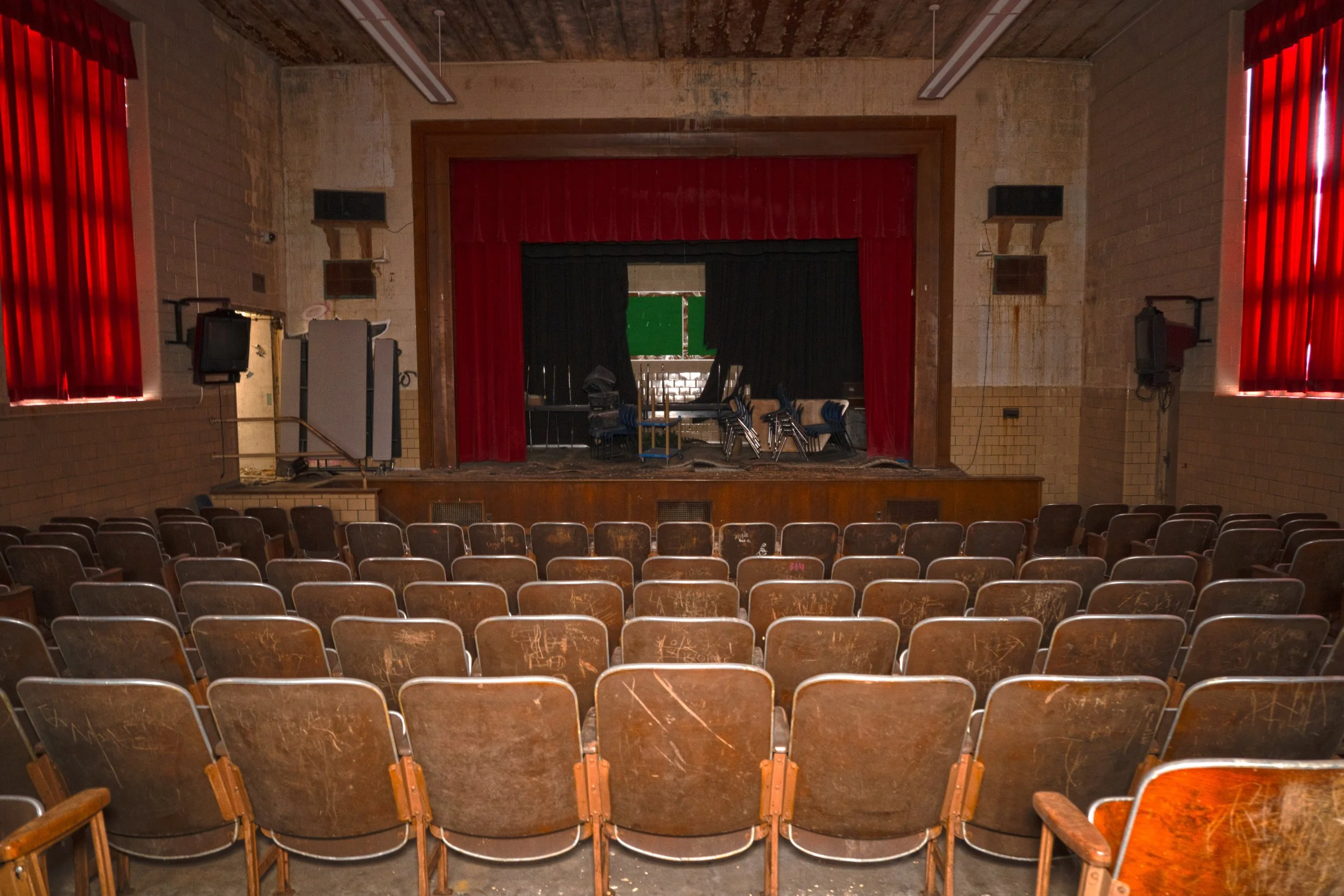
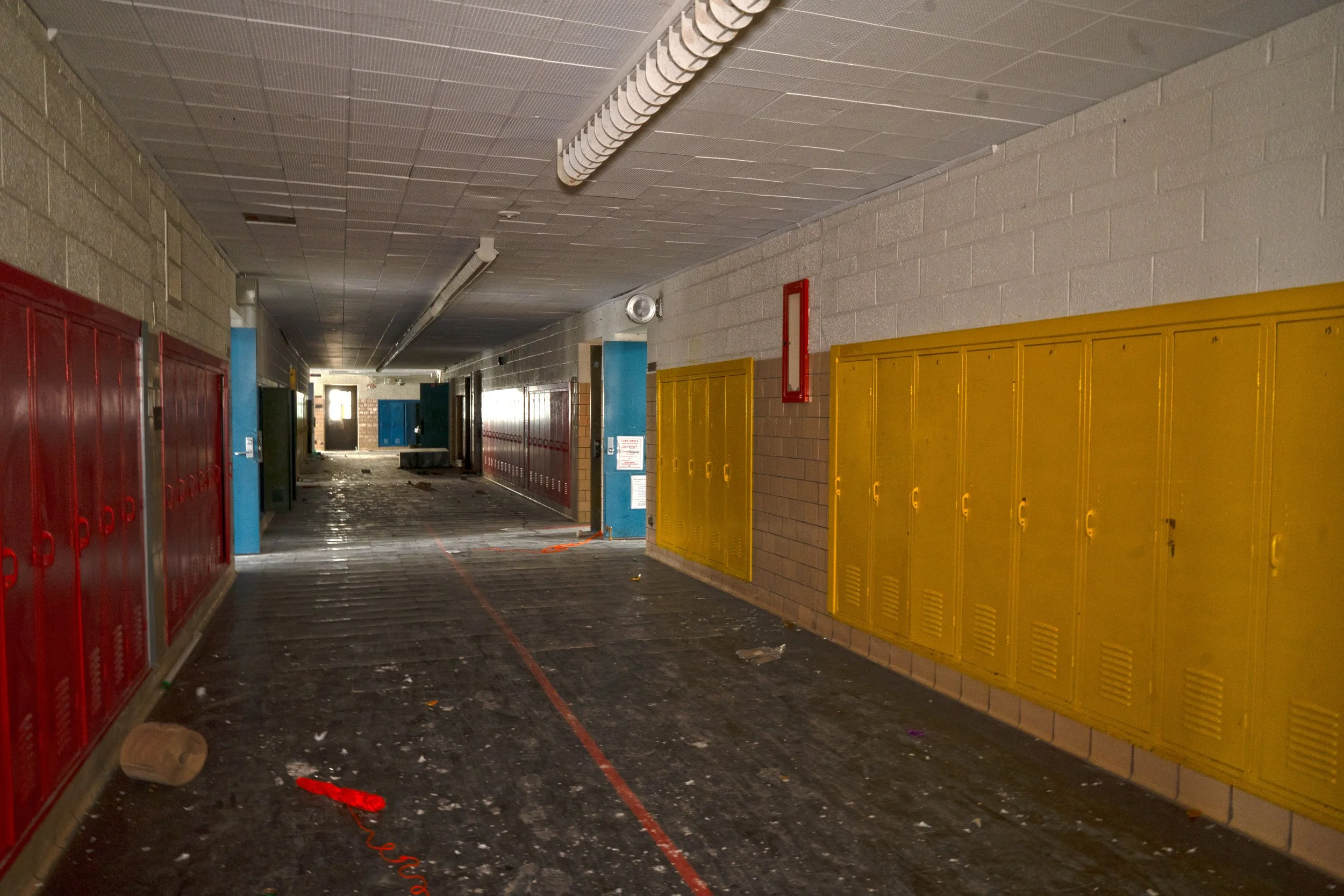
Pulaski was a amazing school with almost all character left intact from banners, to a amazingly unique auditorium, and a brightly lit gymnasium. The school as a whole was a bit of a cluster of items, but overall a great school. It’s up to debate of which of the best condition schools is better Ludington or Pulaski to me it depends on the aspect as each has its strong points.
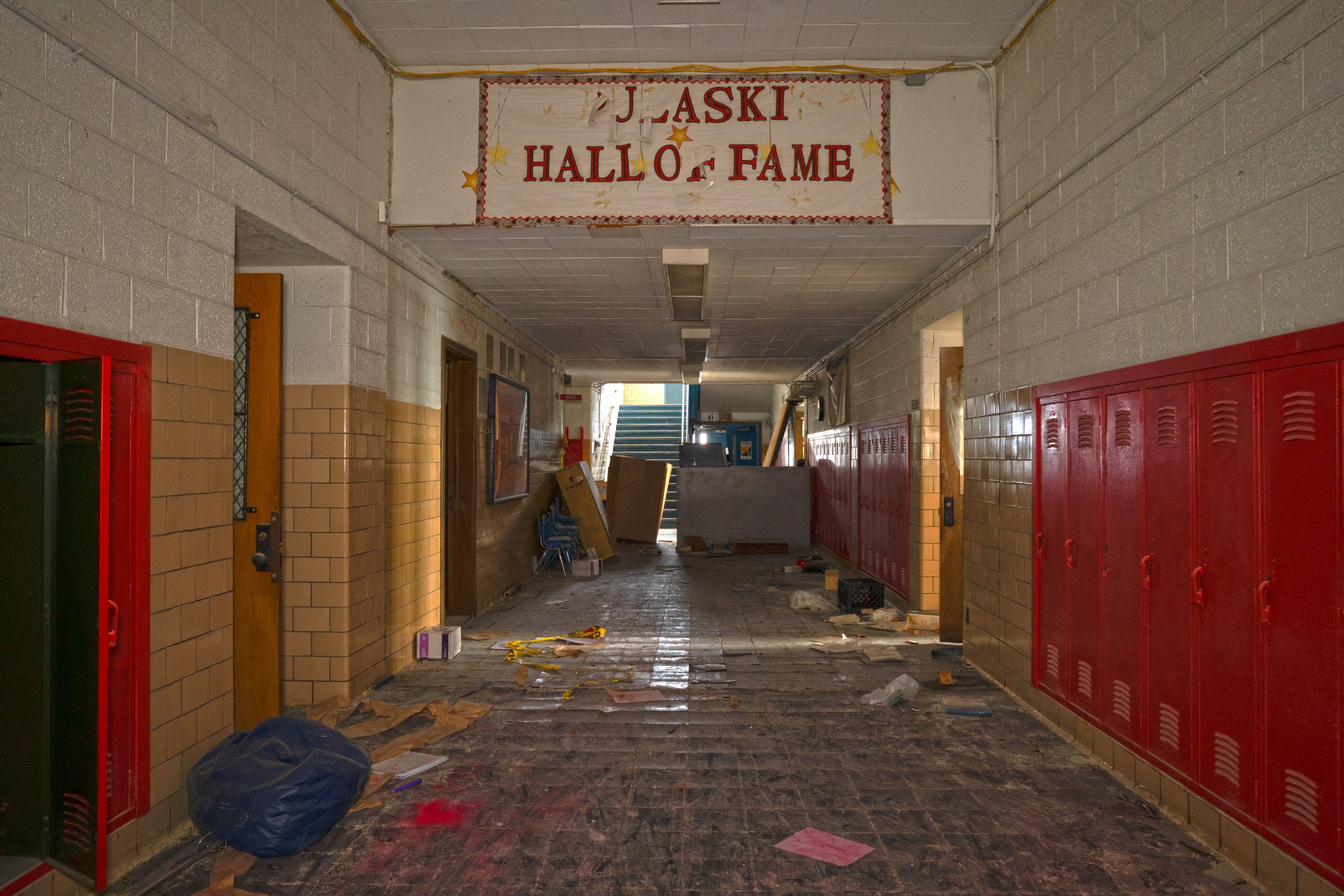
1st floor hallway shot 1
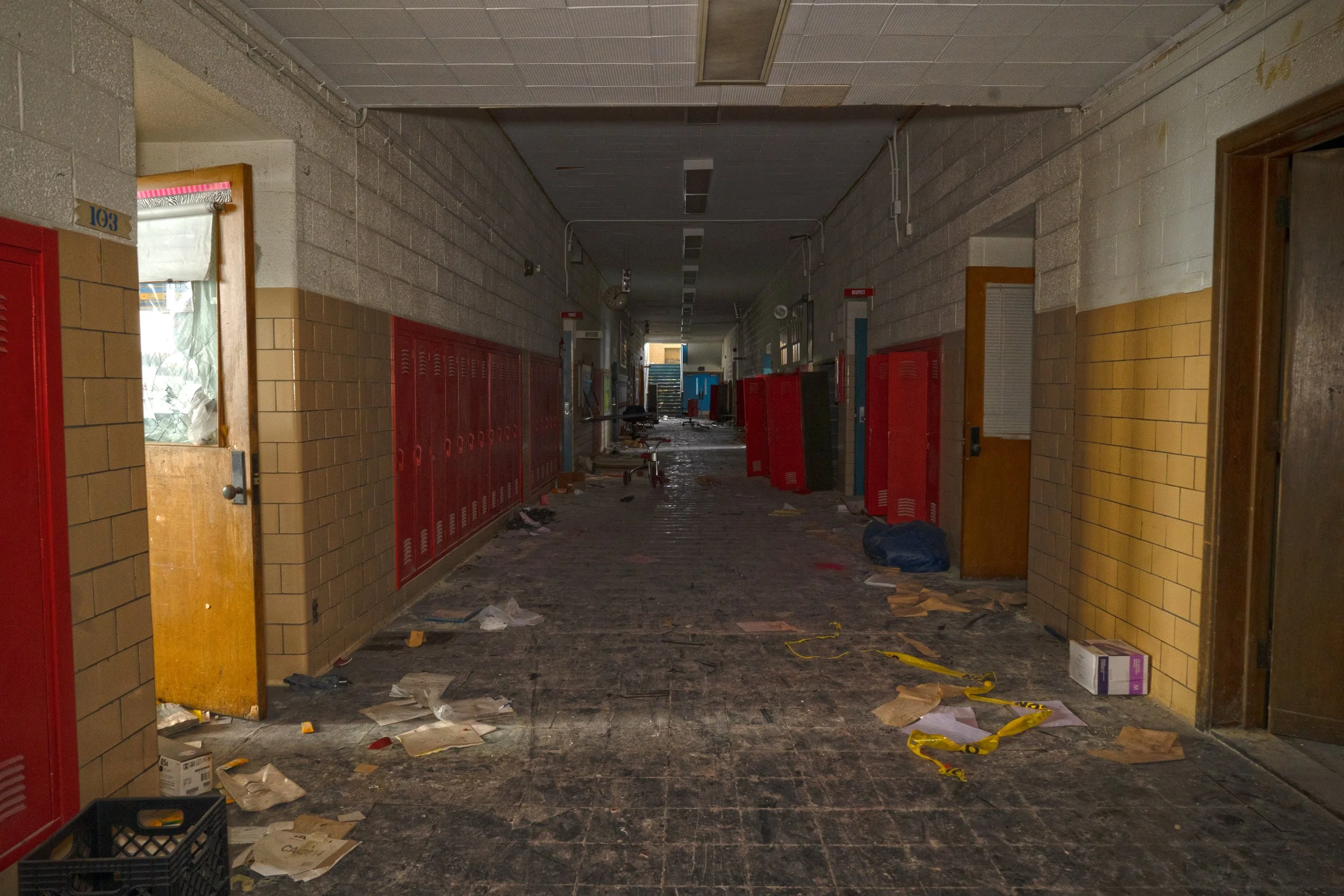
1st floor hallway shot 2
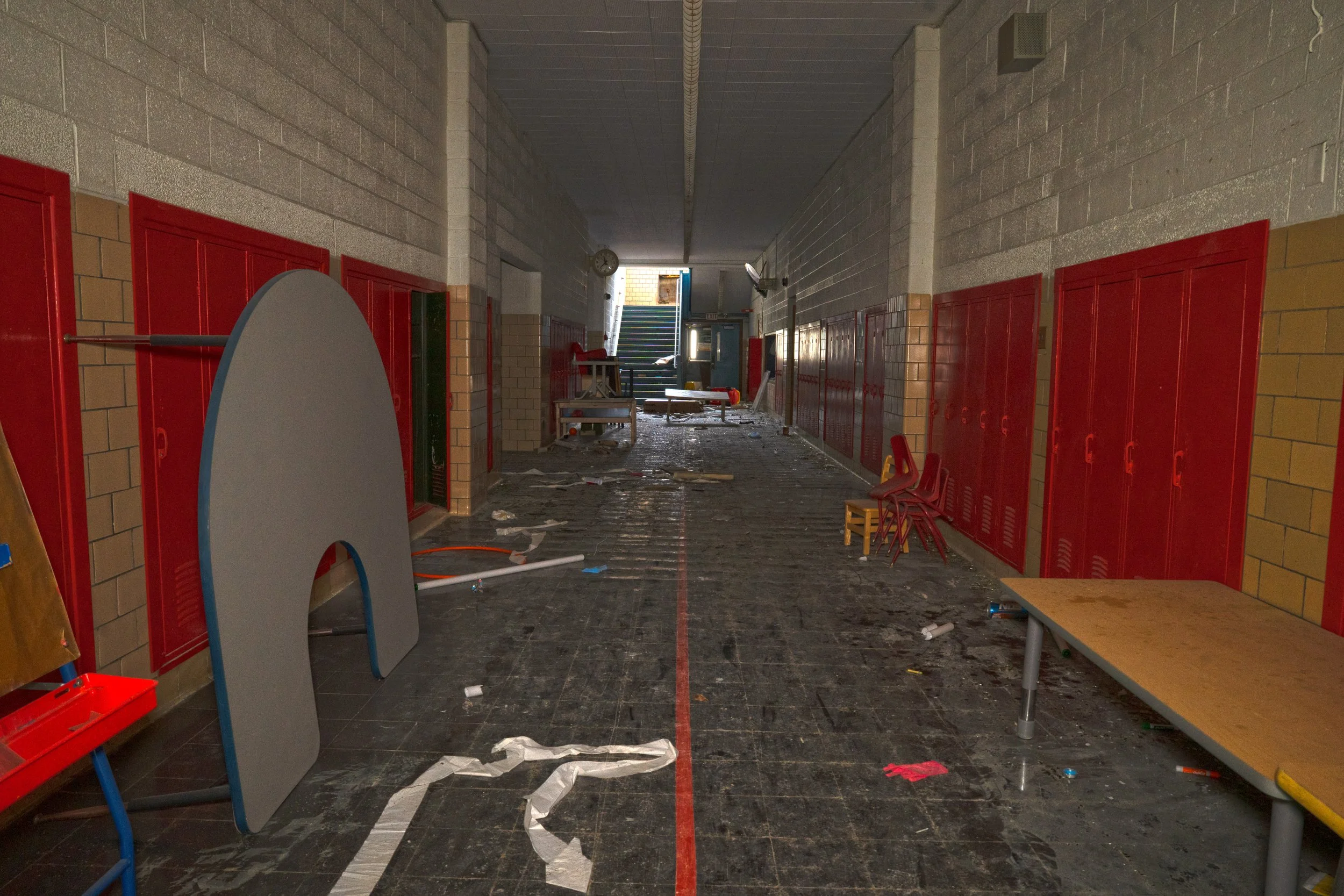
1st floor hallway shot 3
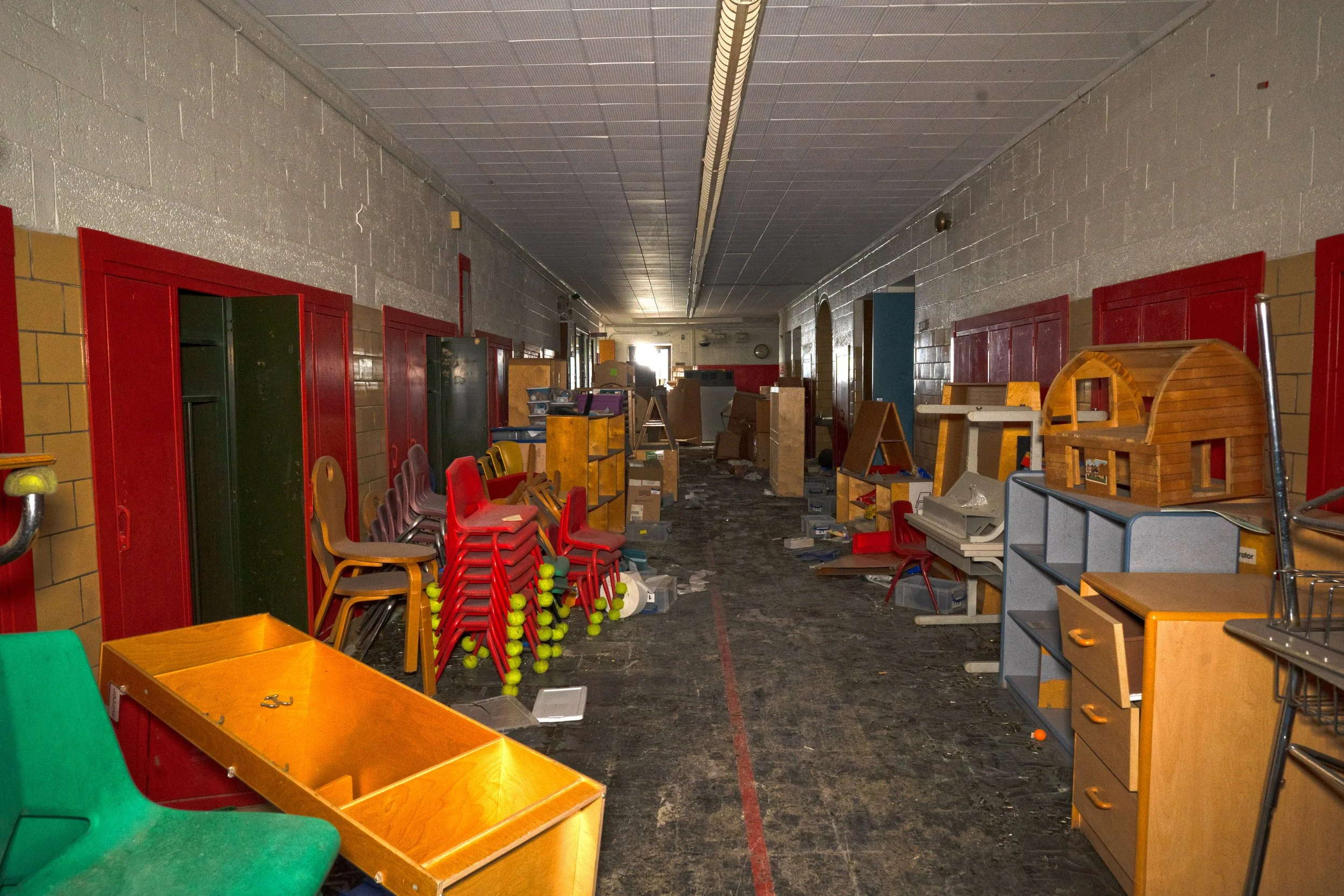
1st floor hallway shot 4
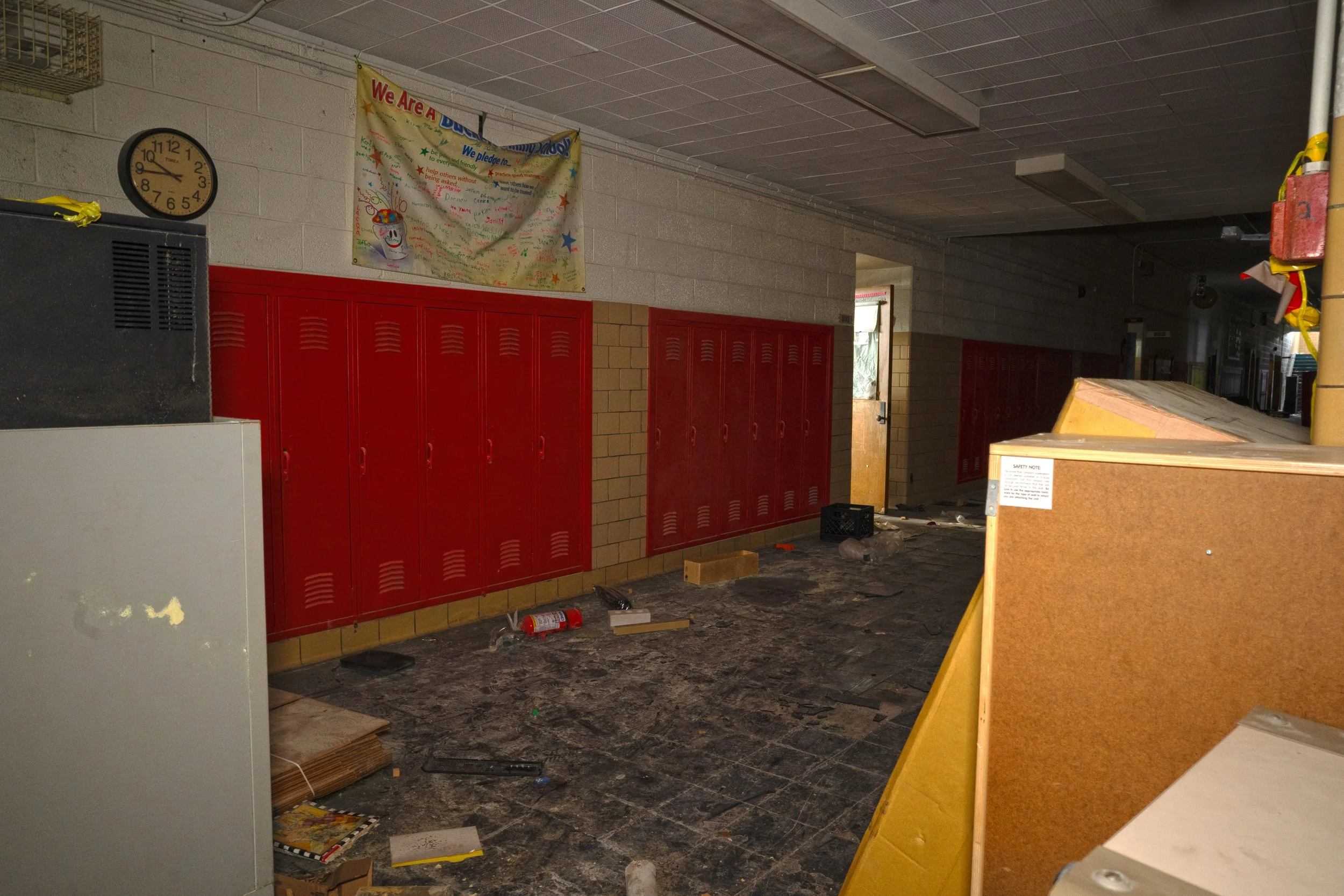
1st floor hallway shot 5
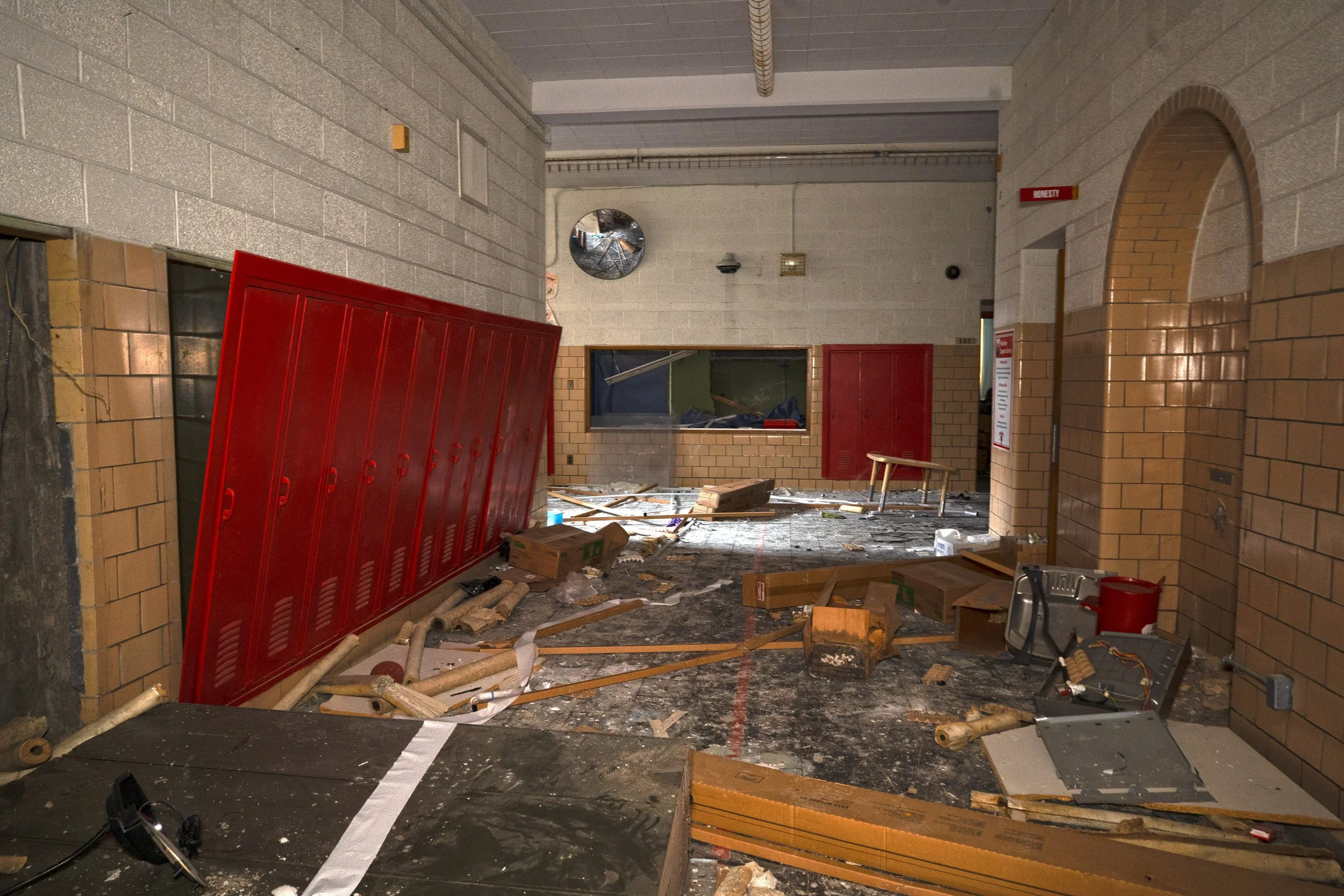
1st floor hallway shot 6
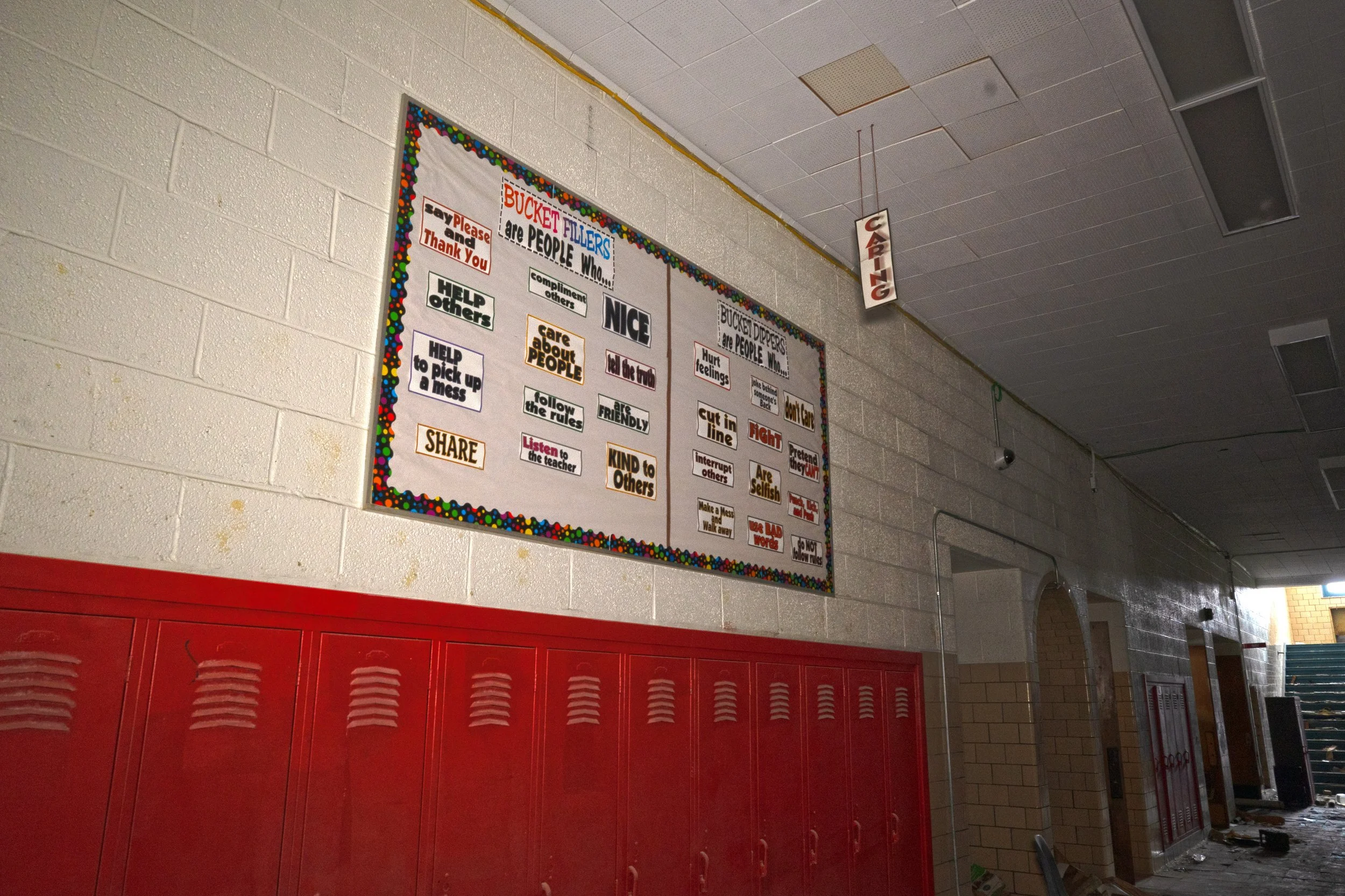
Display board in the 1st floor hallway
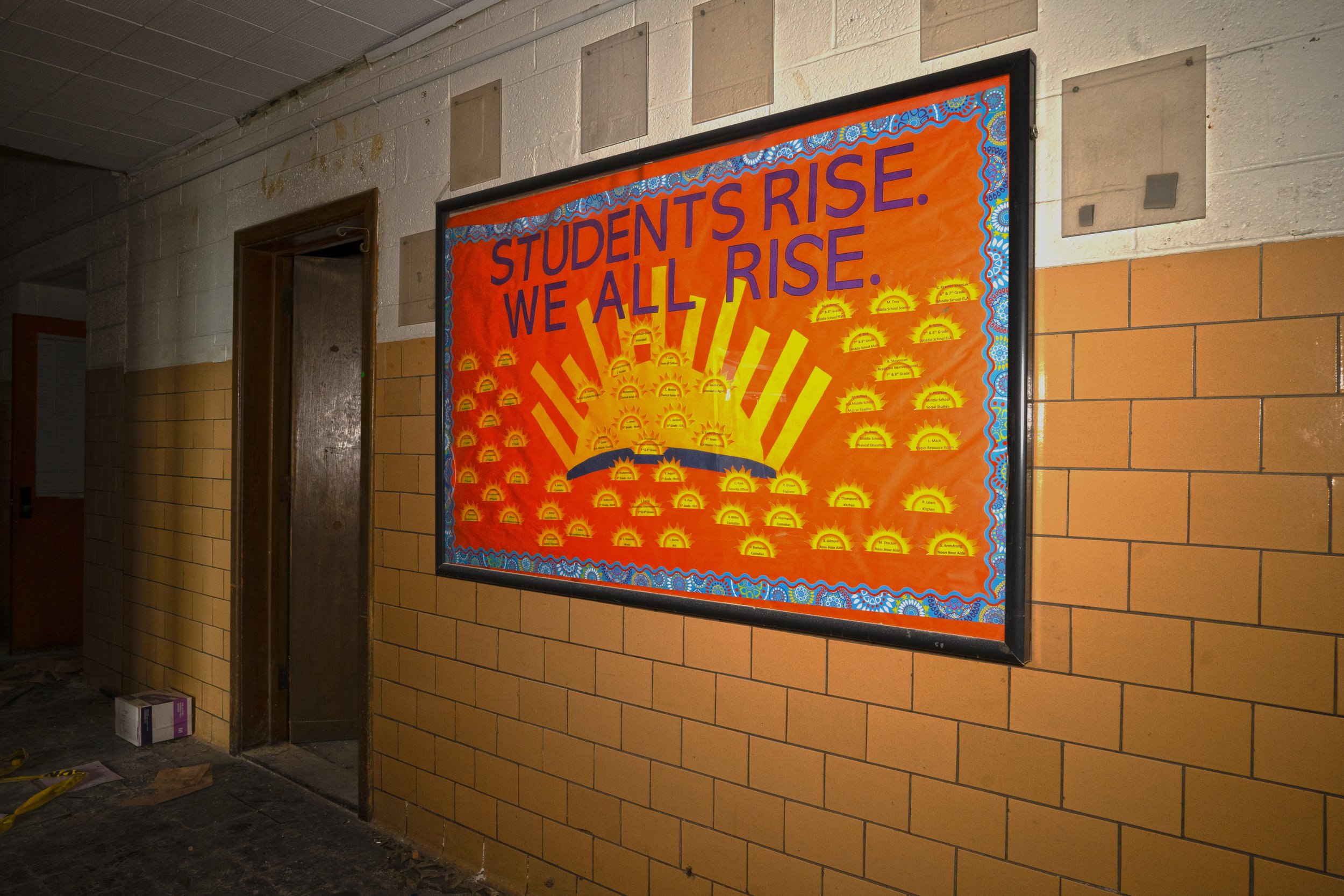
Another display case in the 1st floor hallway
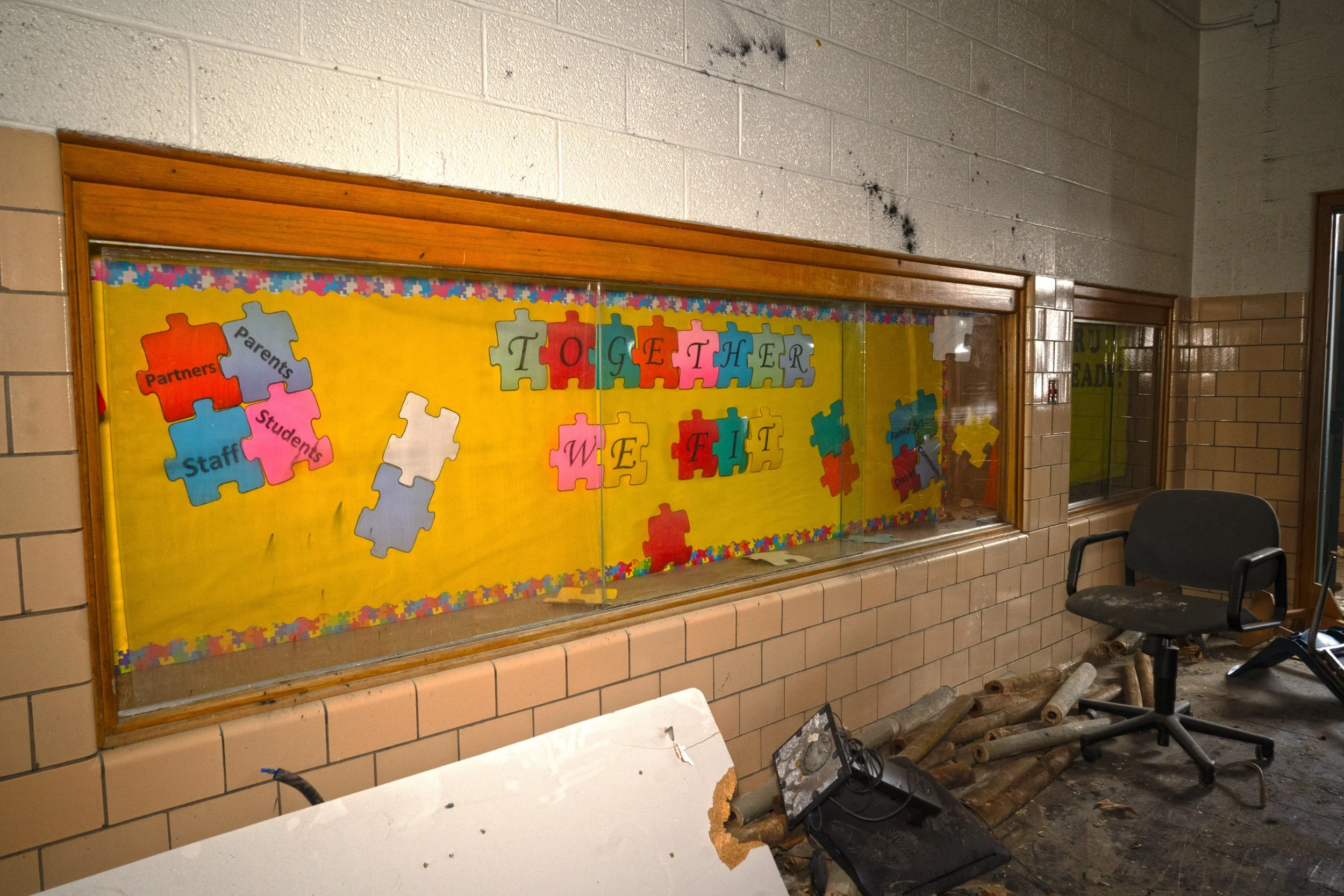
Another display case in the 1st floor hallway
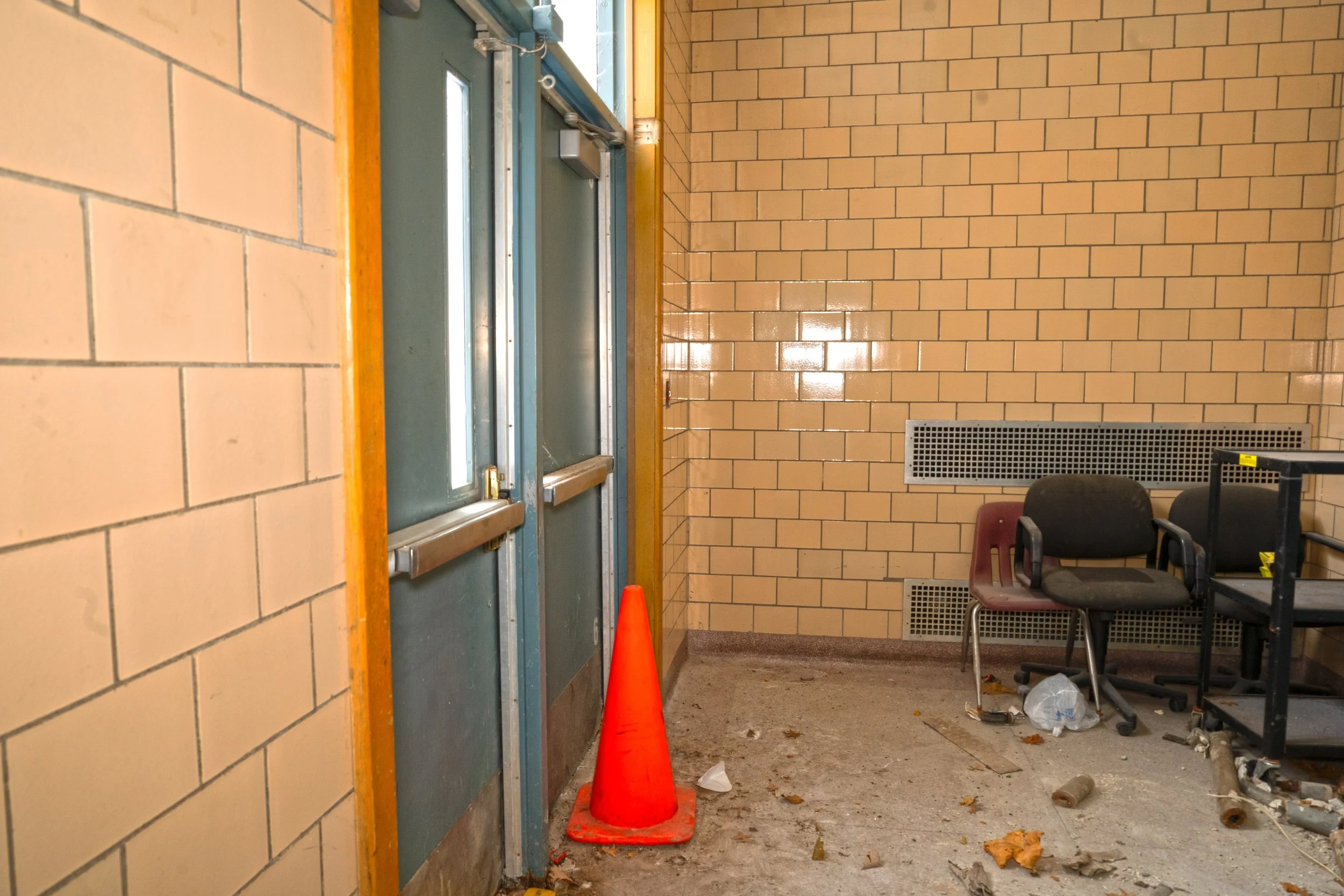
Outside entrance to auditorium
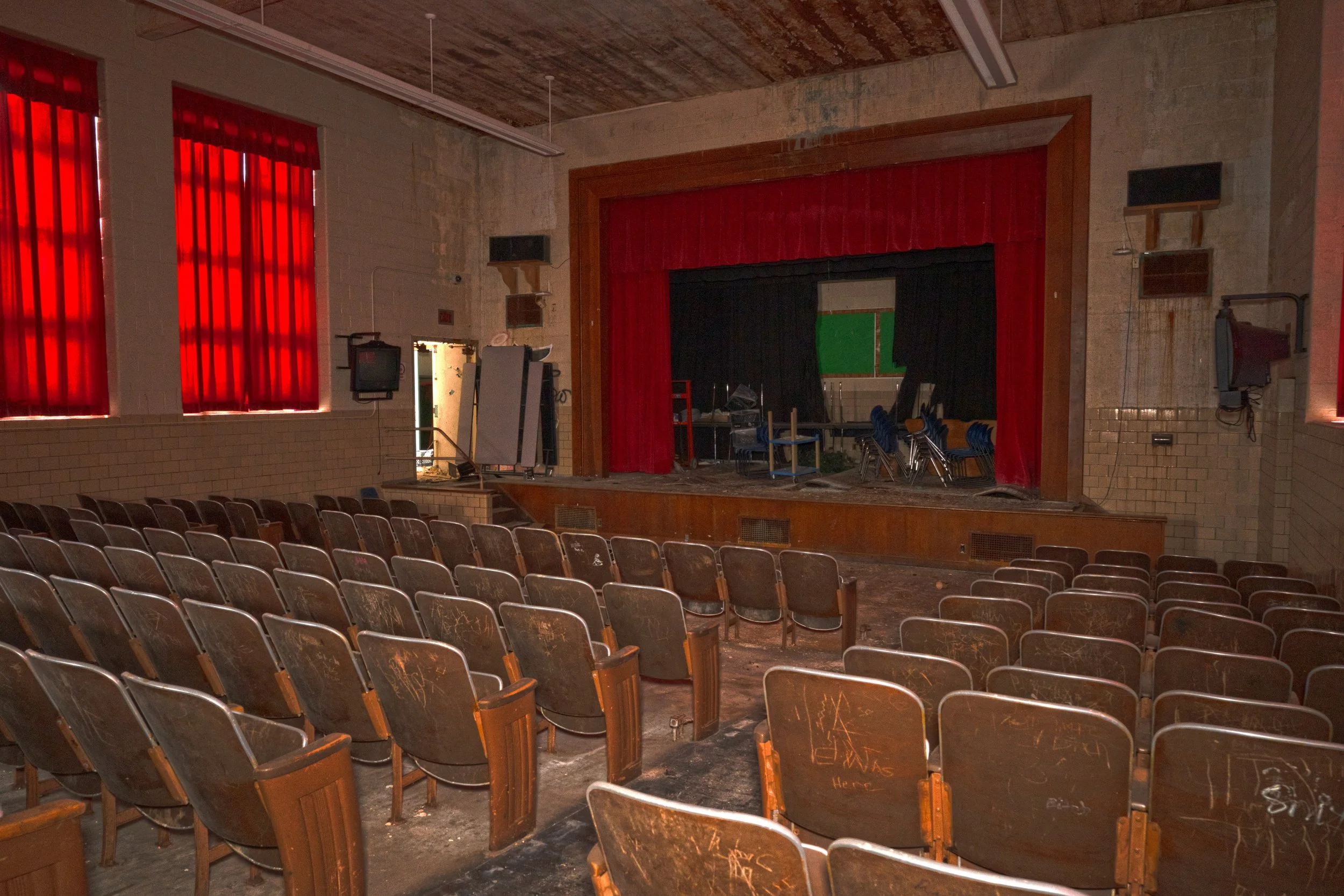
Auditorium shot 1
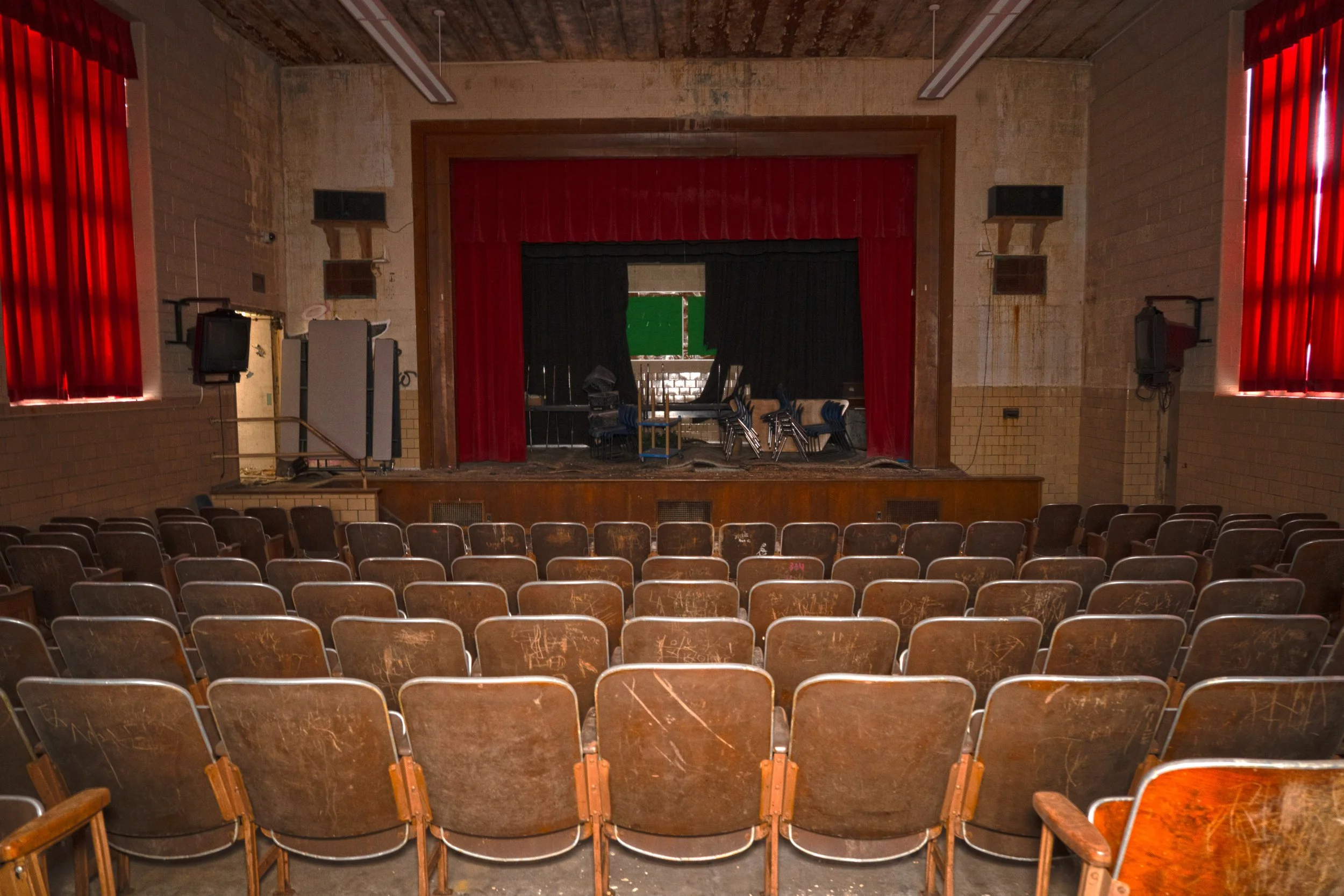
Auditorium shot 2
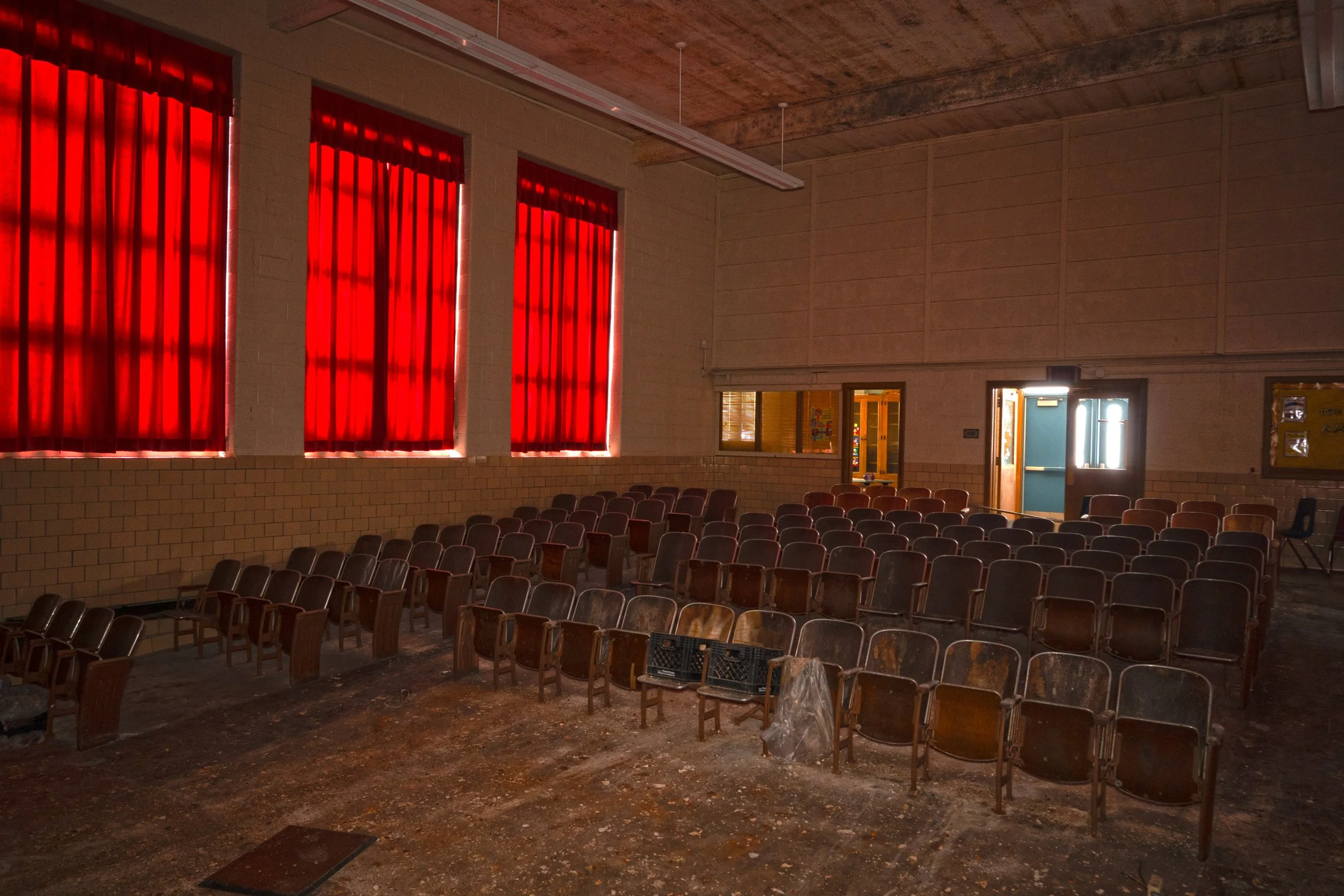
Auditorium shot 3
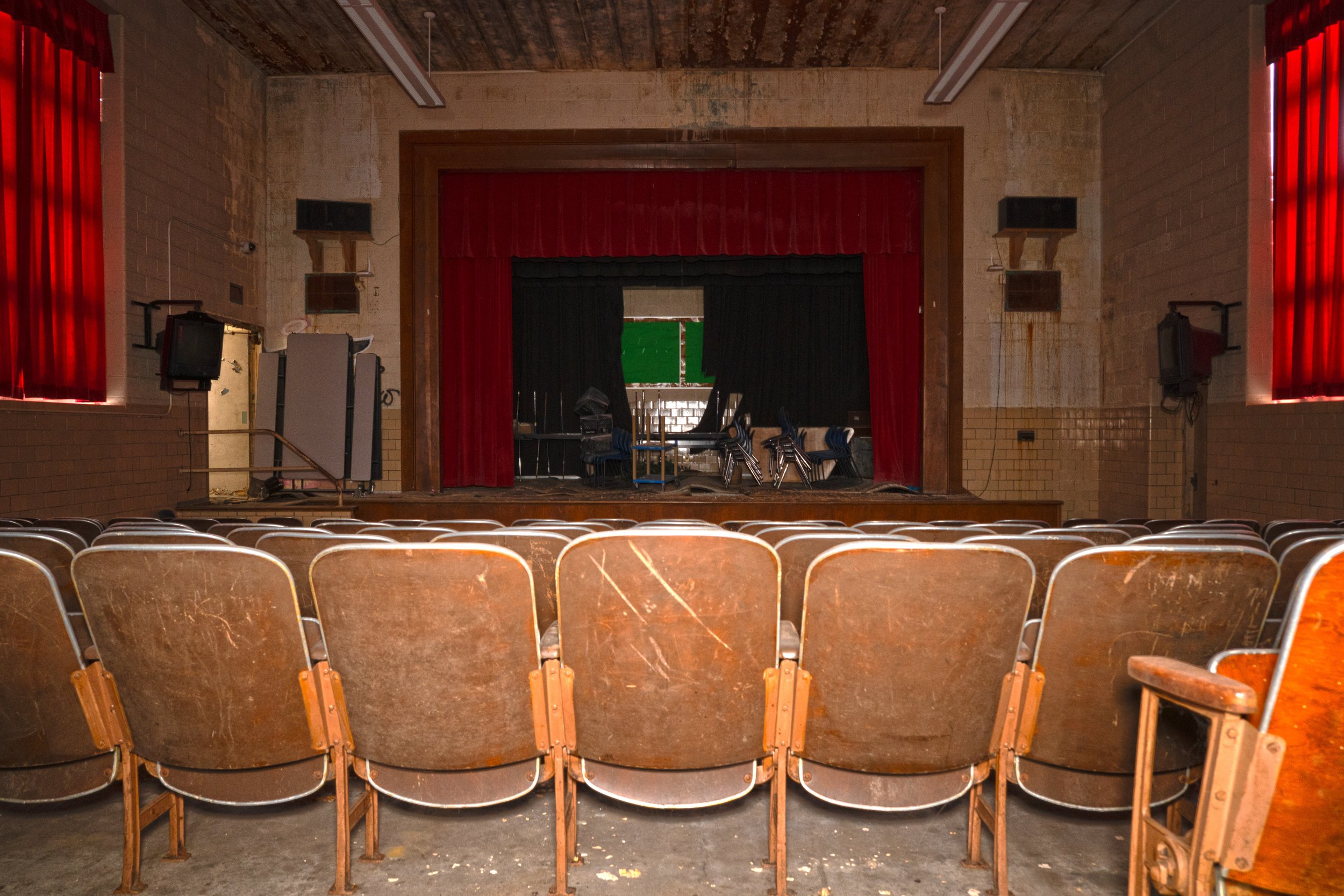
Auditorium shot 3
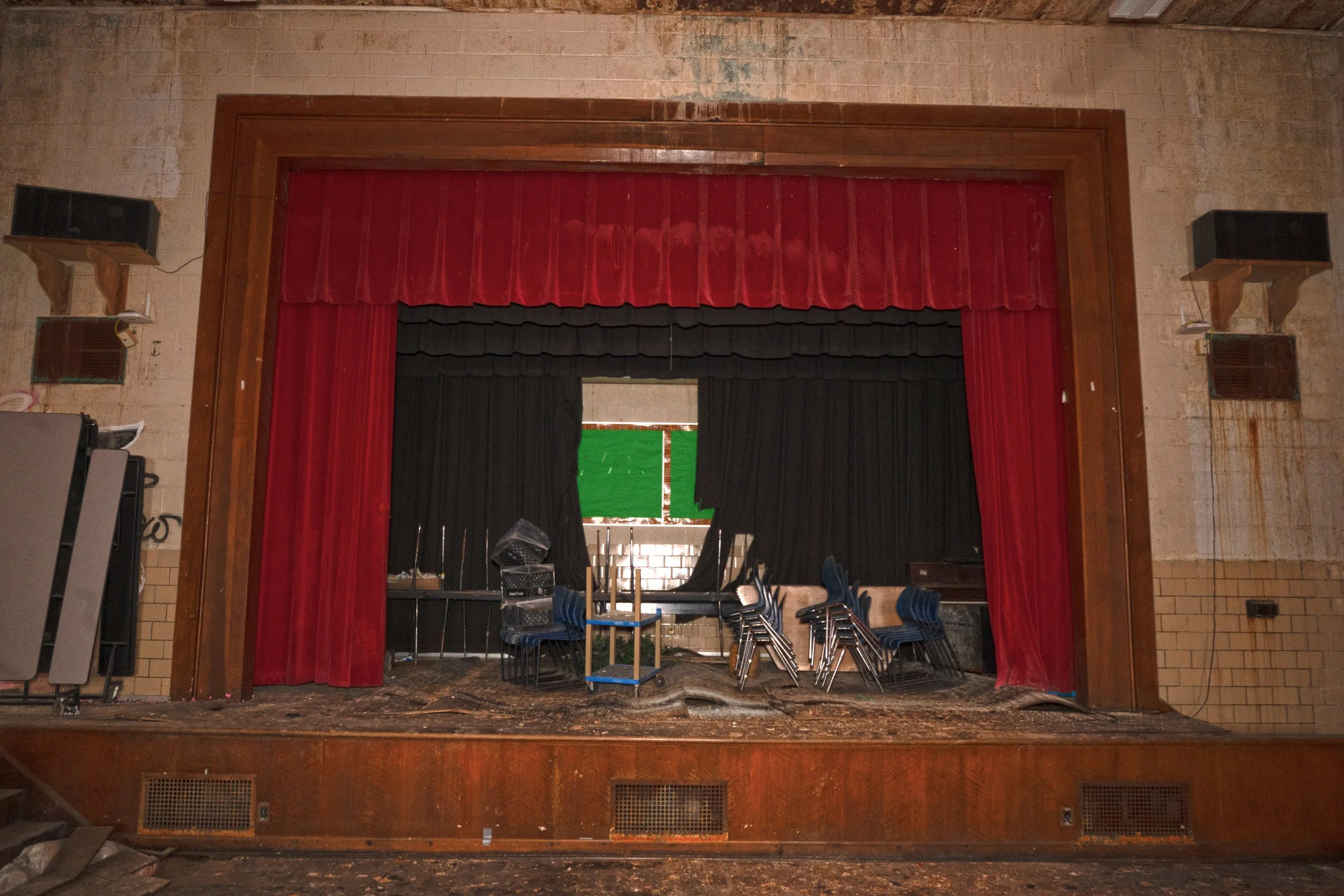
Auditorium shot 4
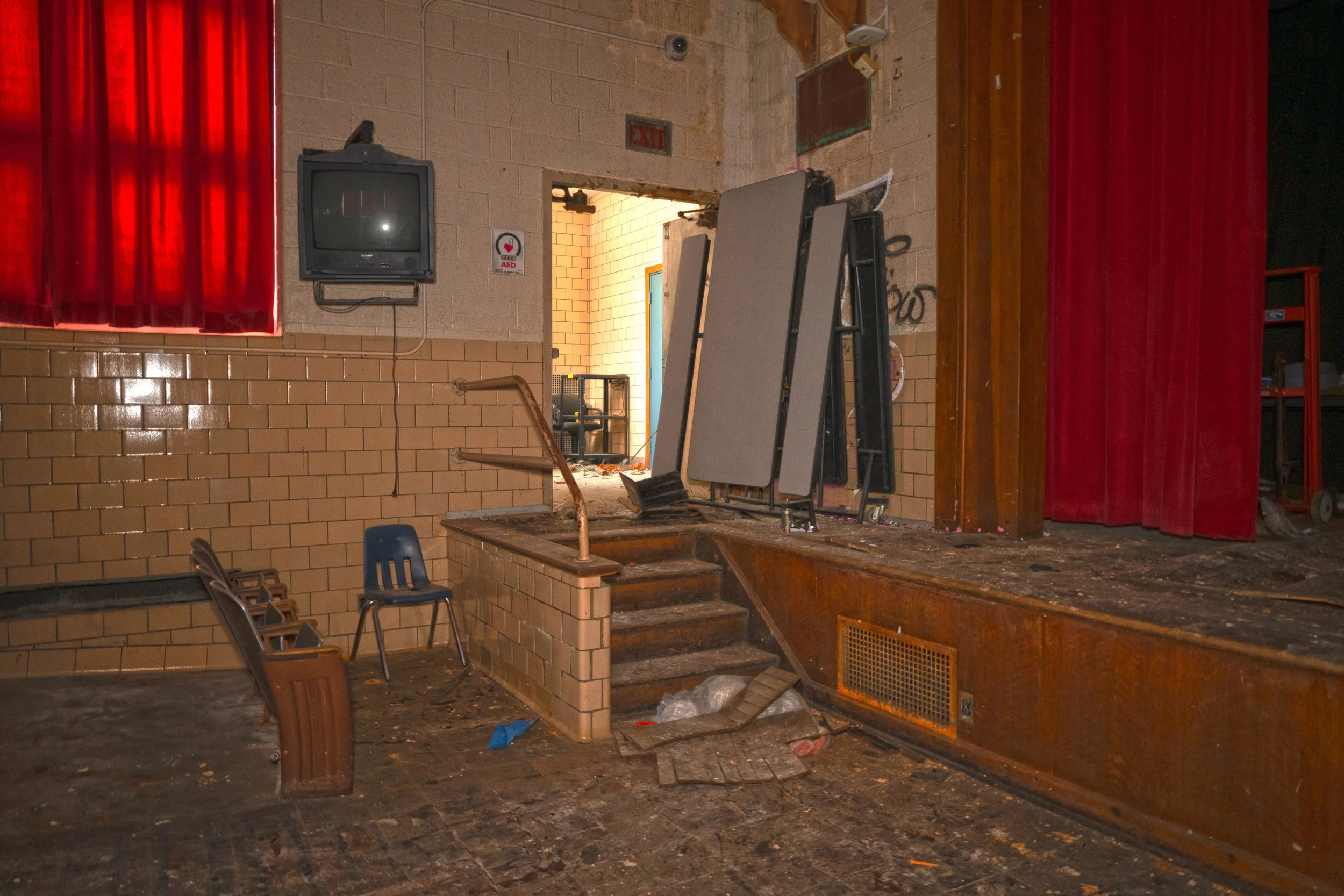
Auditorium shot 5
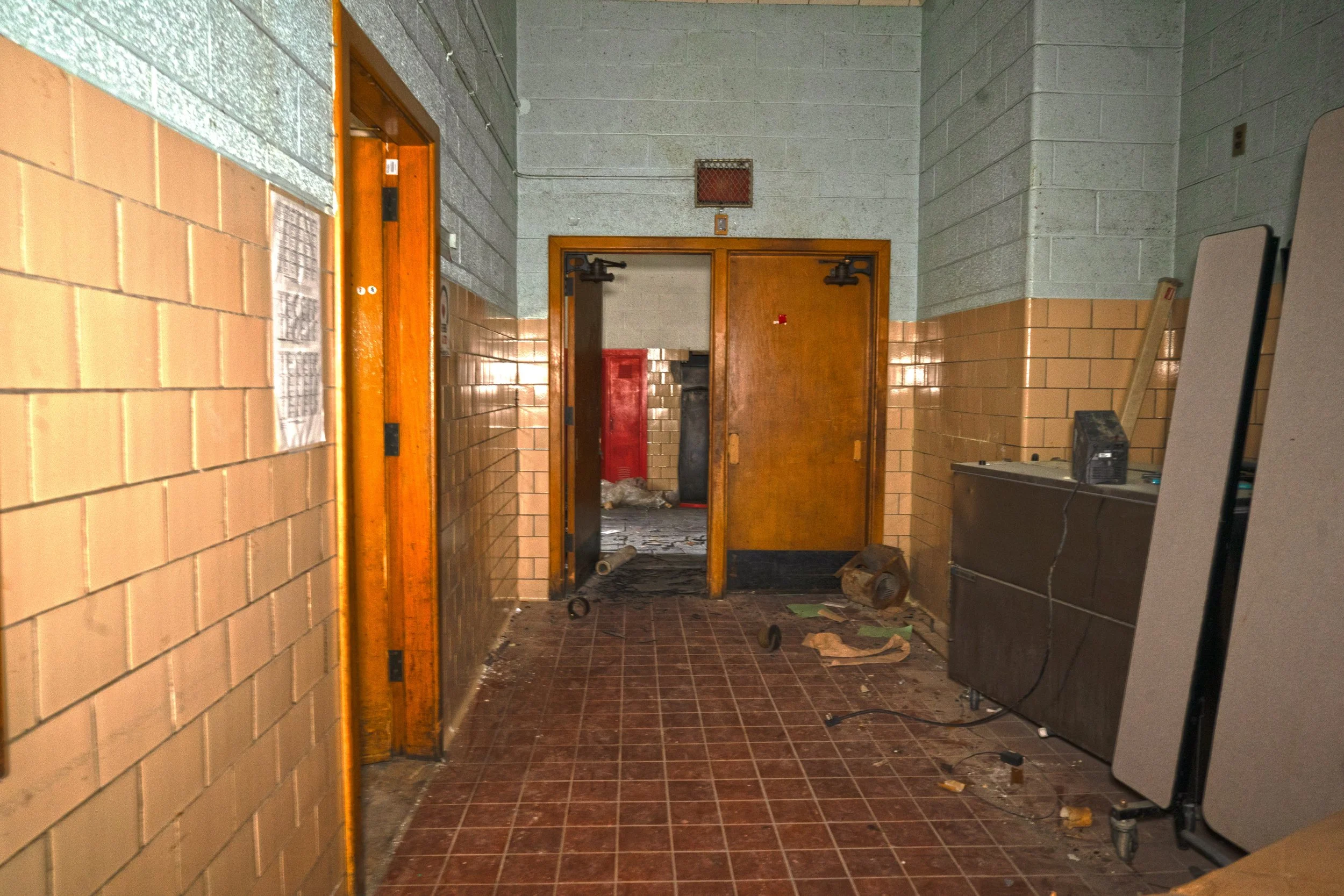
Entrance to Gymnasium
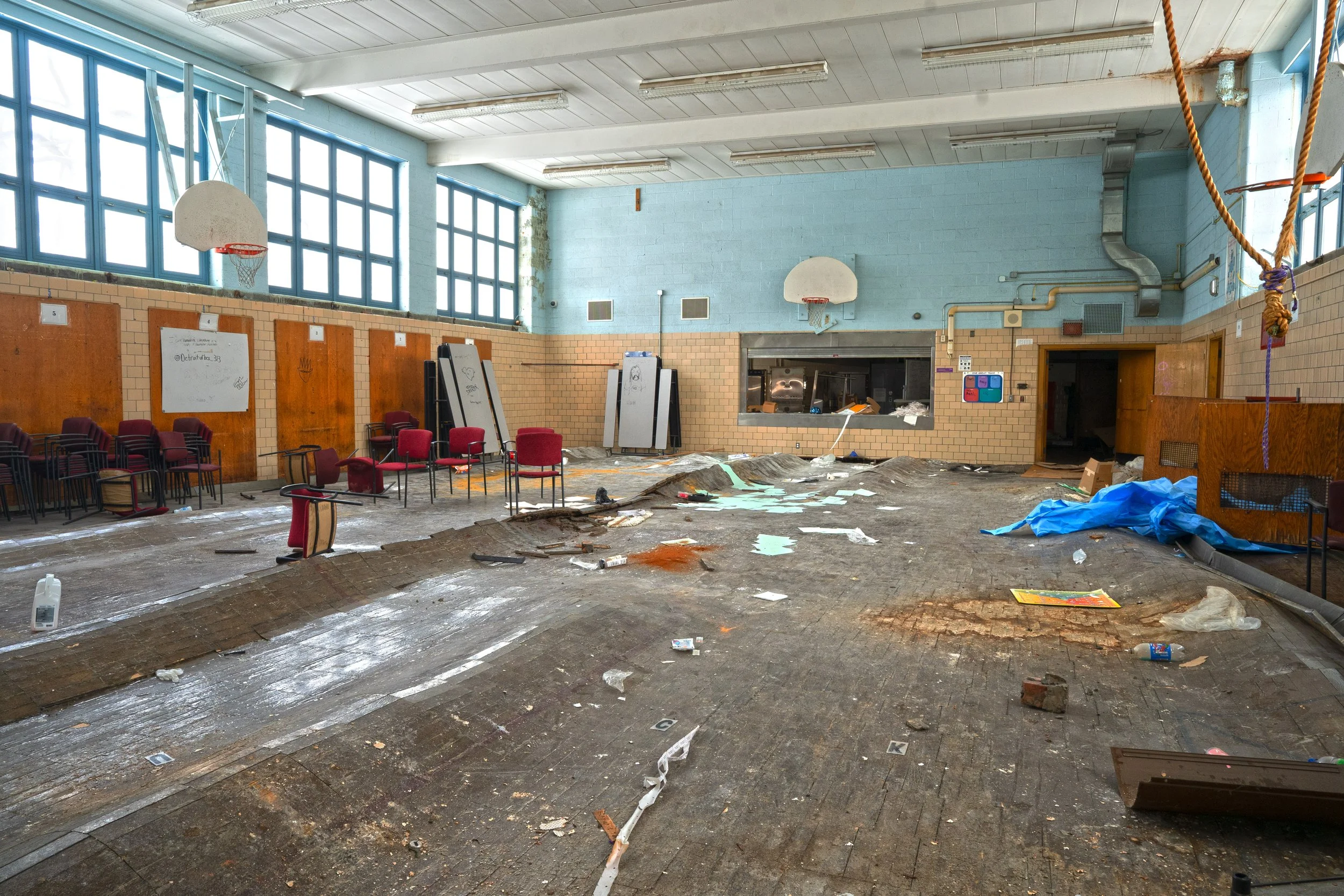
Gymnasium shot 1
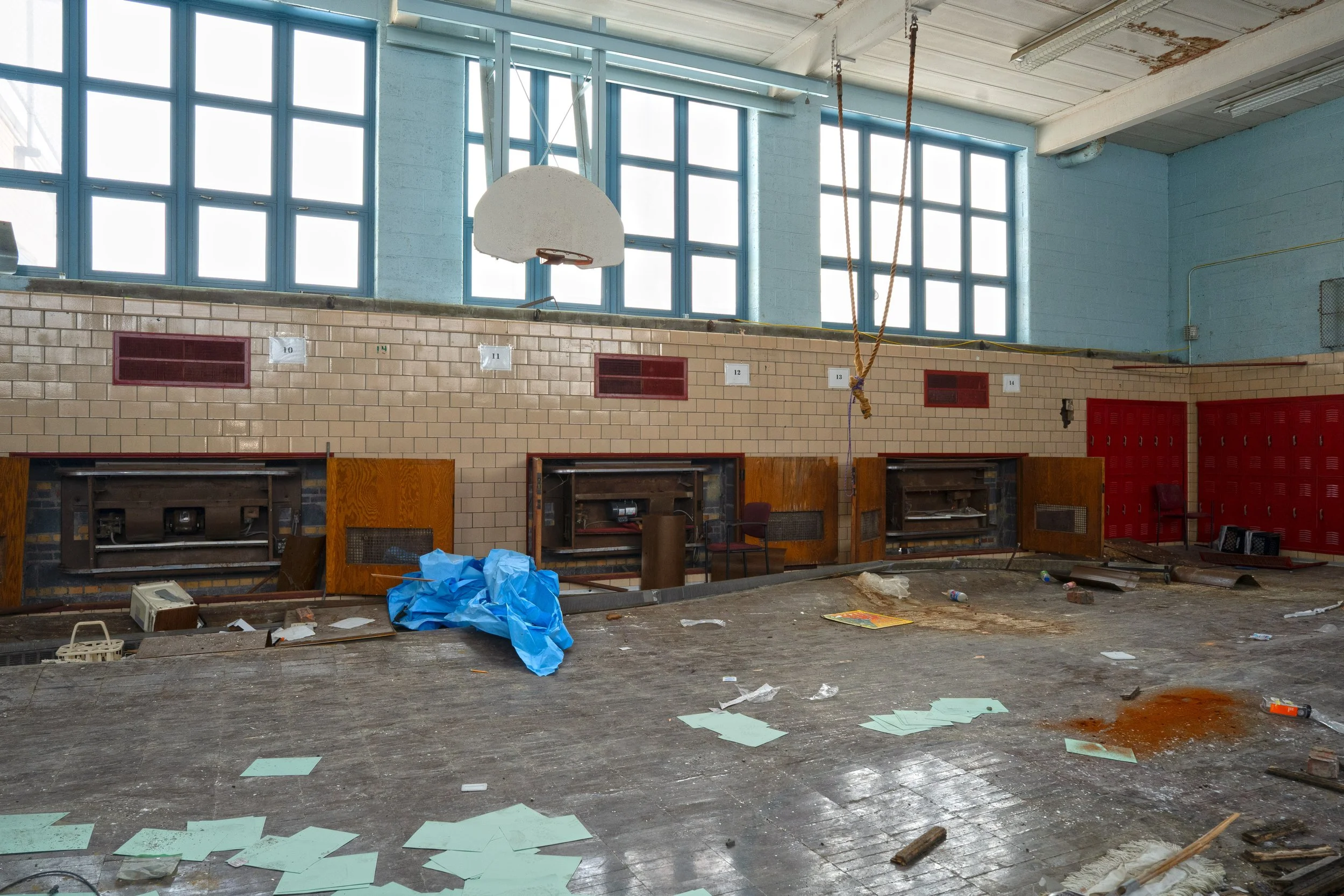
Gymnasium shot 2
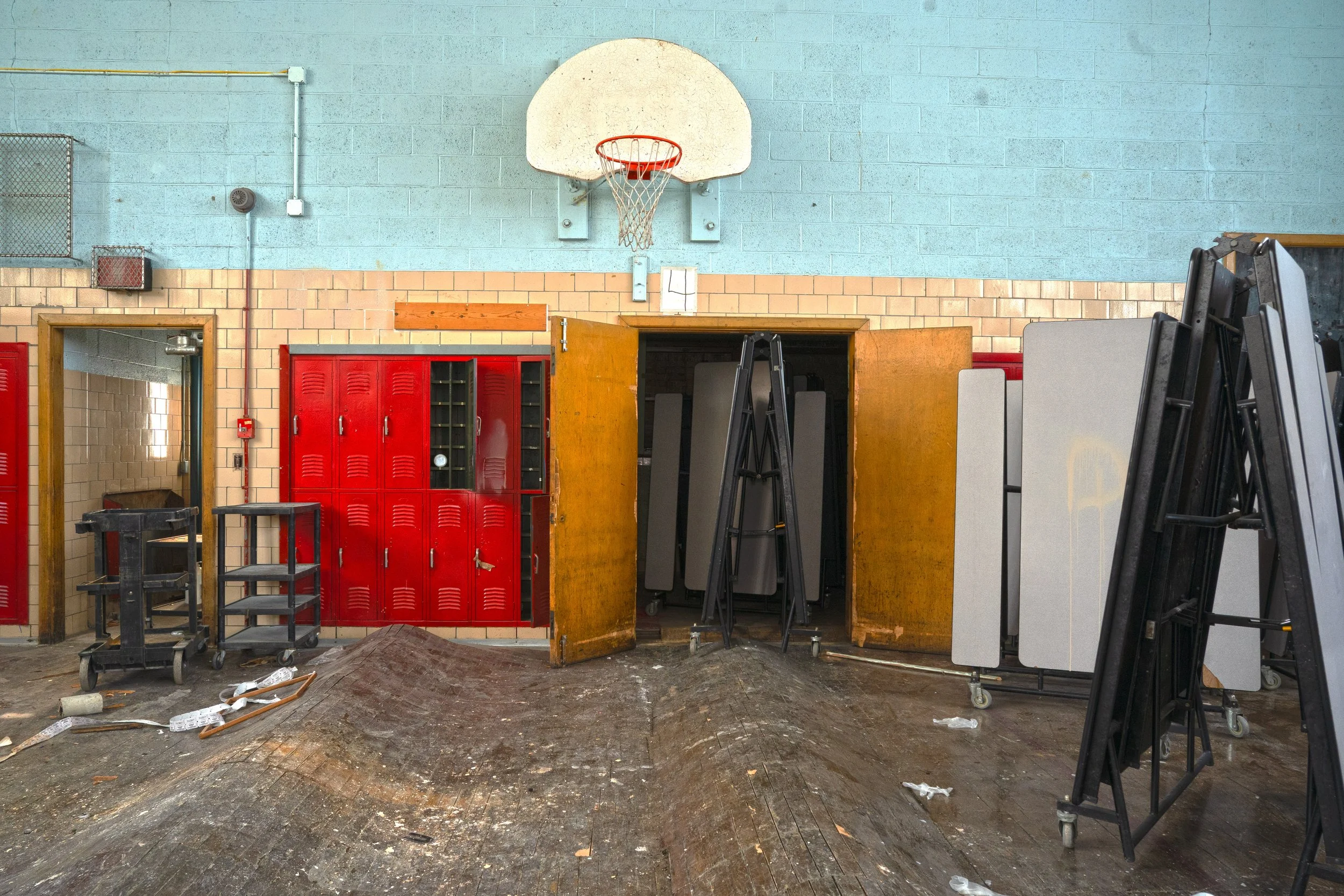
Gymnasium shot 3
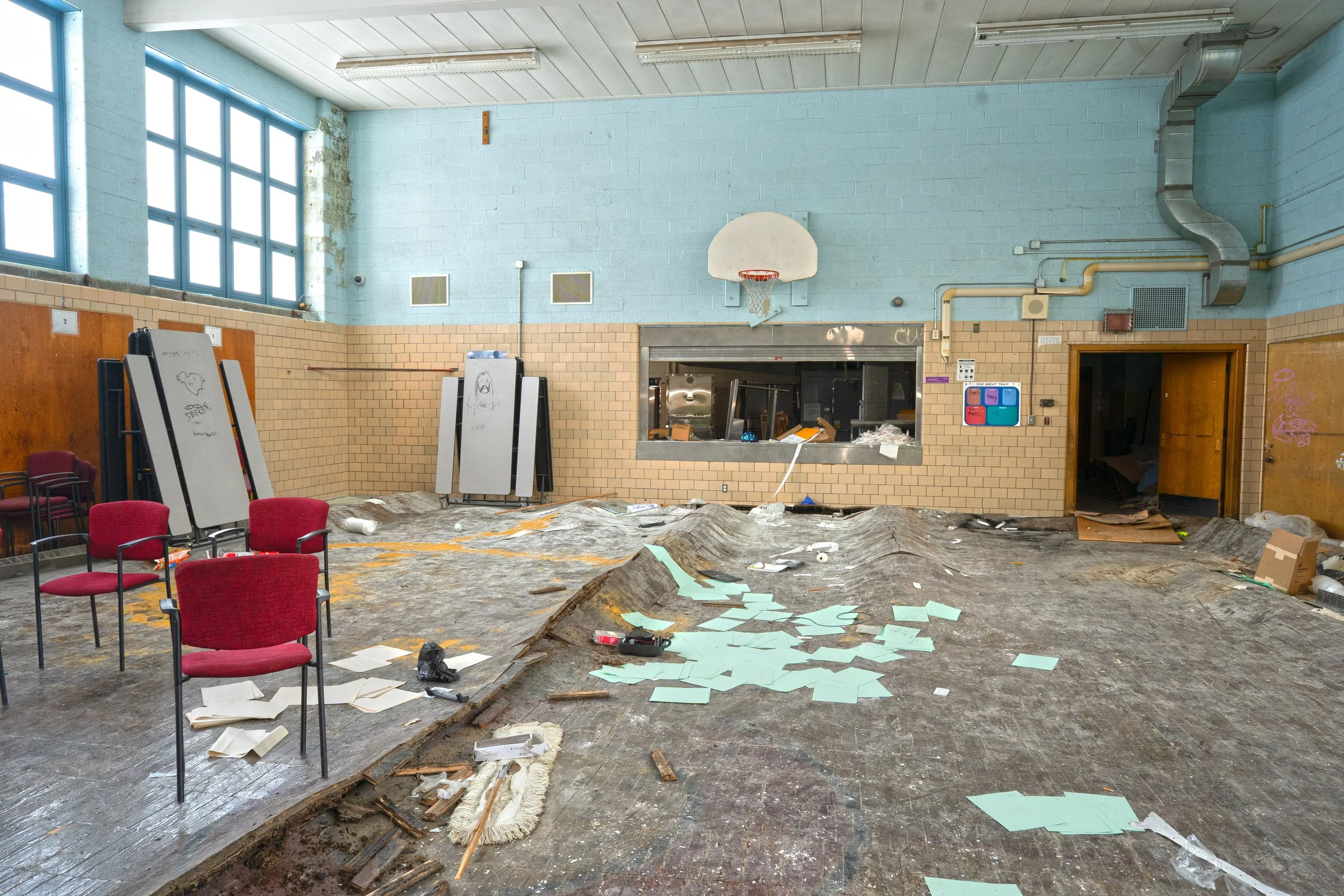
Gymnasium shot 4
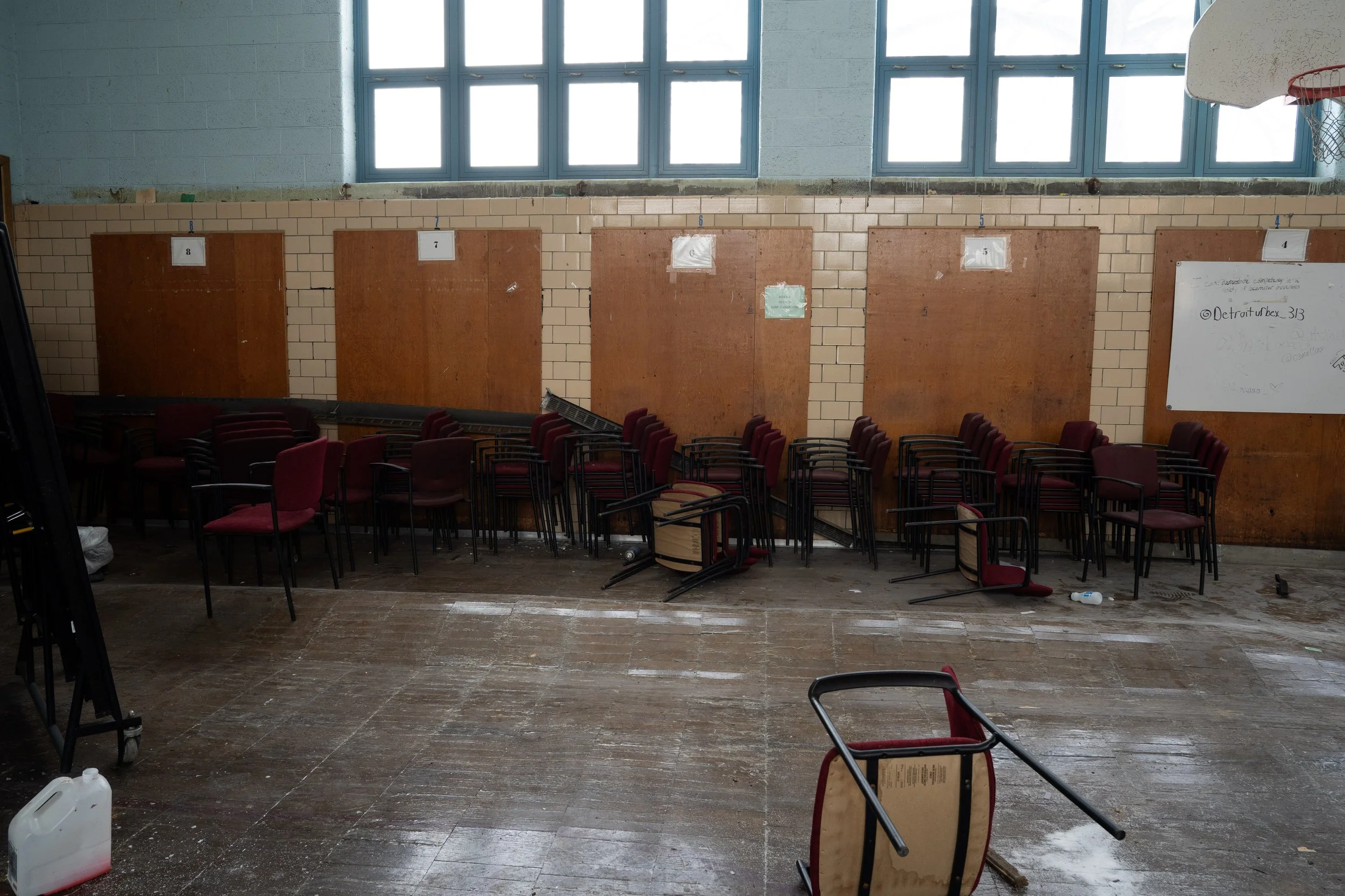
Gymnasium shot 5
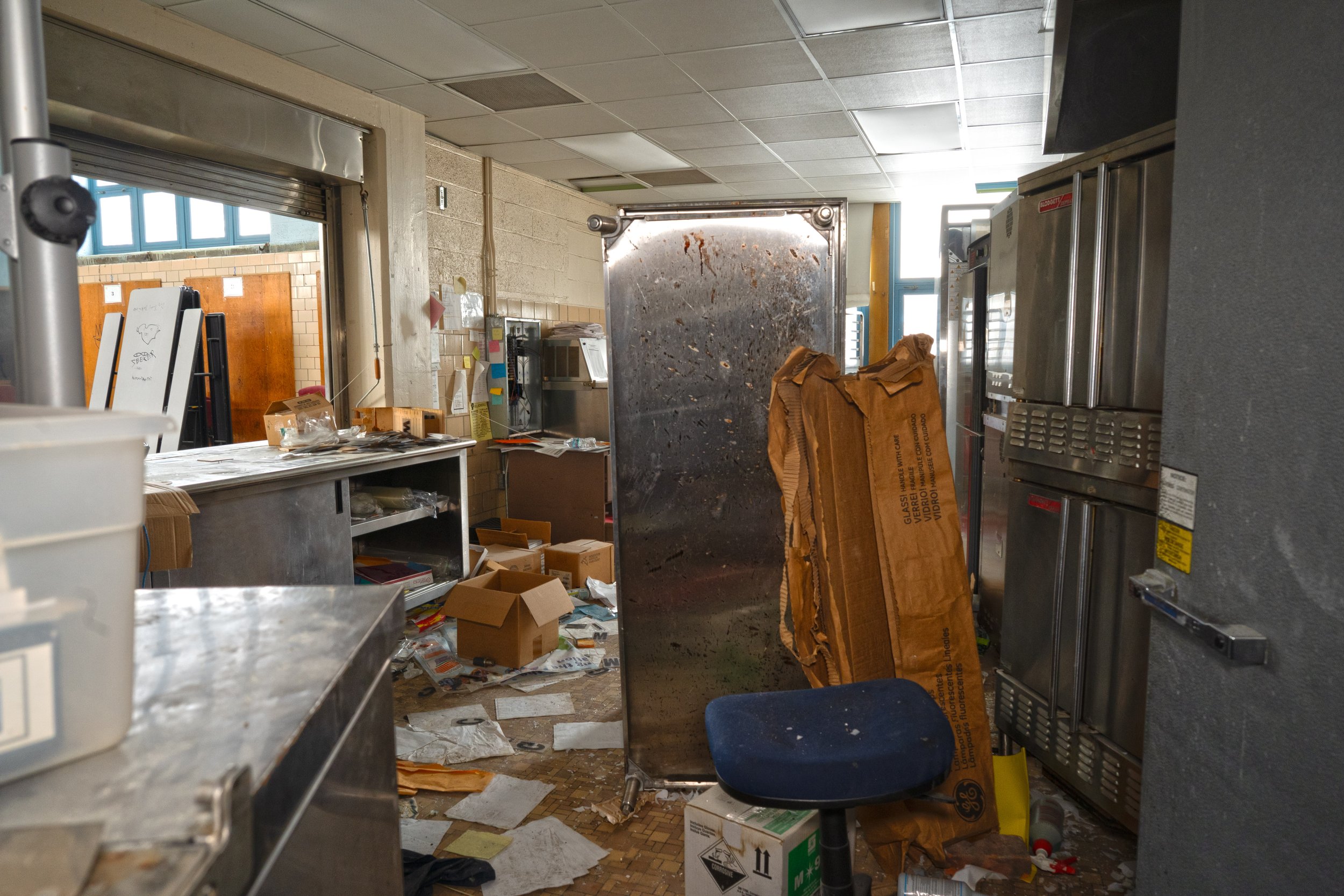
Kitchen located next to gymnasium
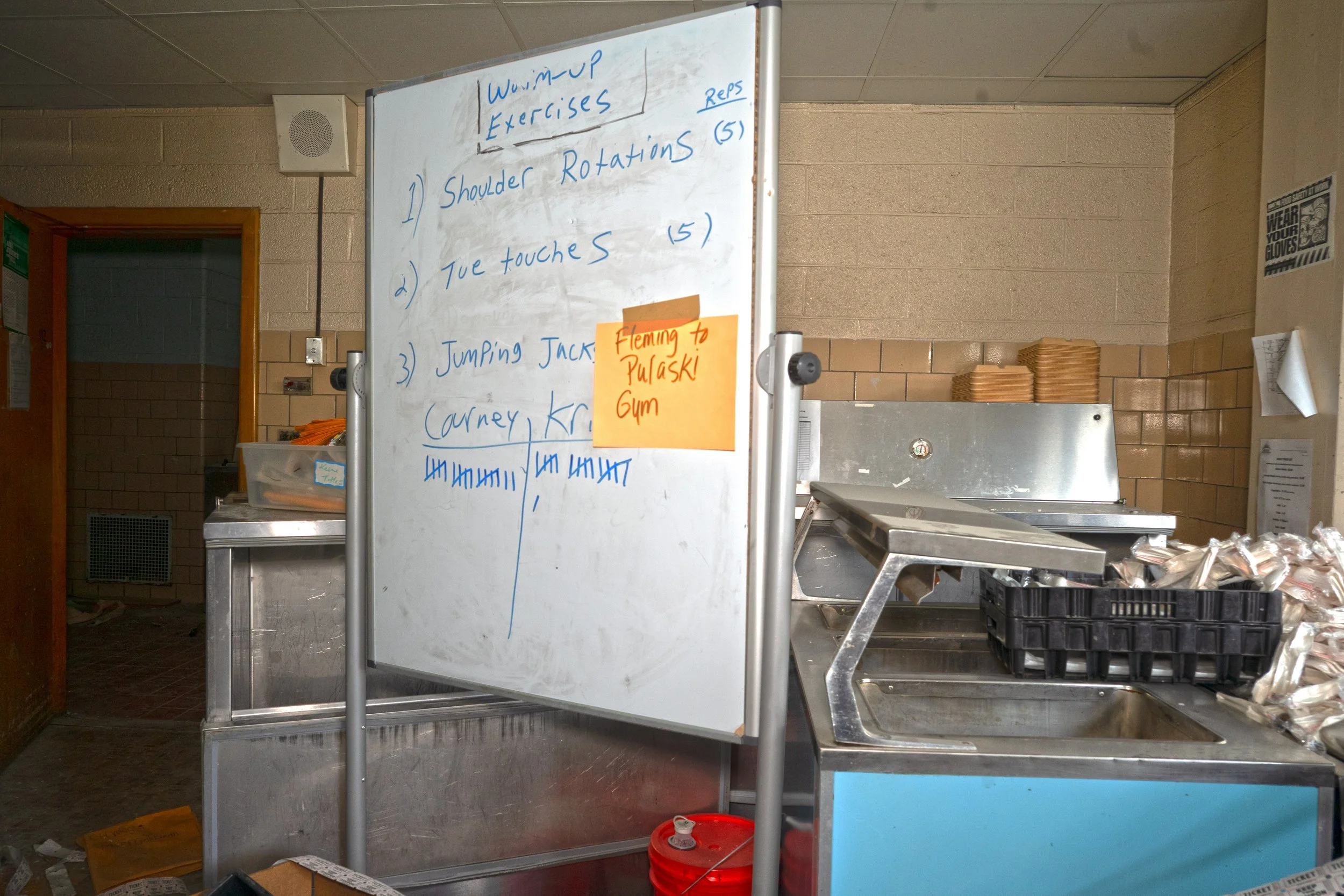
Gymnasium workout board in kitchen
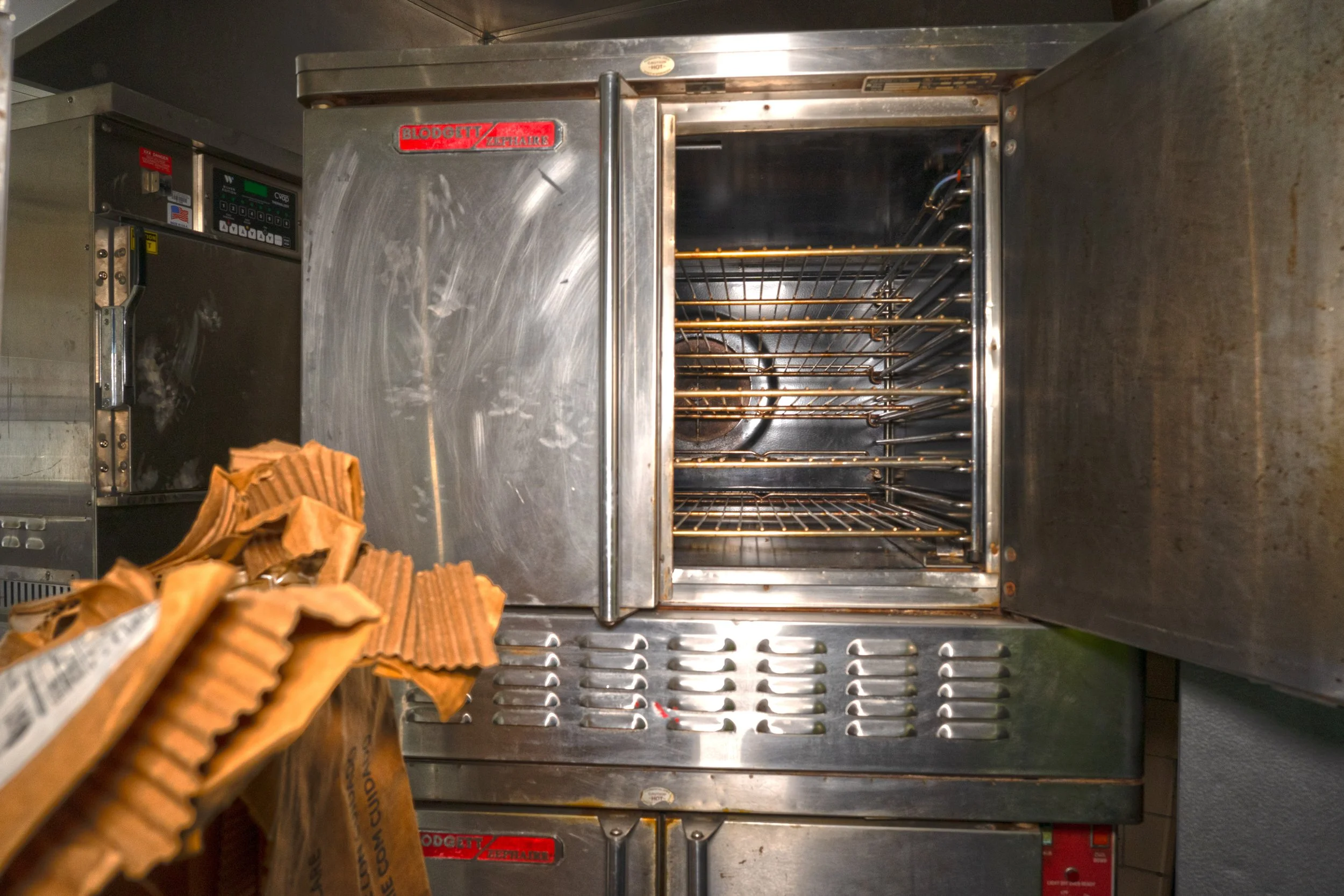
Appliance in the kitchen
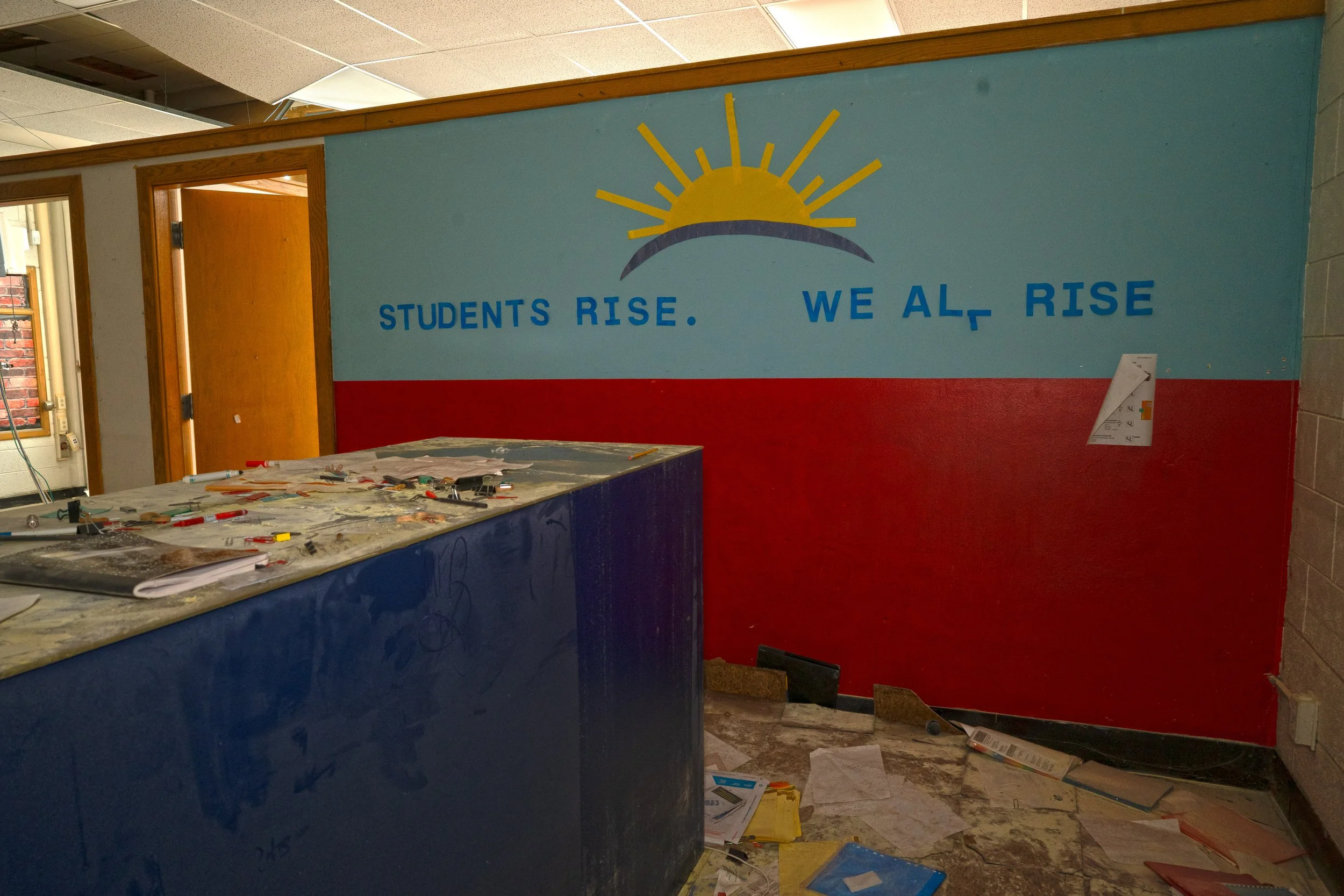
Mural in the office space
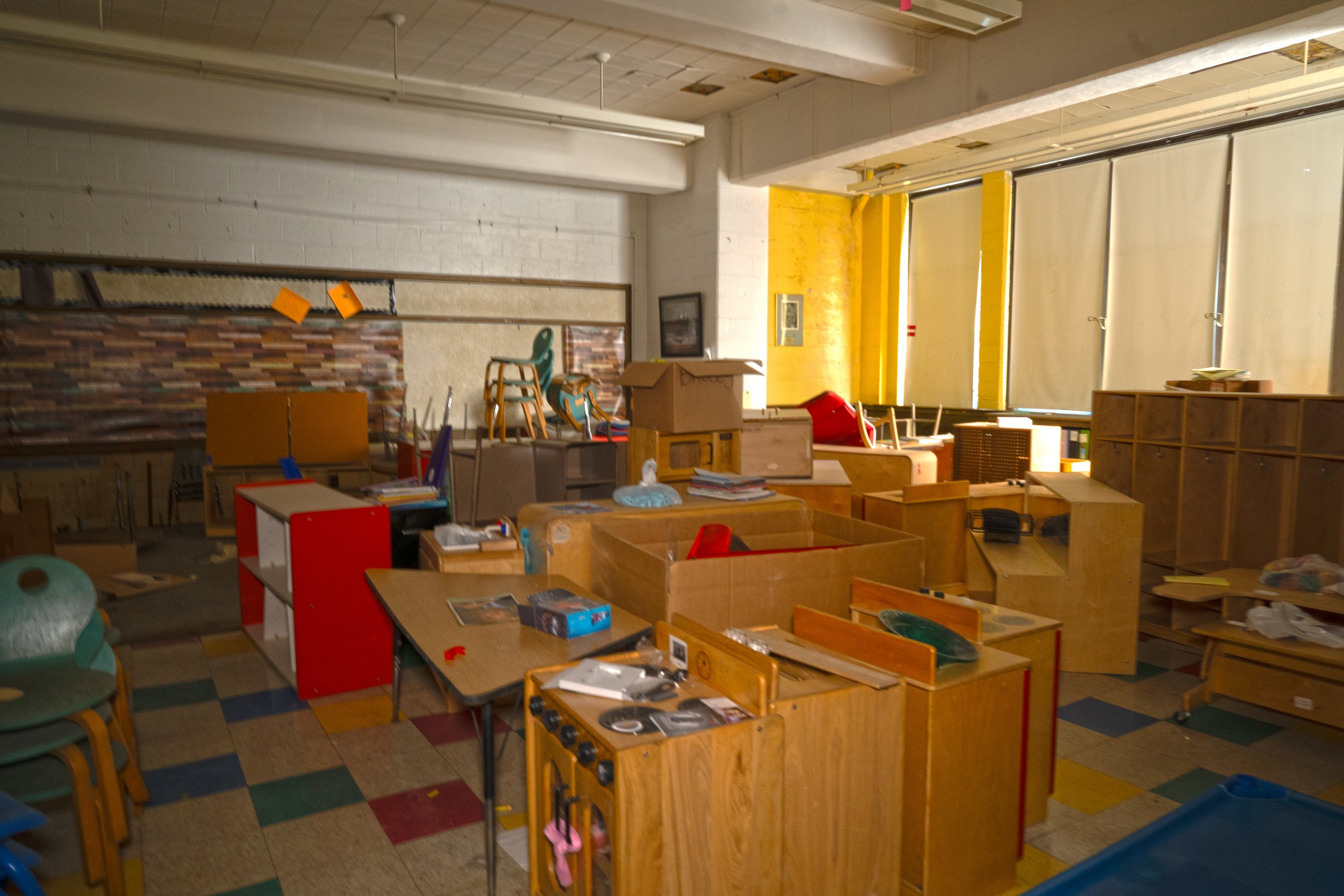
Kindergarten room shot 1
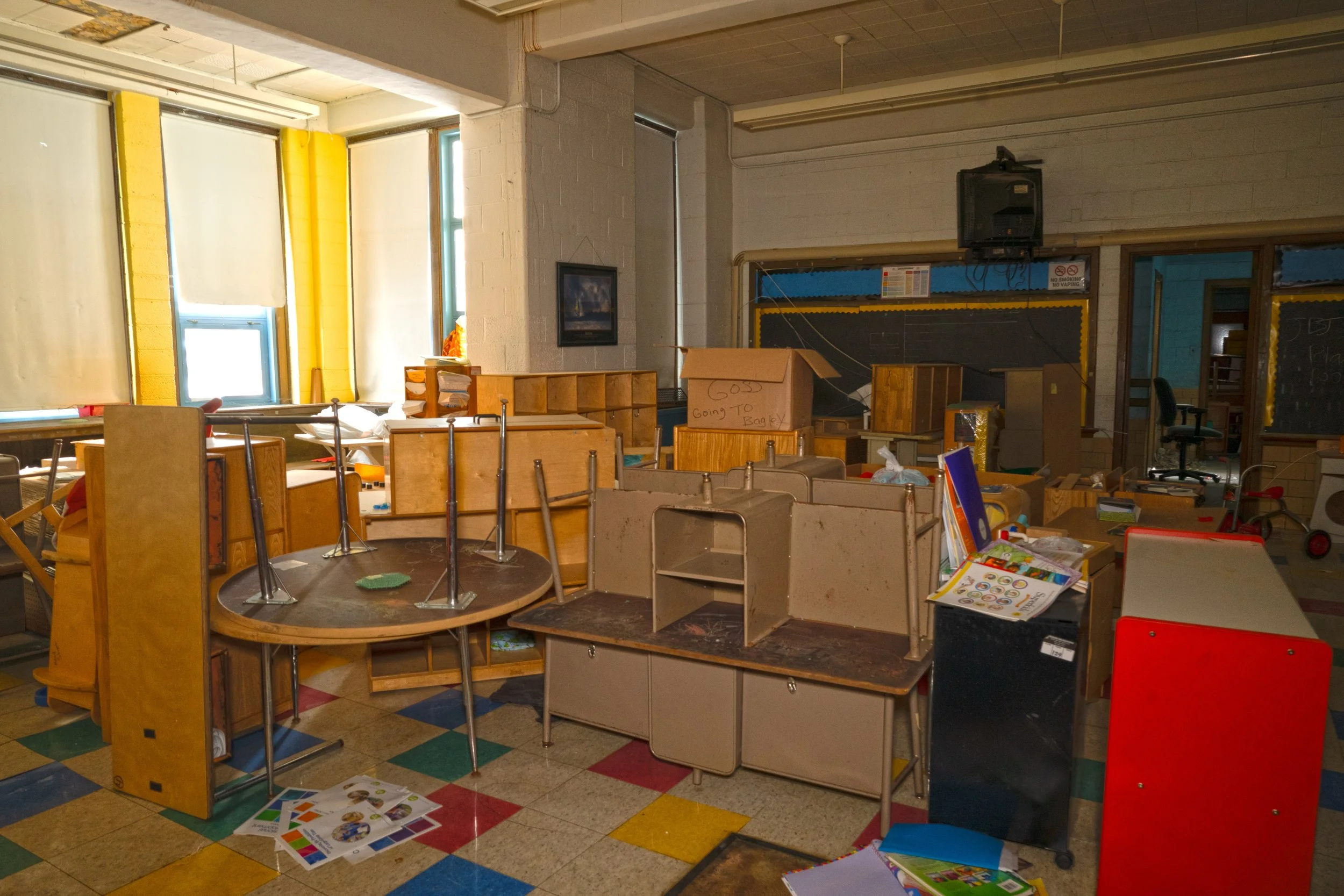
Kindergarten room shot 2
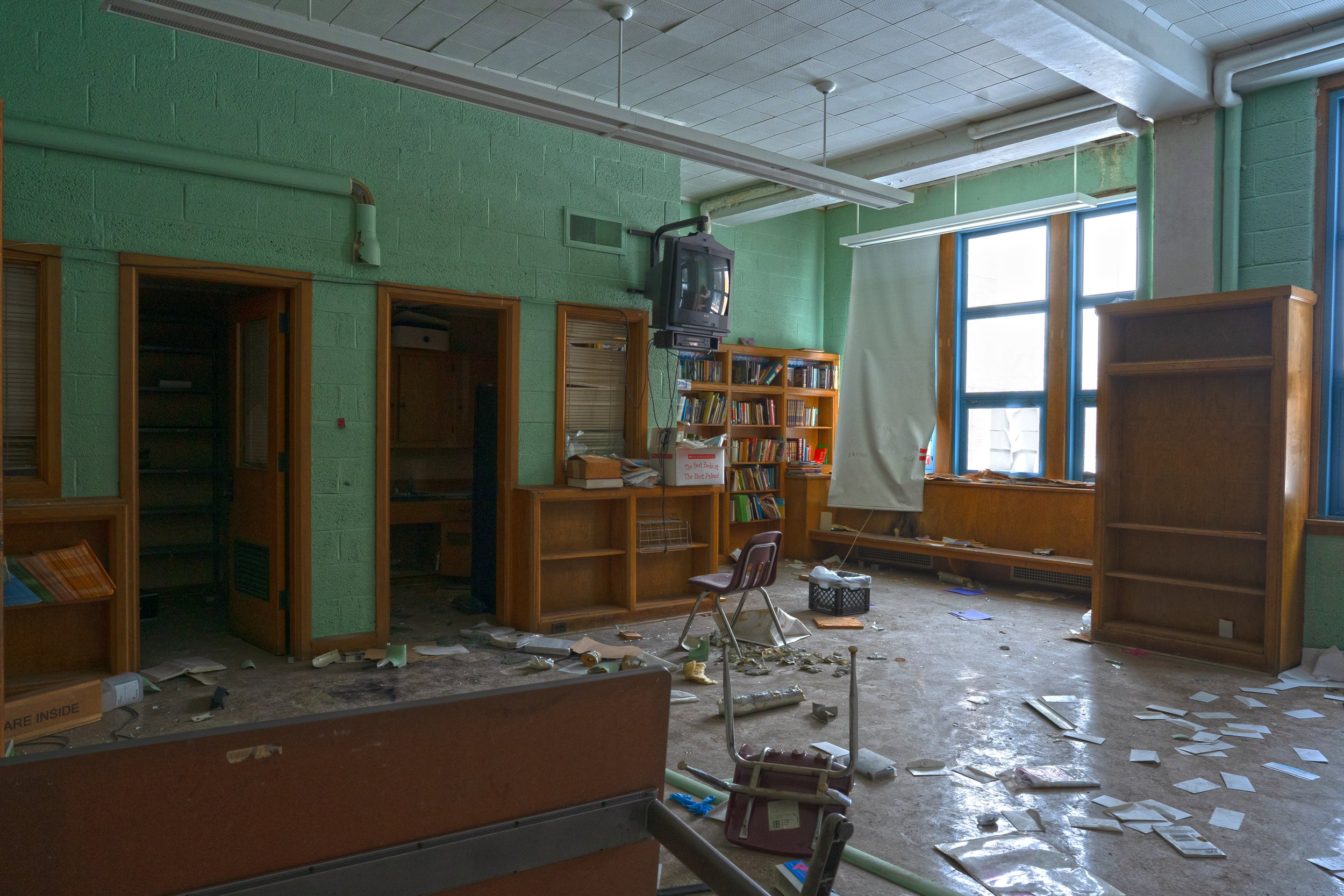
Library shot 1
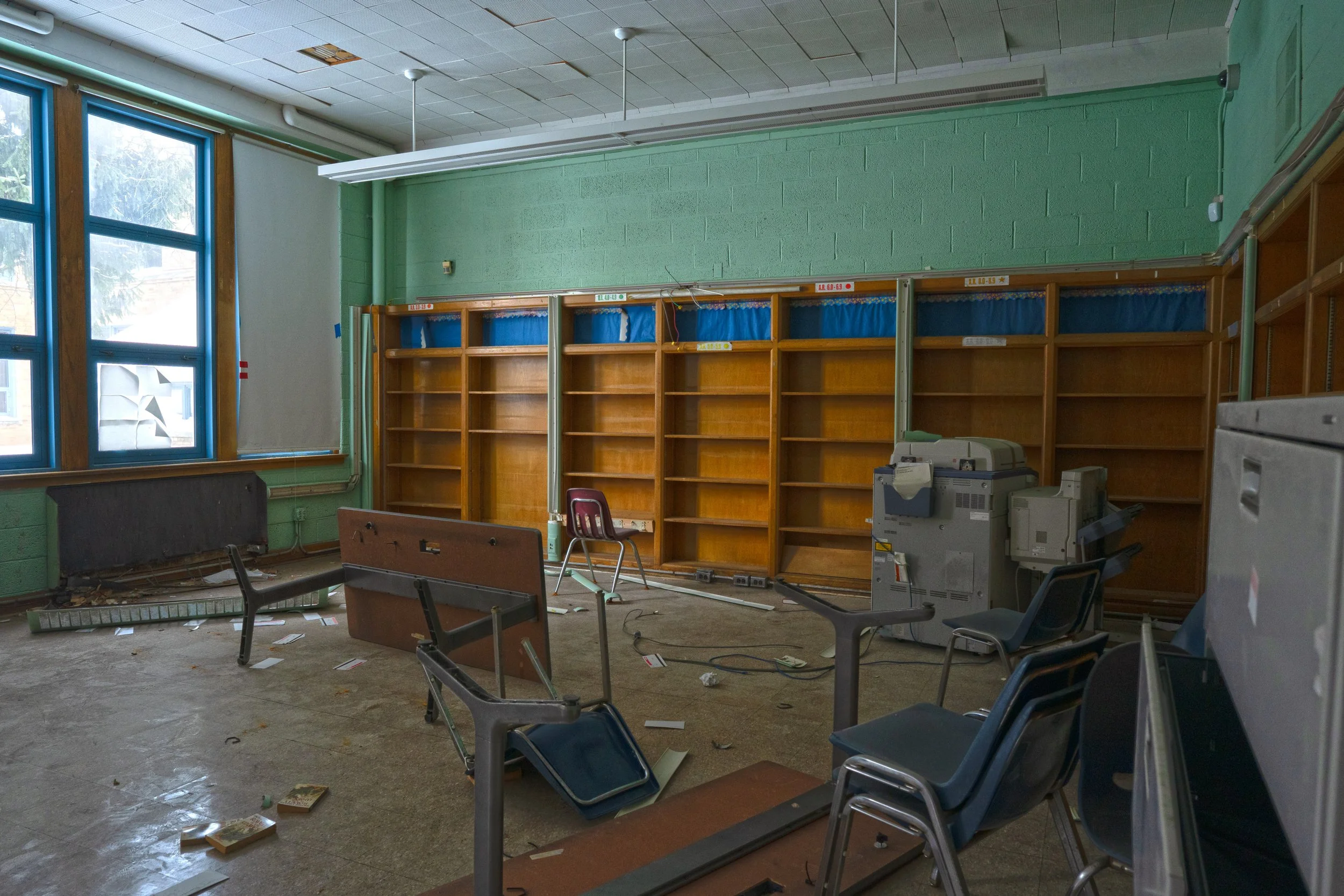
Library shot 2
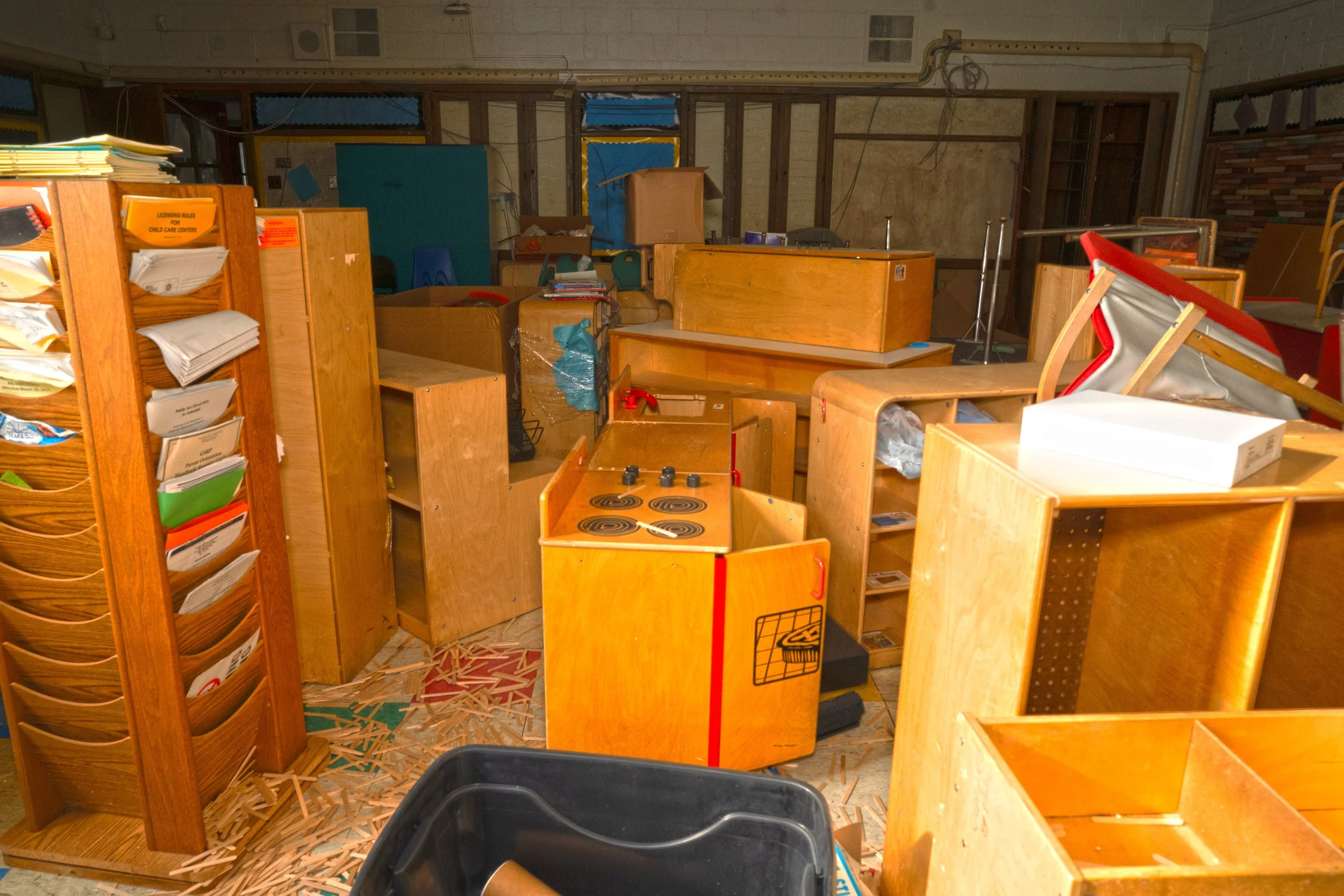
Kindergarten room shot 3
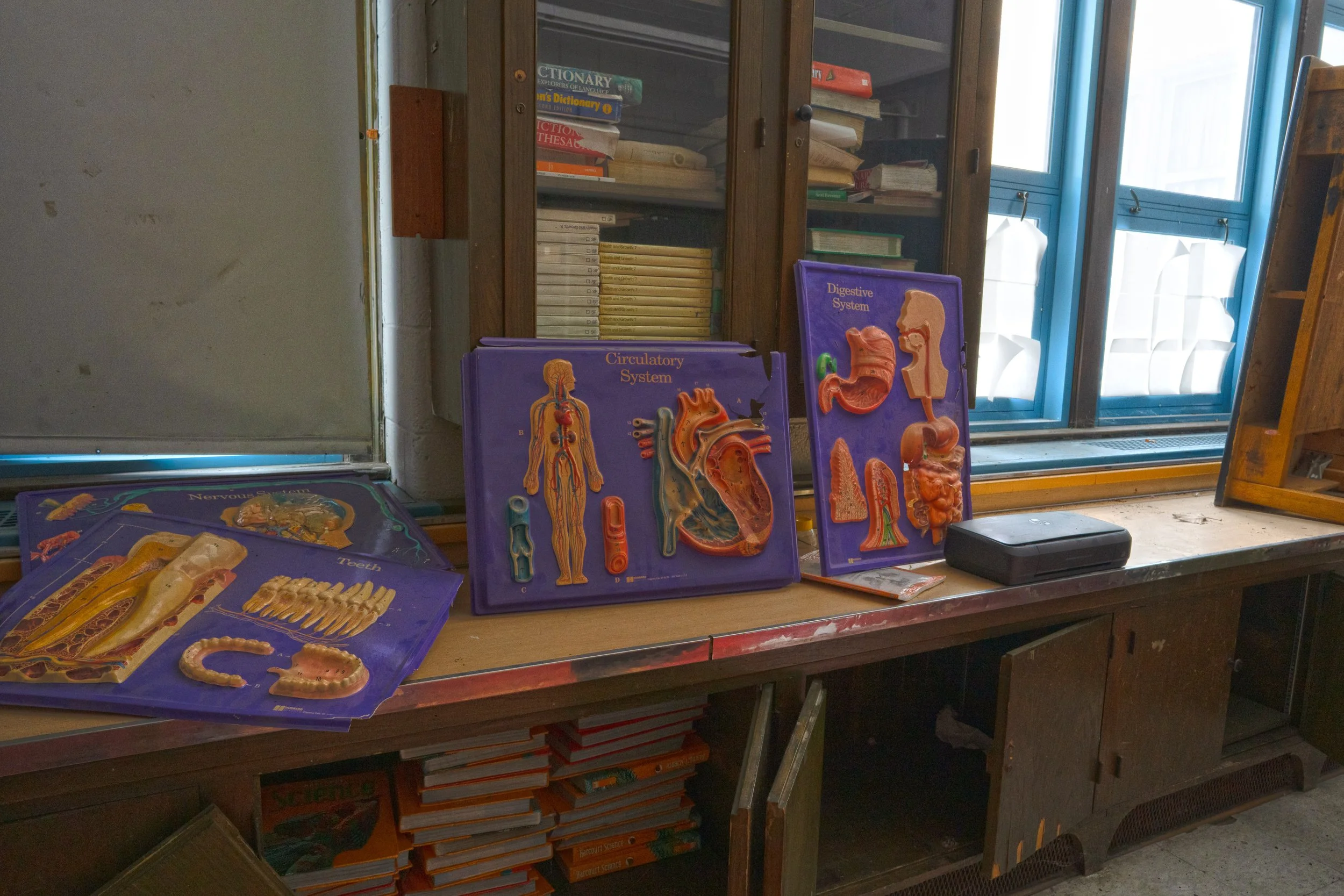
Human body diagrams in a 1st floor classroom
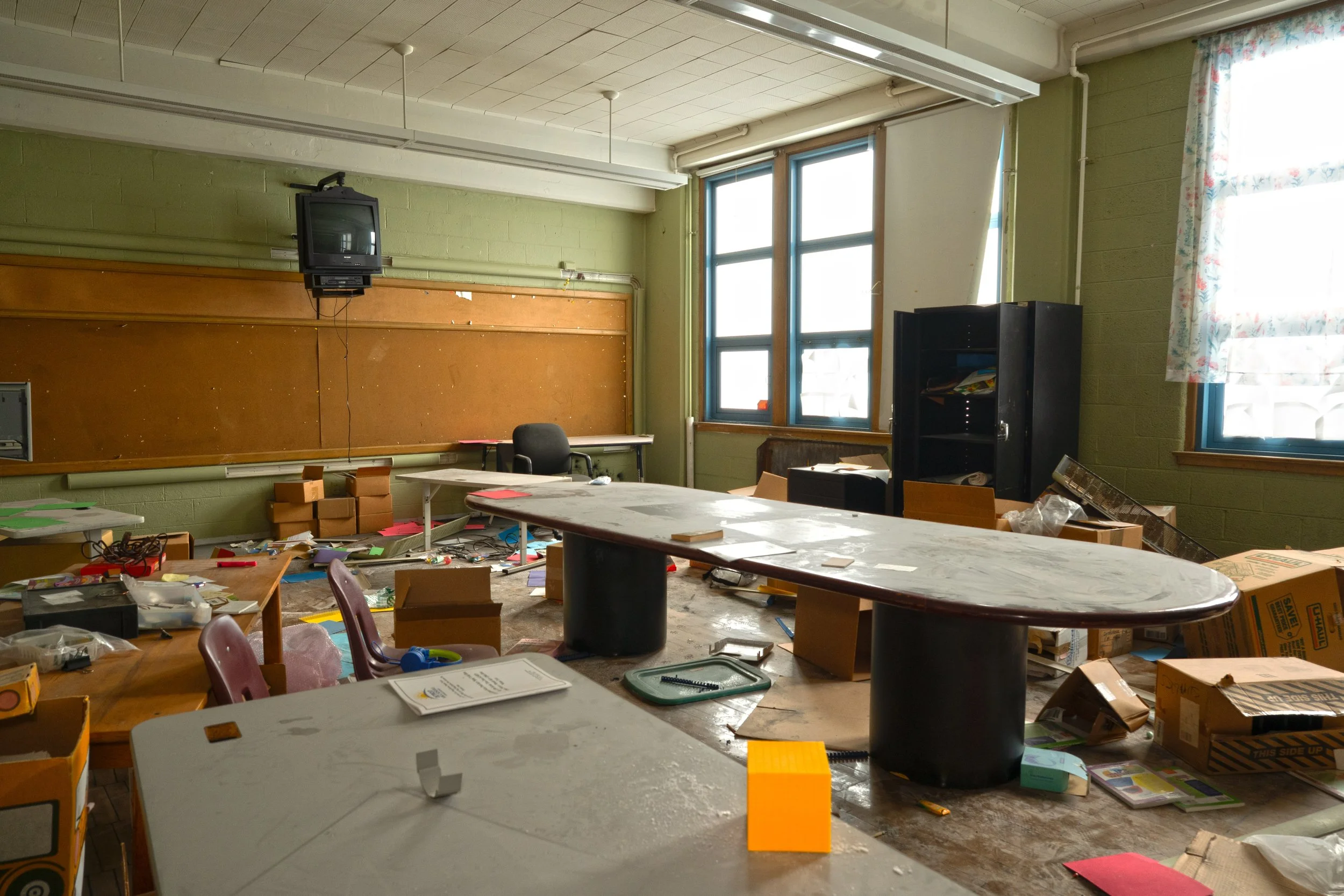
1st floor classroom
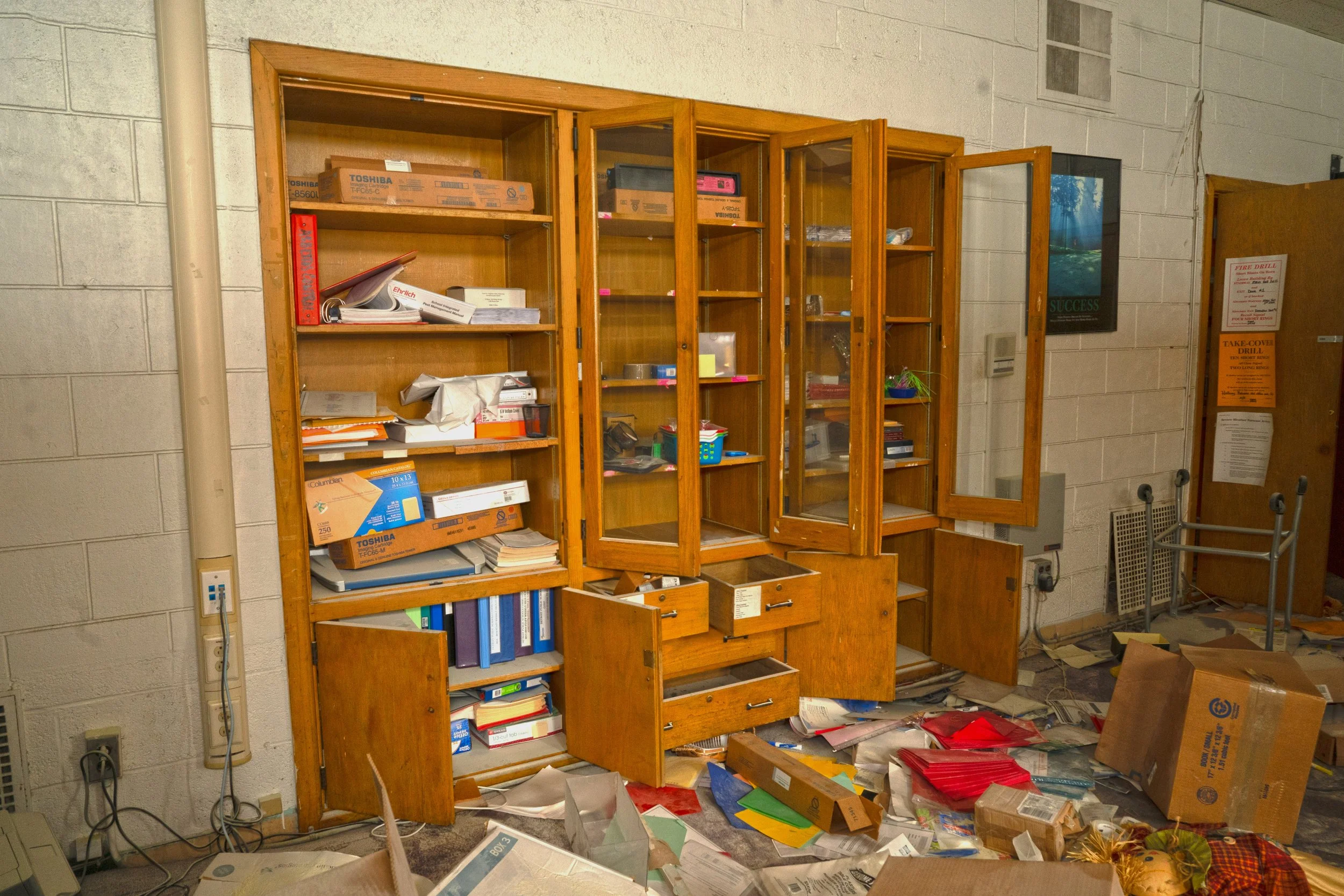
shelves in a 1st floor classroom
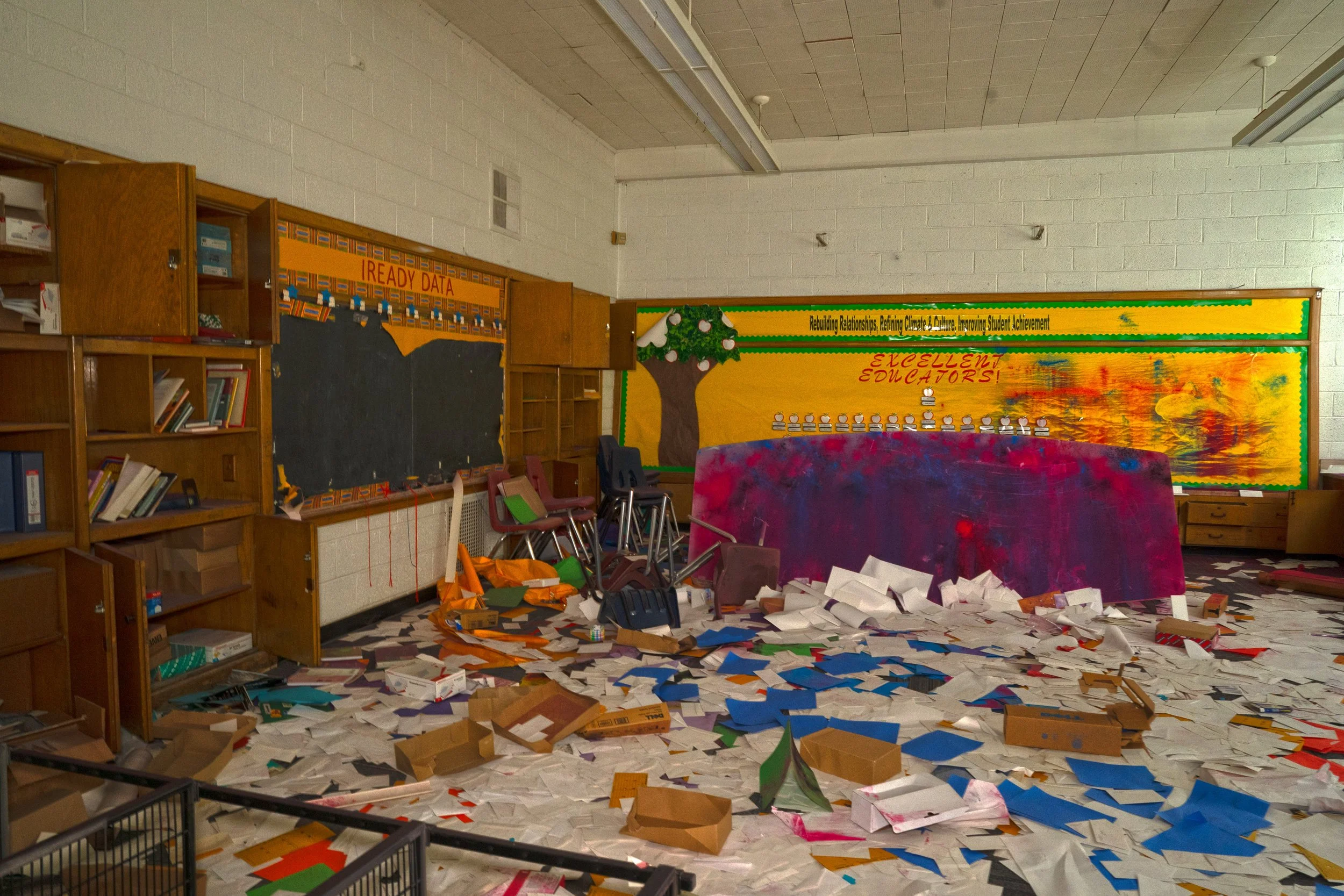
1st floor classroom
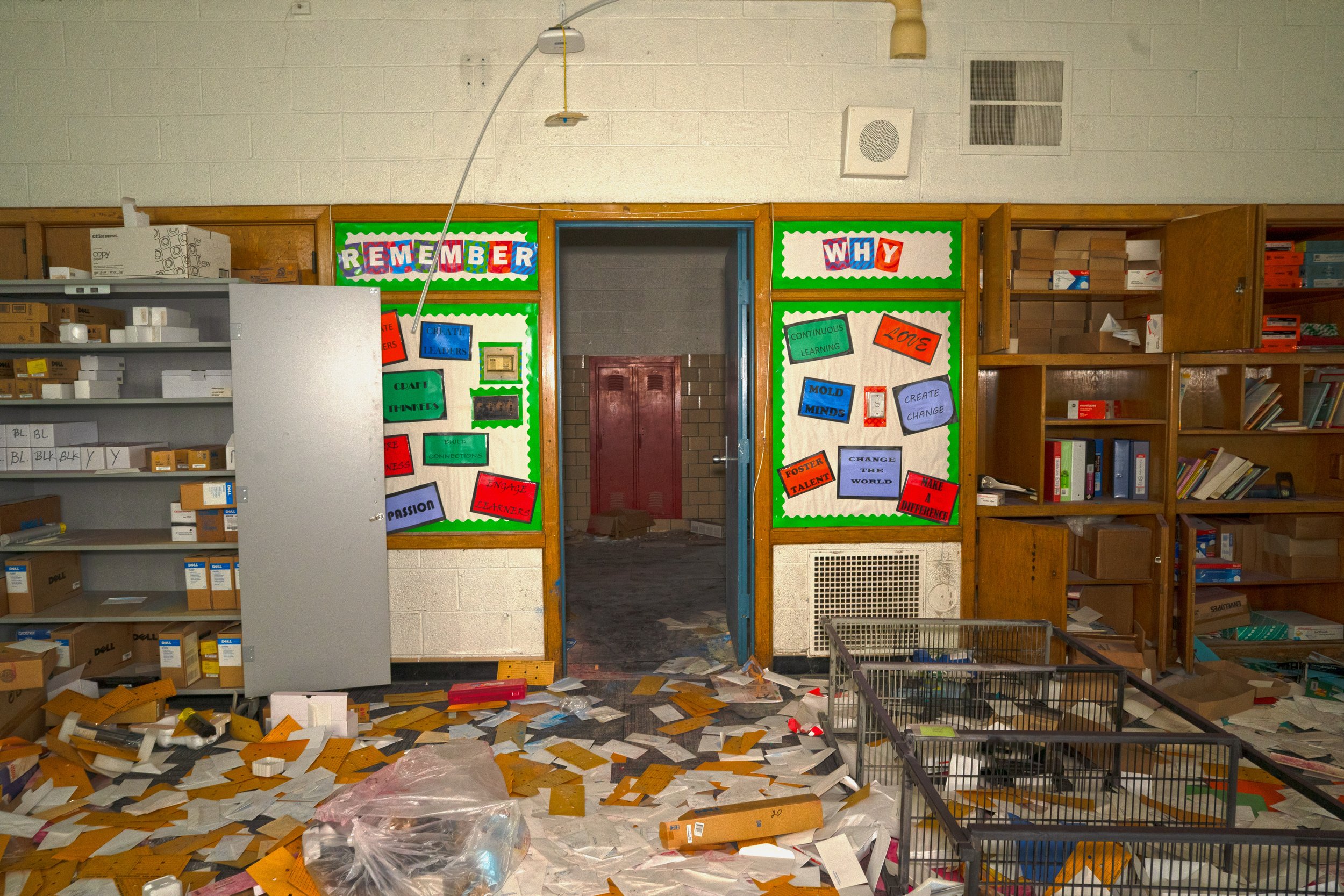
1st floor classroom
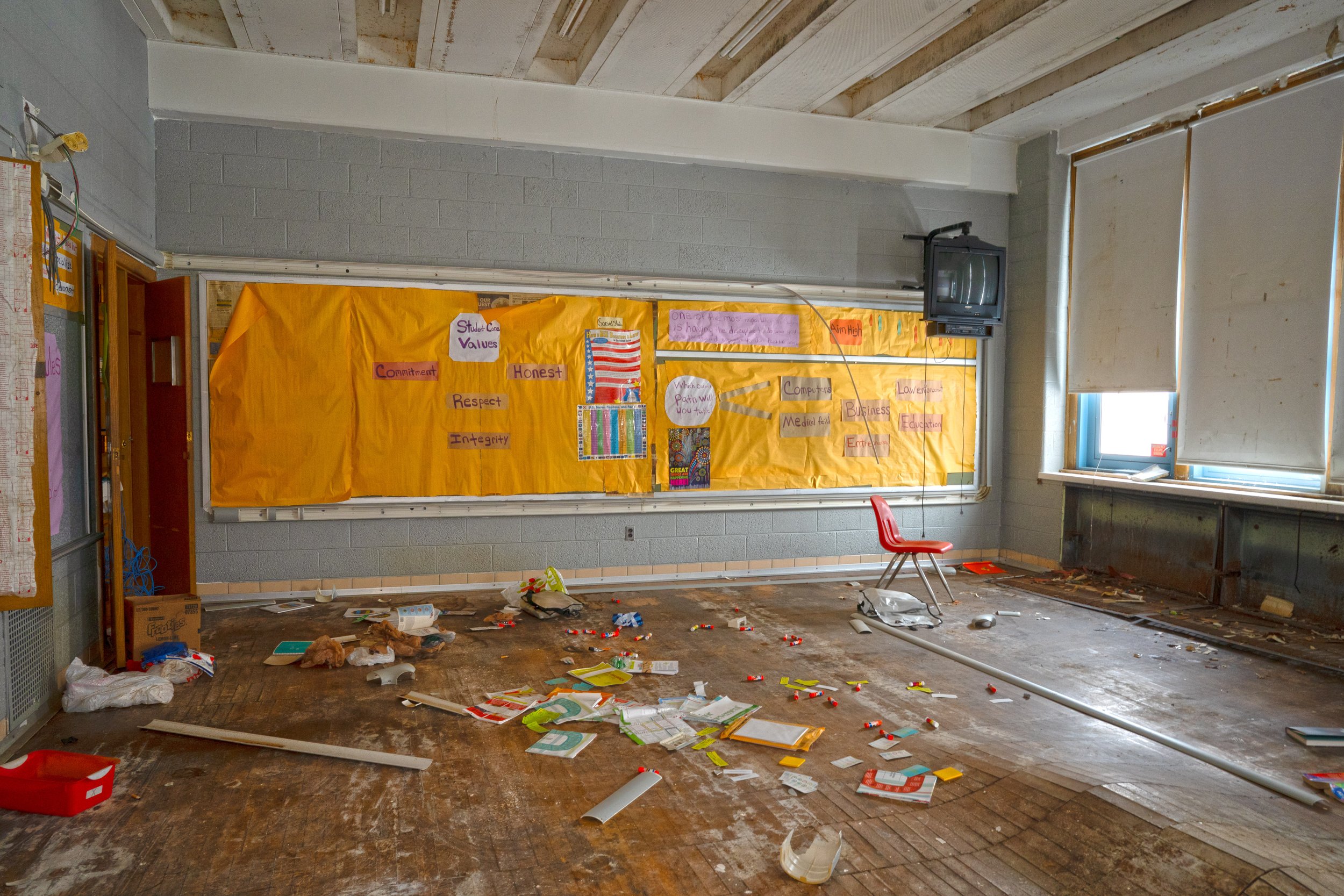
1st floor classroom
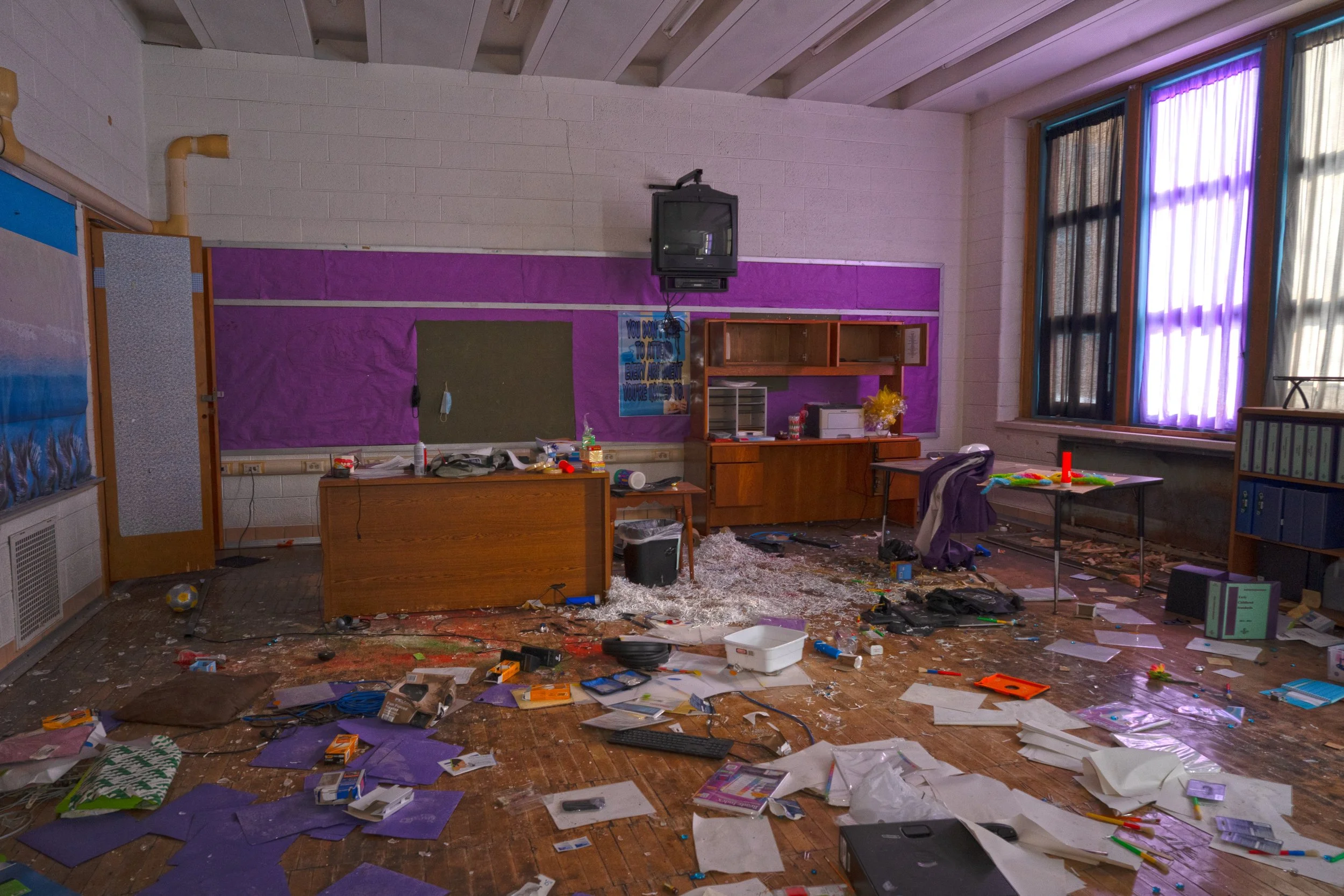
1st floor classroom with a purple hue to it
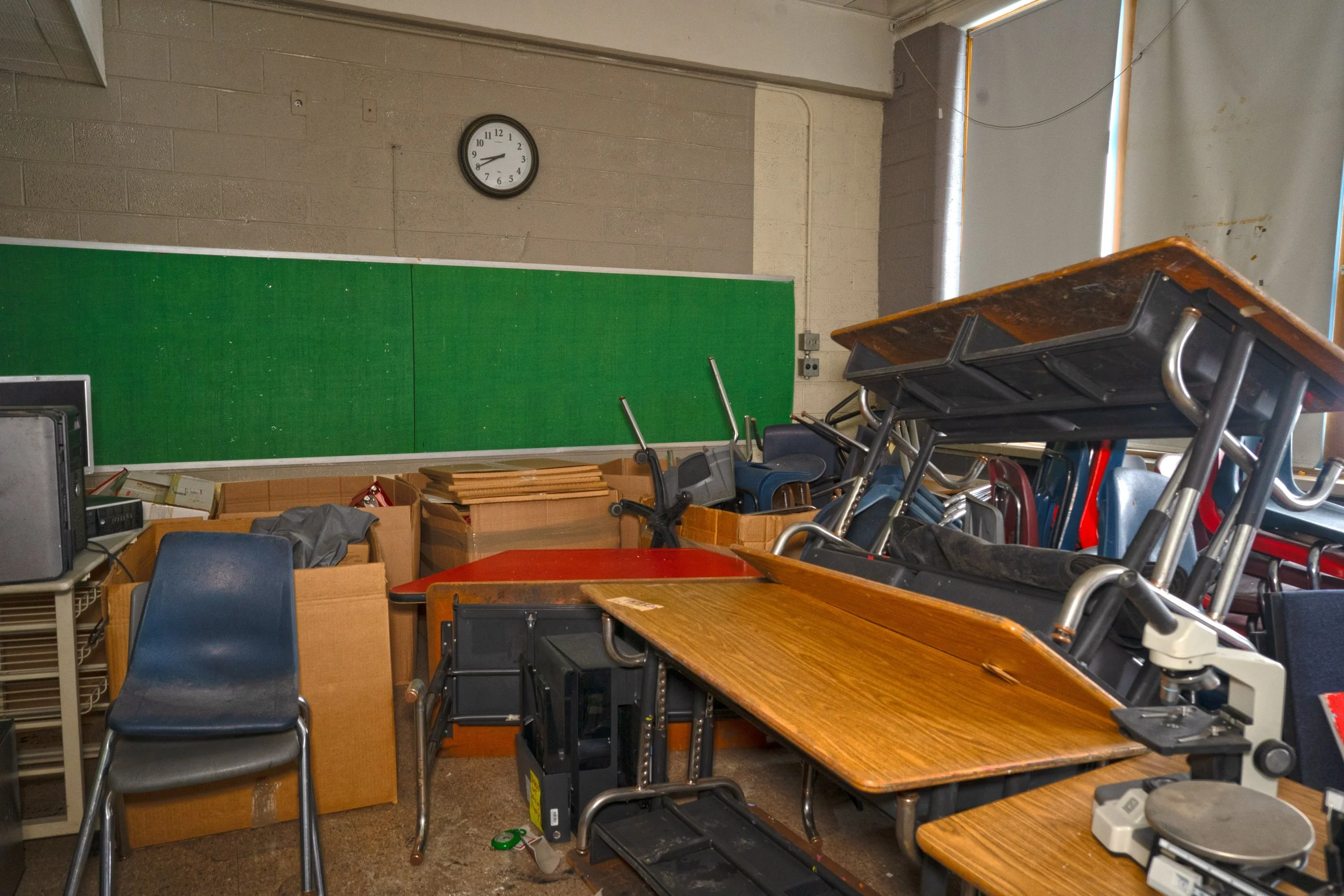
1st floor classroom
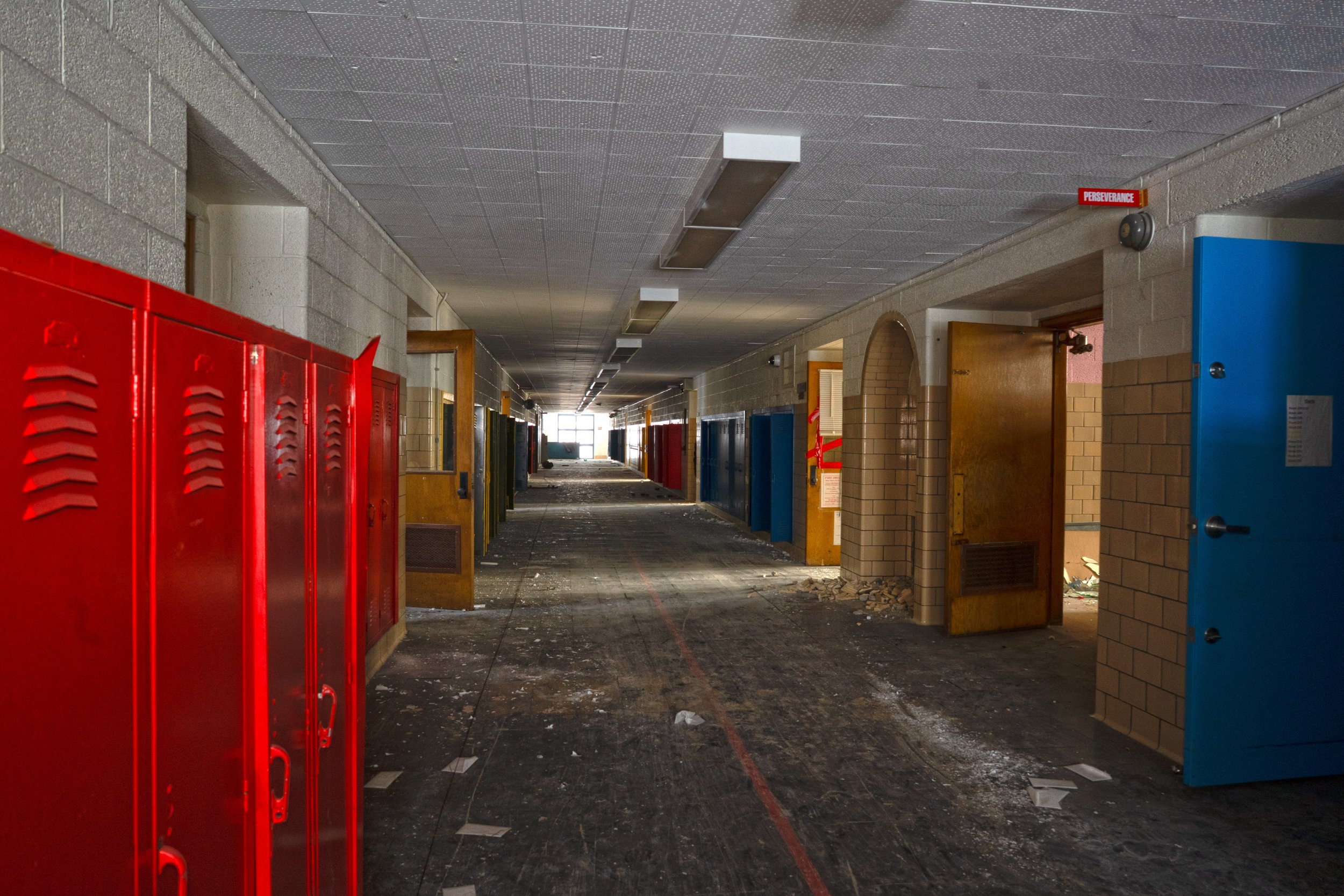
2nd floor hallway
2nd floor hallway shot 2
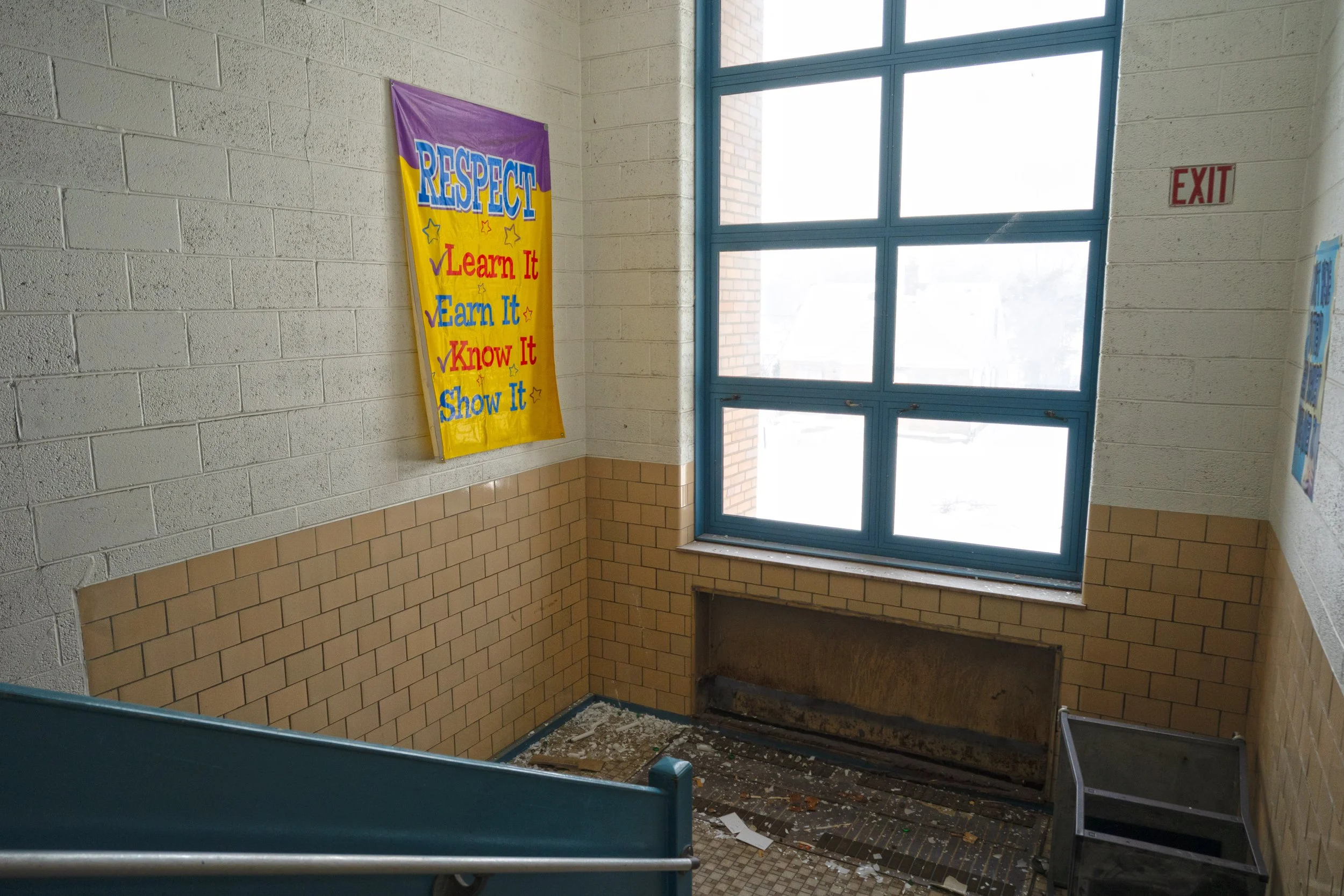
2nd floor staircase with a banner on the wall
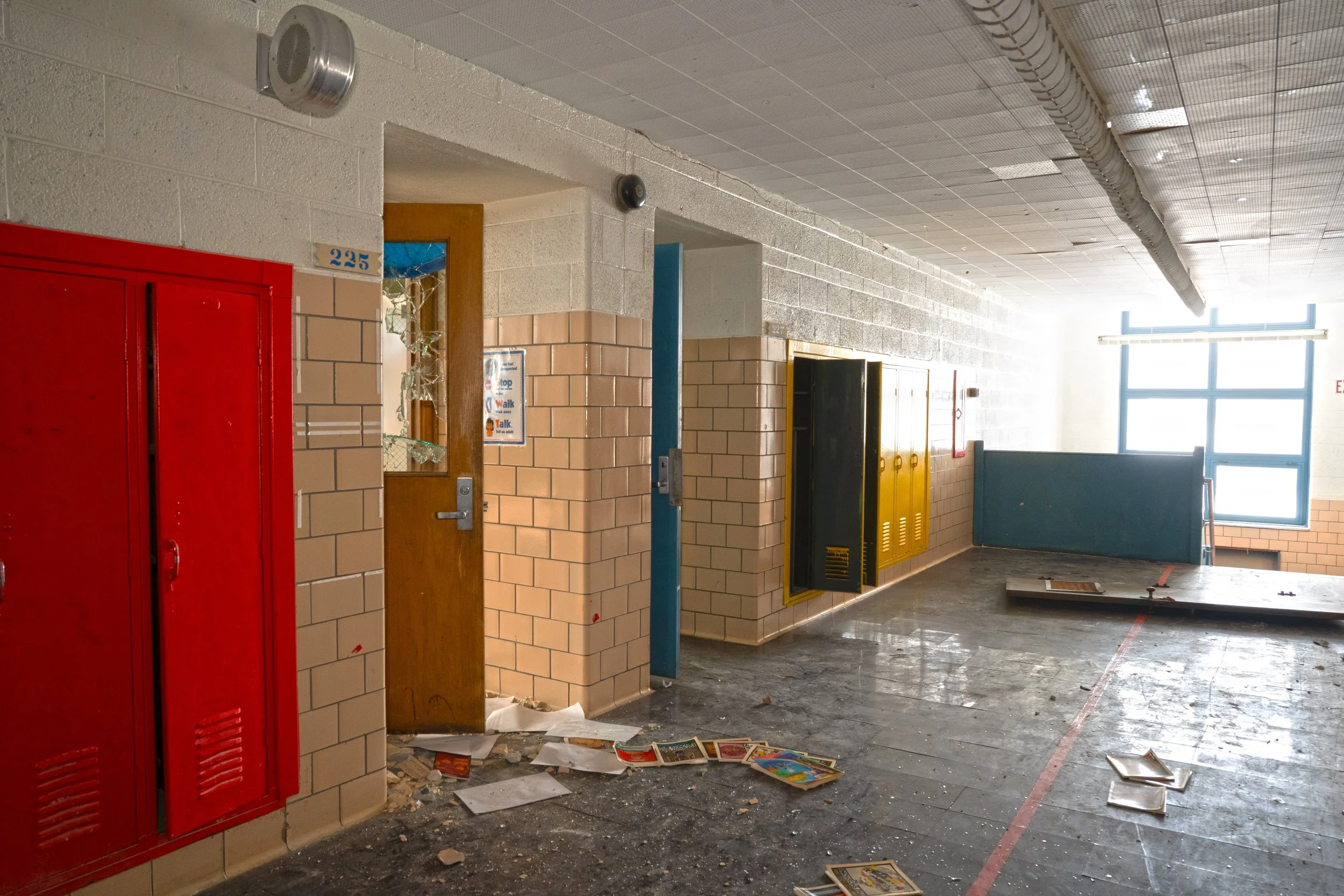
2nd floor hallway shot 3
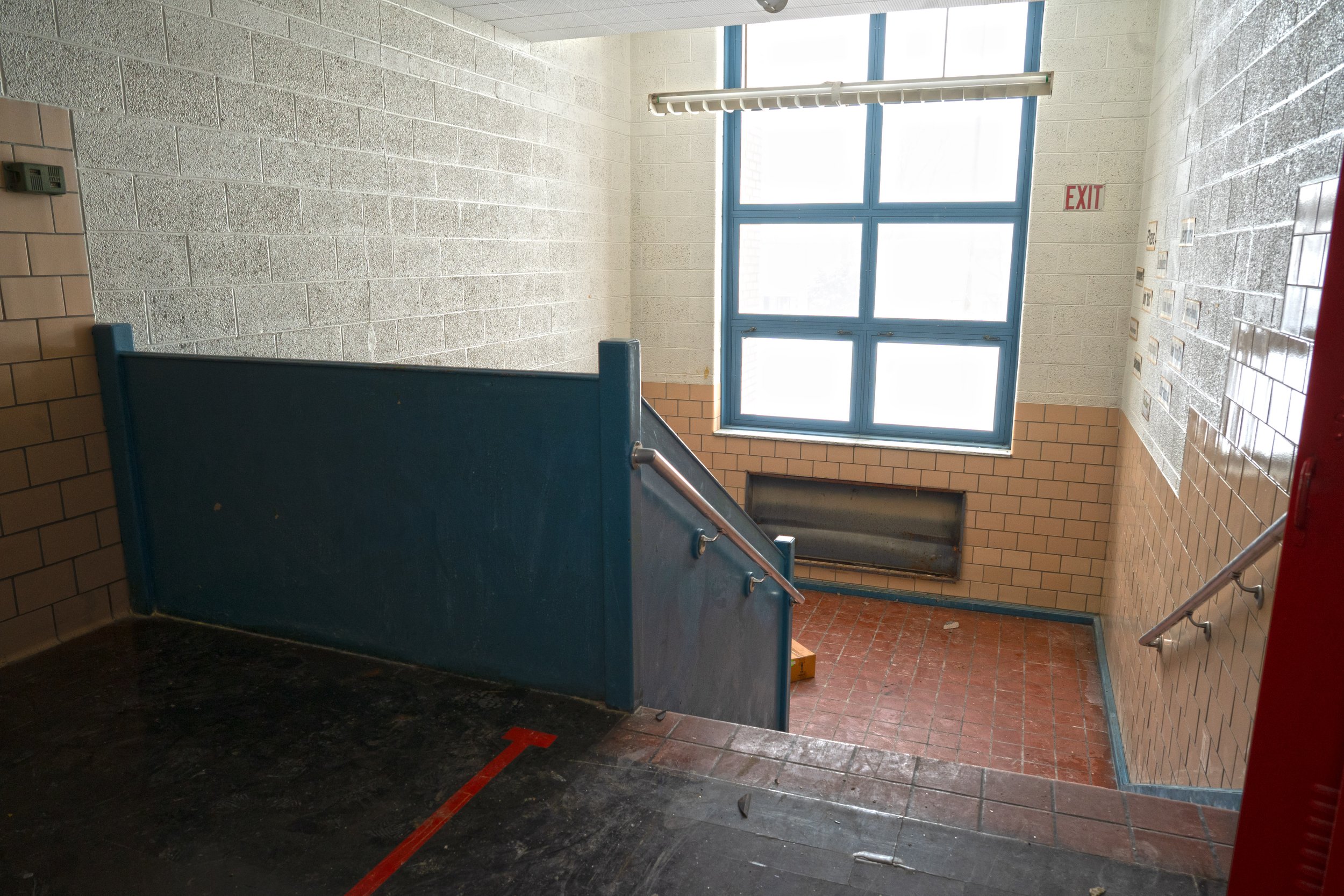
another 2nd floor staircase
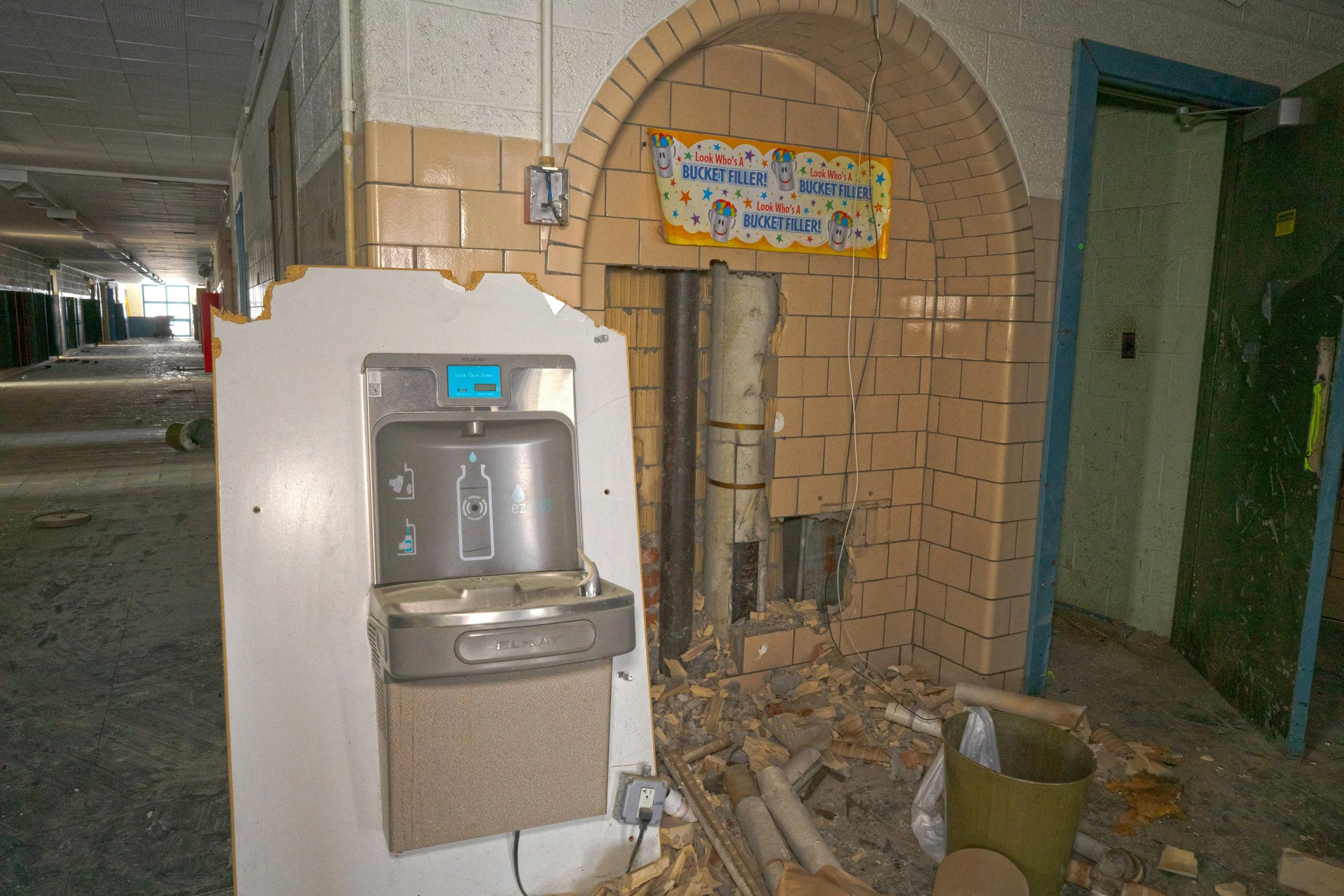
A drinking fountain remains intact on the 2nd floor
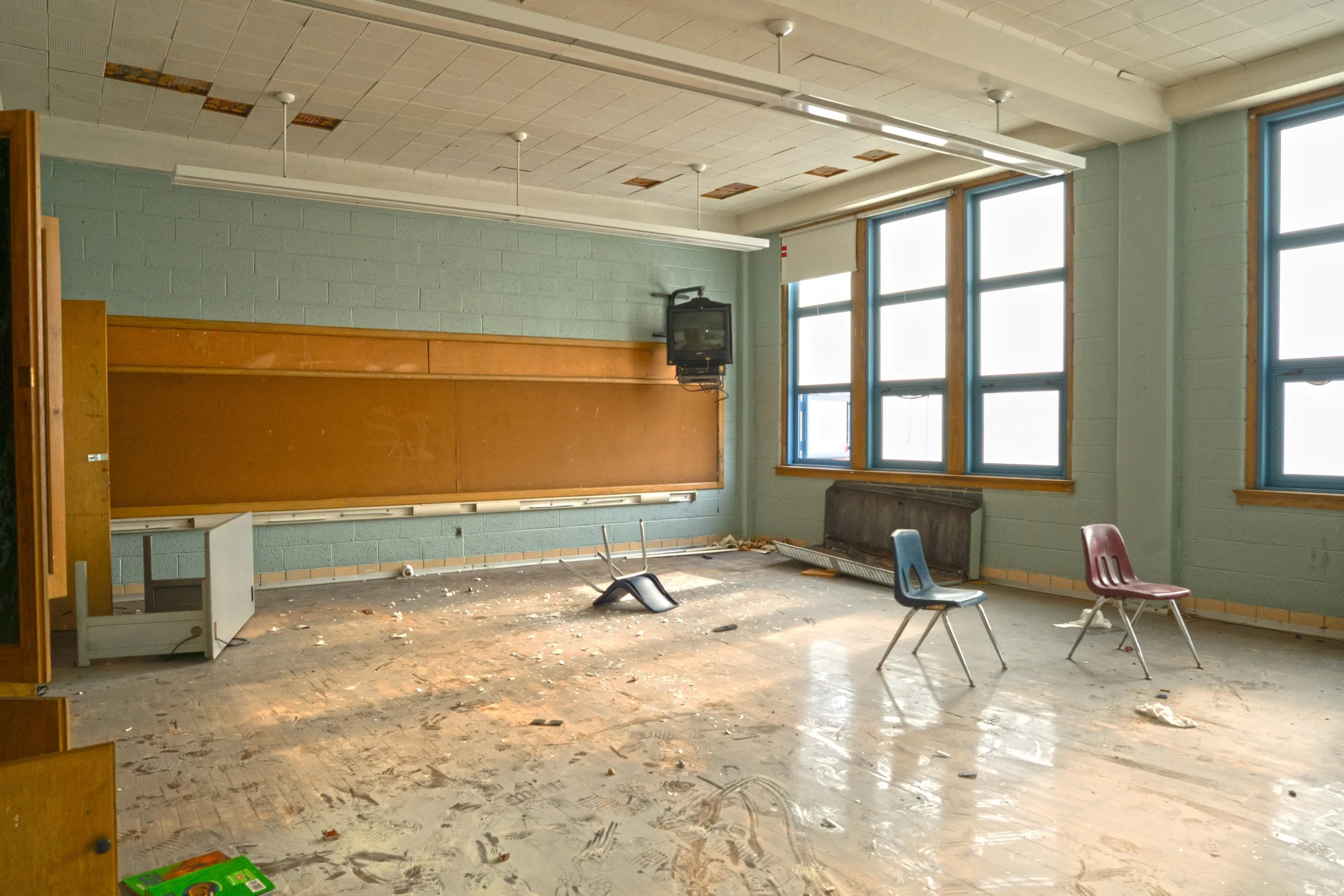
2nd floor classroom
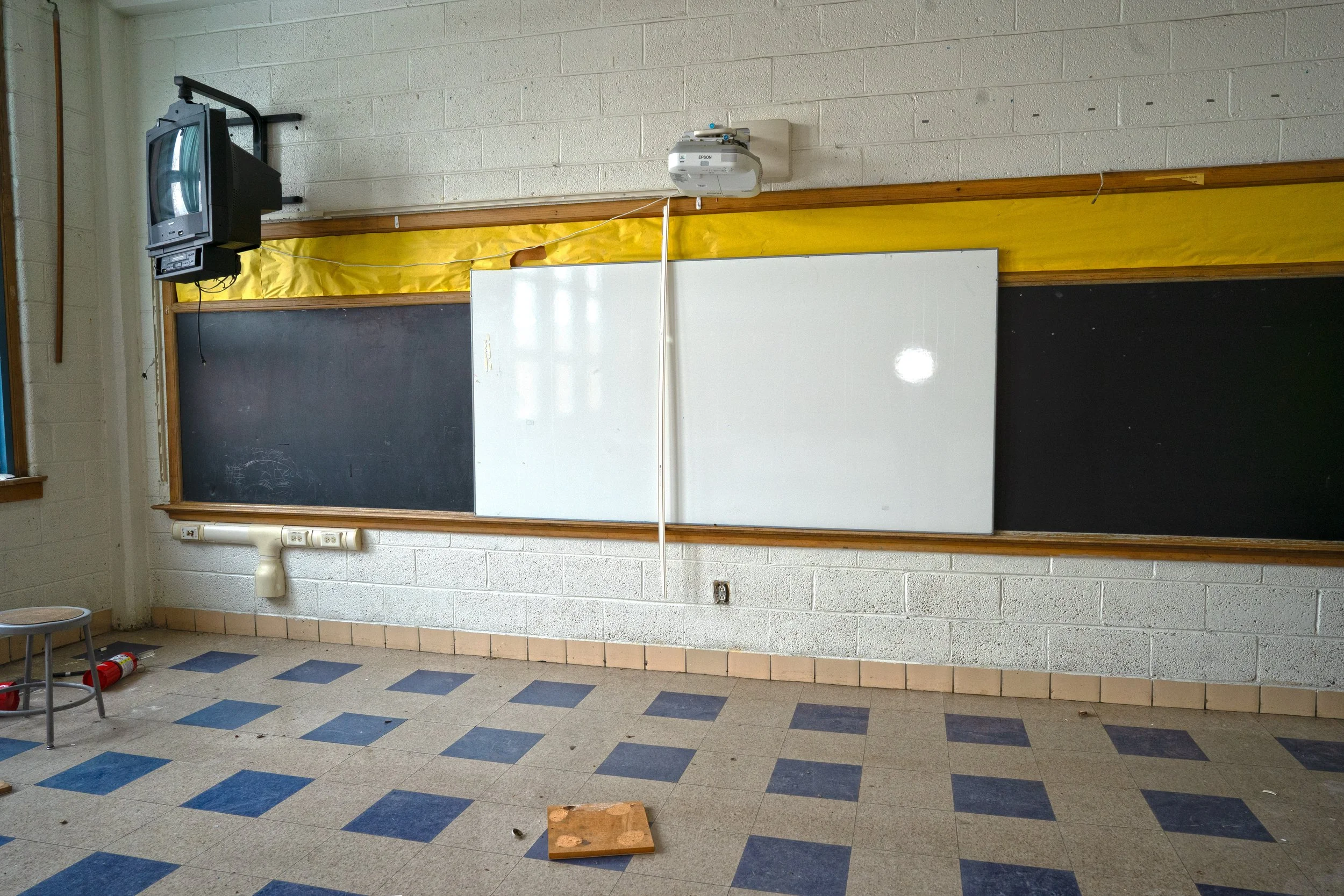
2nd floor classroom with a smart board still intact
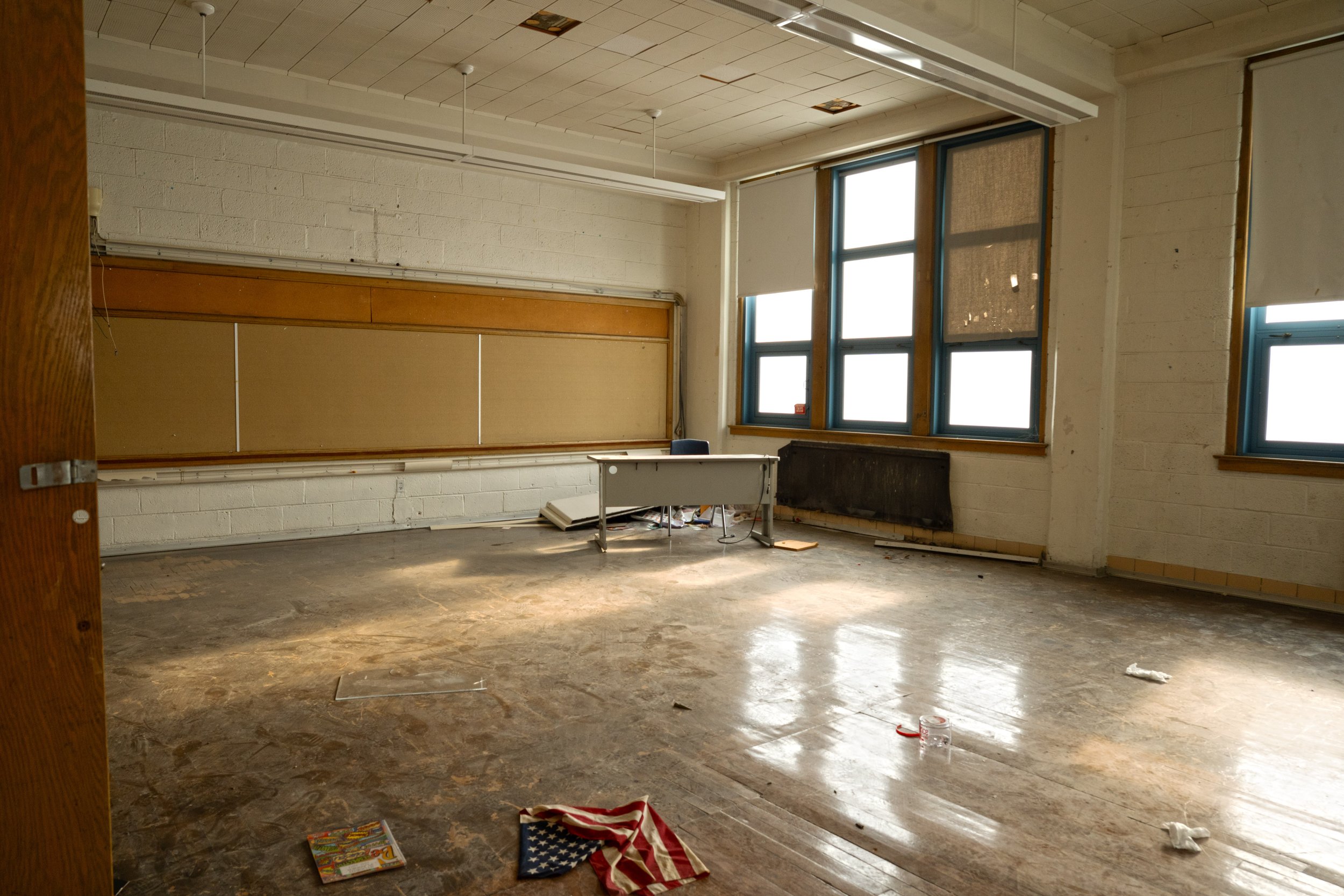
2nd floor classroom
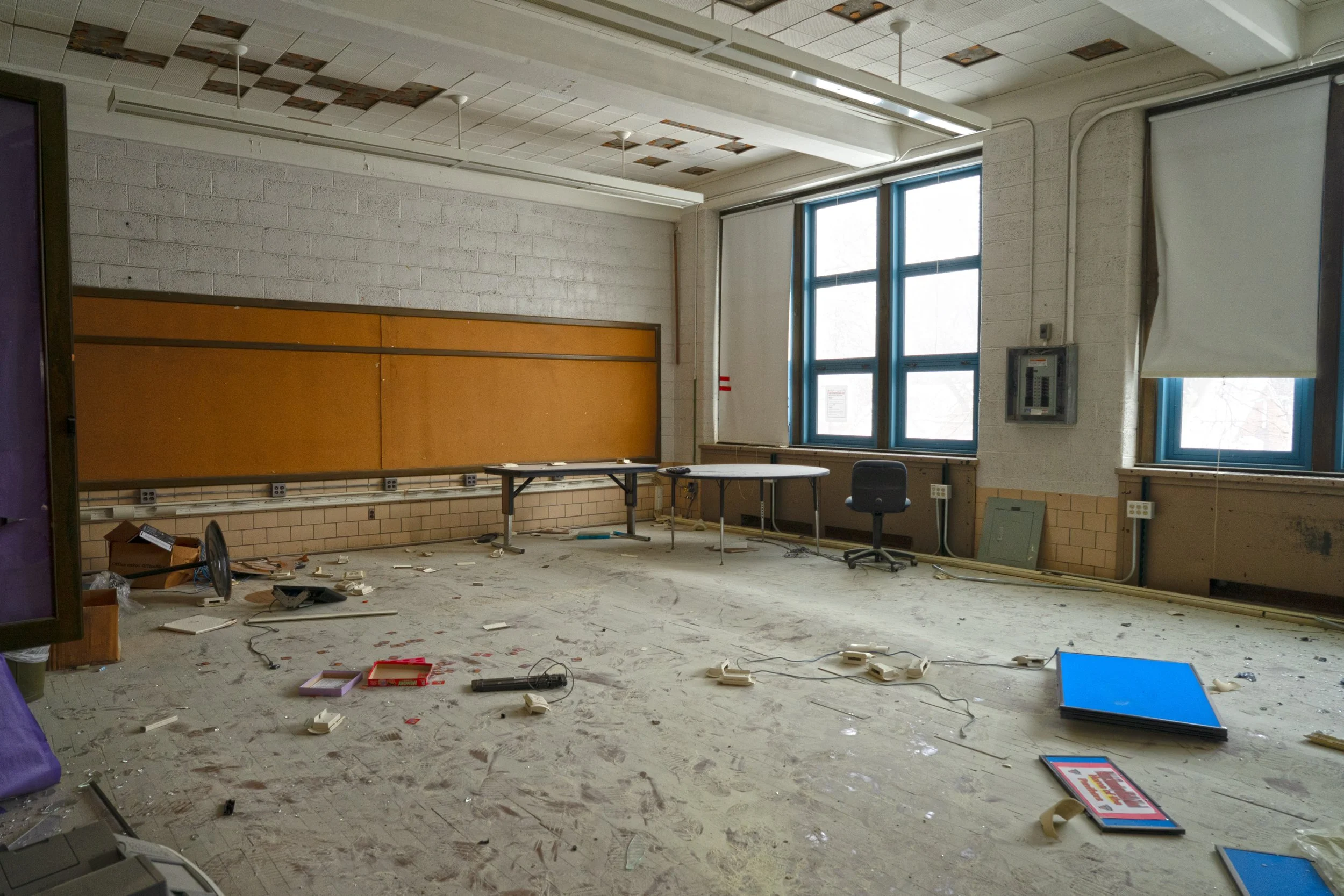
2nd floor classroom
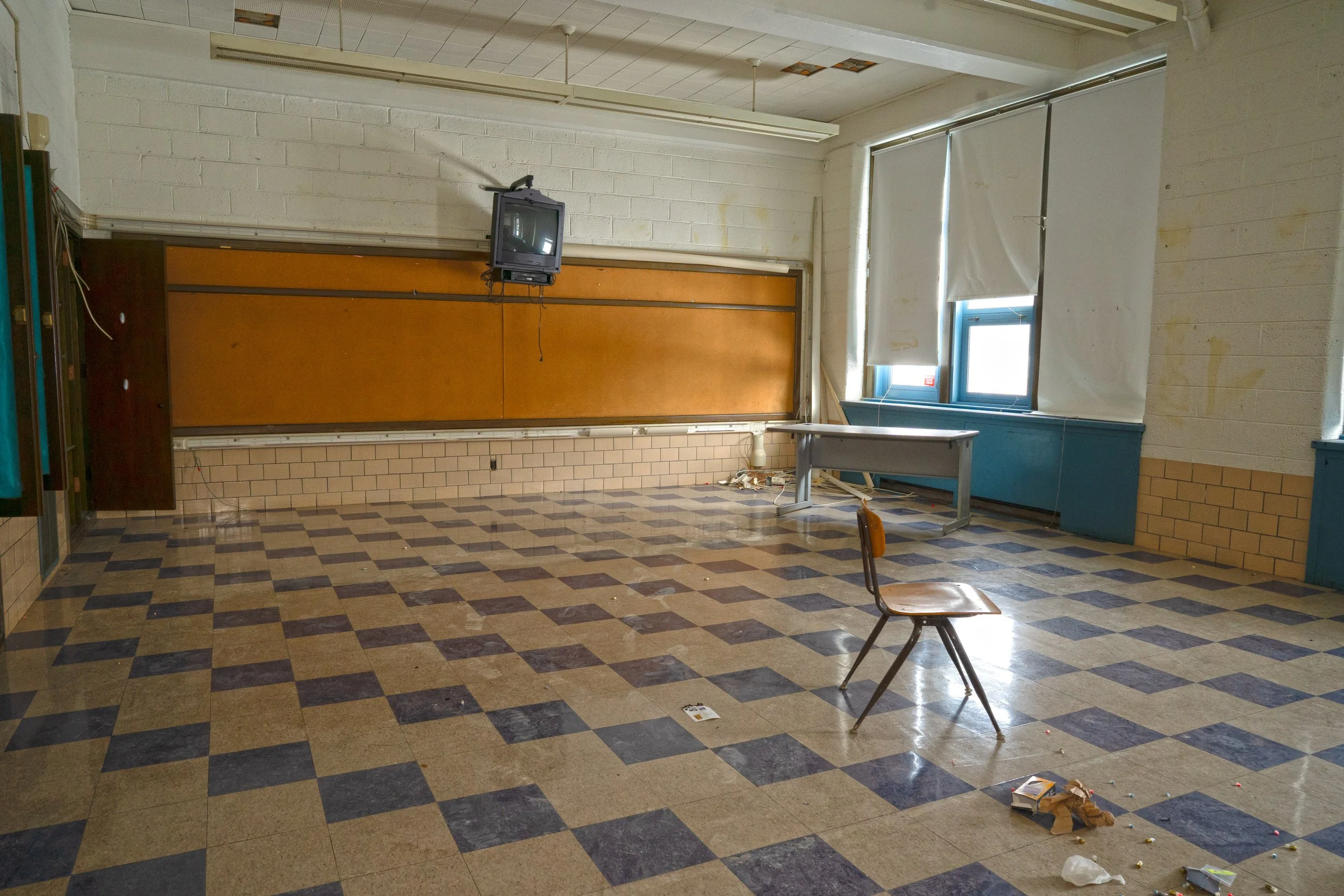
2nd floor classroom
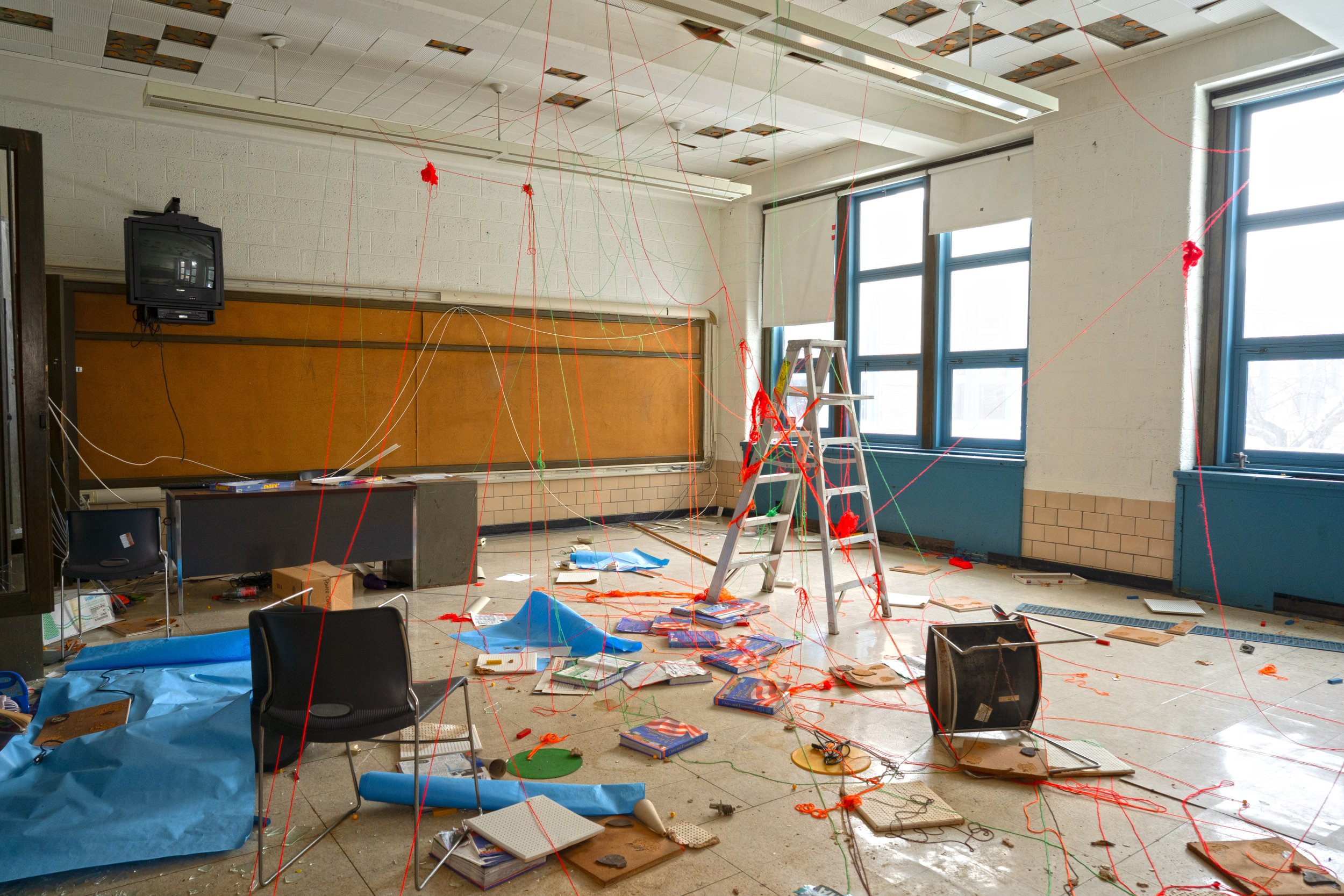
2nd floor classroom with minor damage done
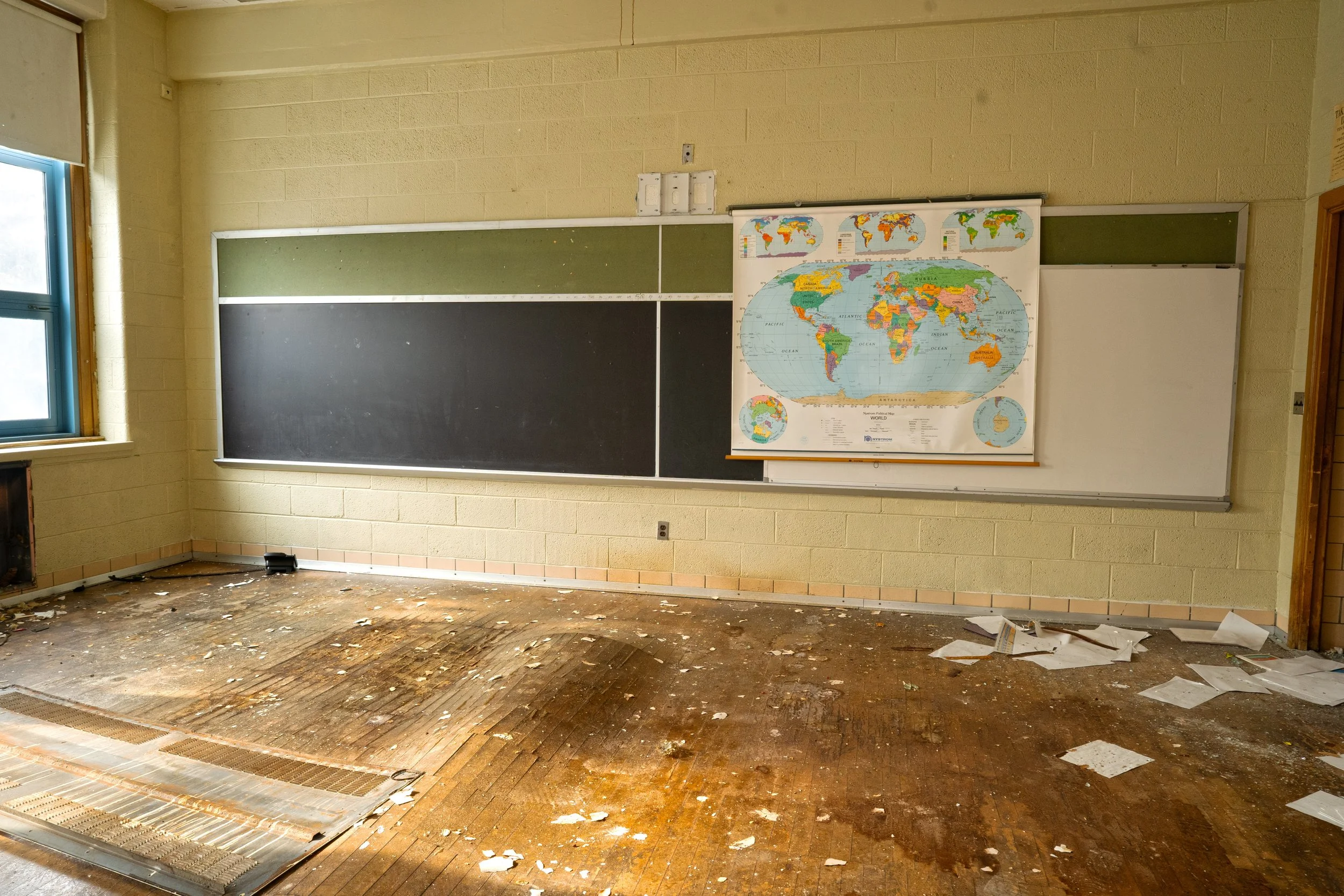
2nd floor classroom
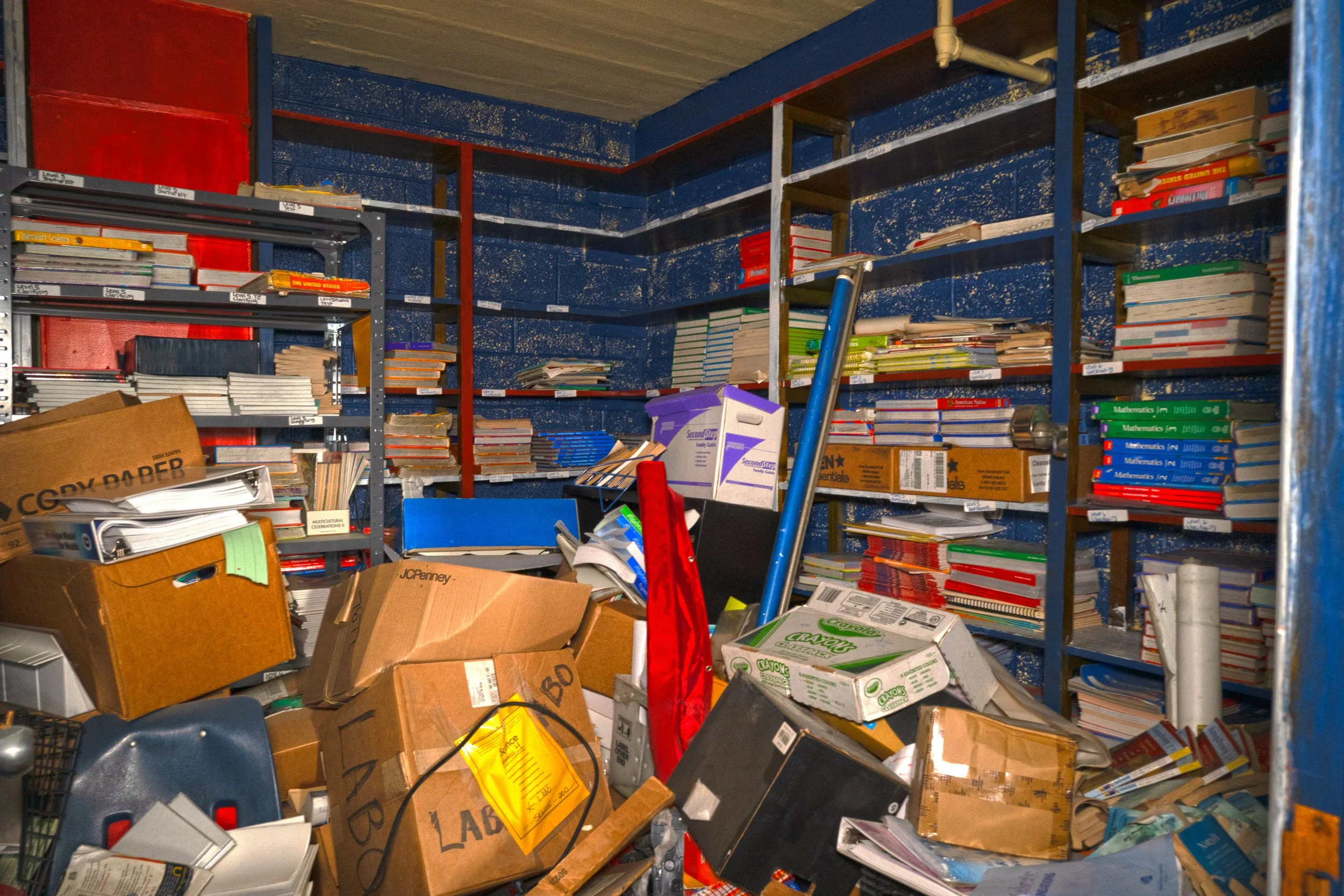
storage closet with stuff in it on the 2nd floor
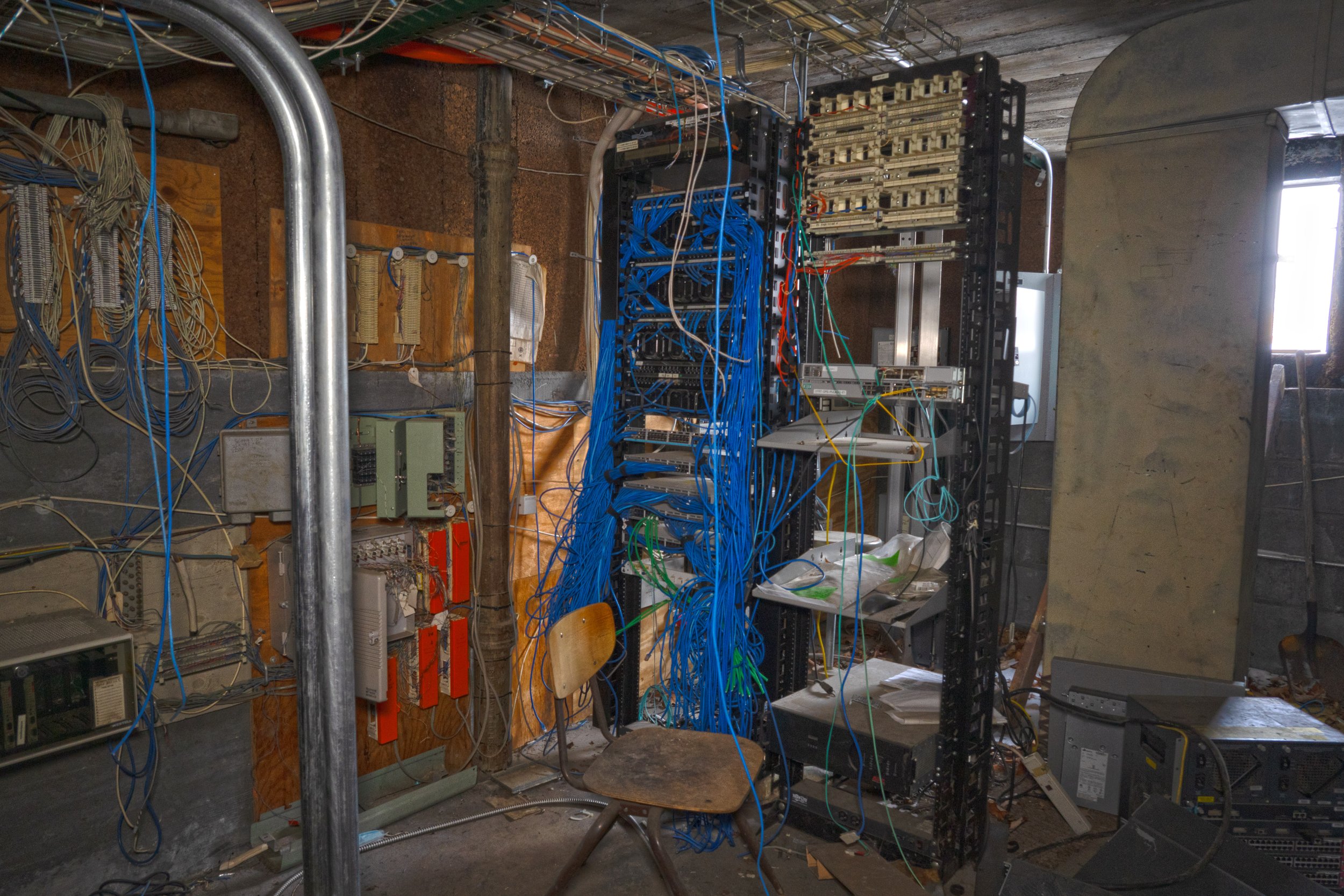
All the cameras have been cut from there base in the utility room above the 2nd floor
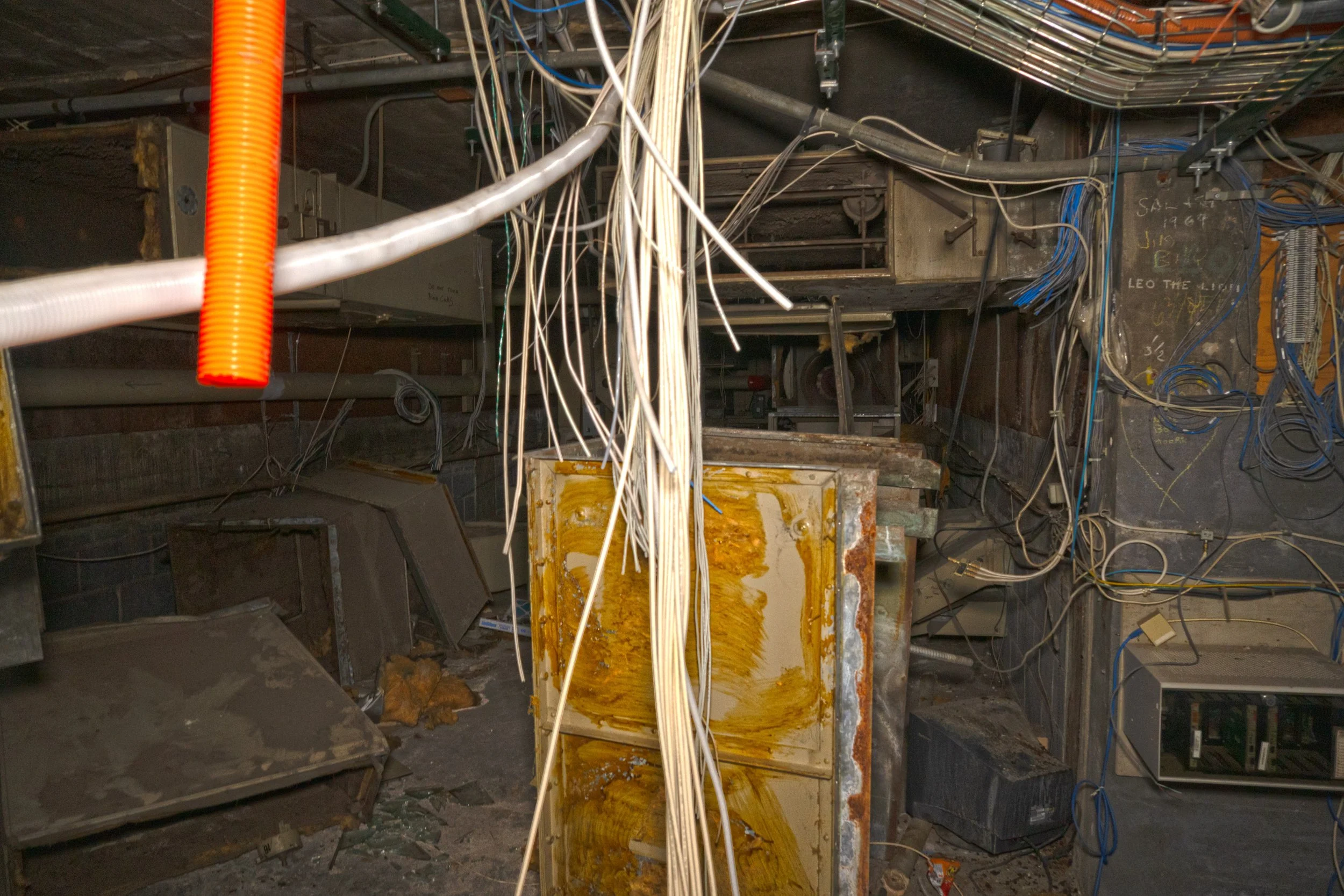
Much of the outdated HVAC remains up here