
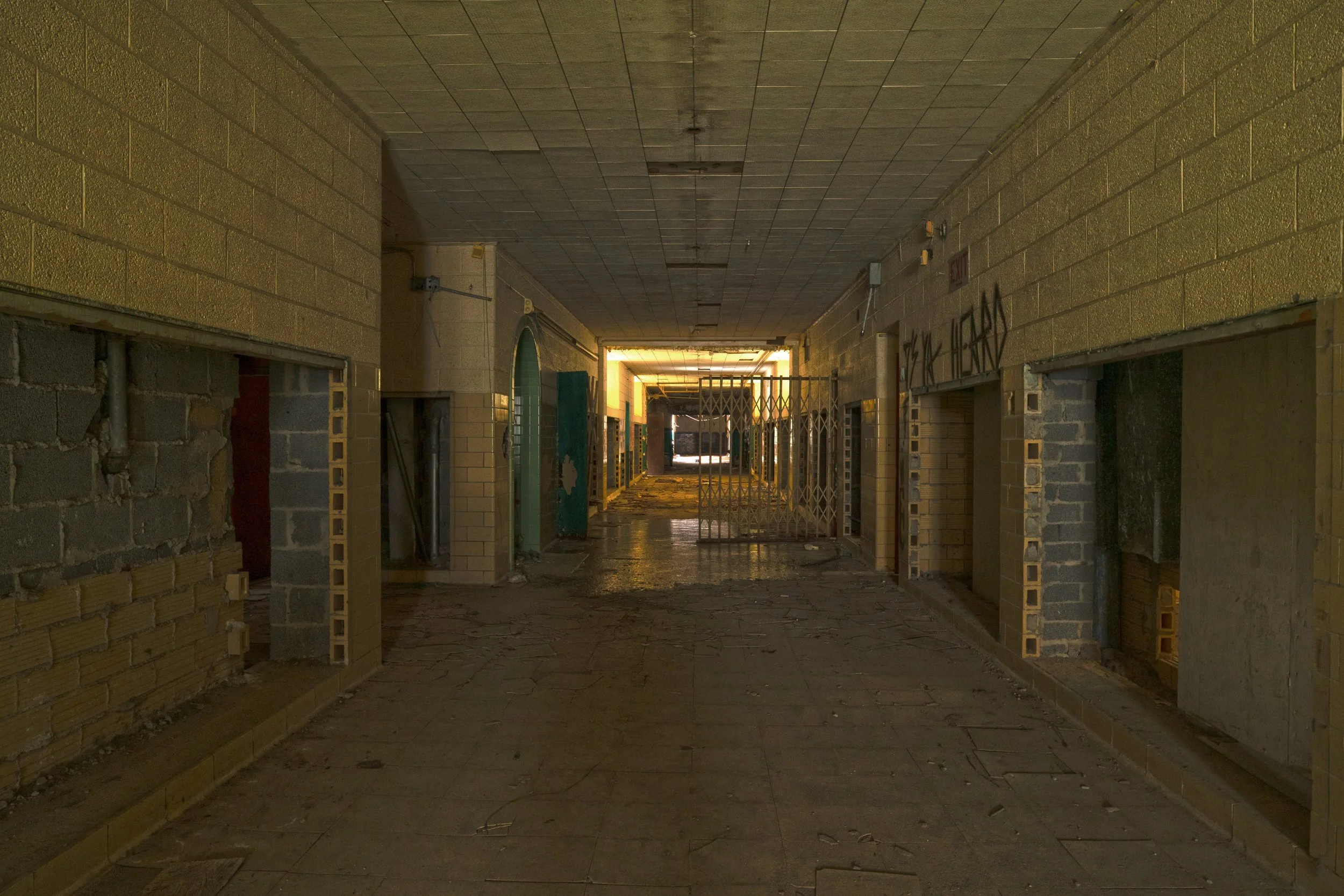
Holcomb Elementary School
18100 Bentler St, Detroit, MI 48219
-Abandoned 2010
|High Resolution page|
Locate it!
History of Holcomb Elementary School
Holcomb was built in 1925 under the Redford township, when it was built it was the largest of the elementary schools built in 1925 alongside Coffey and Mettetal (Later known as Ludington. While Mettetal and Coffey were built in remote parts of the township, Holcomb was built in what was then the township’s commercial and residential center. Upon opening in 1926 the school featured 13 classrooms, compared to Coffey and Mettetal’s 4 room schoolhouses. In 1926 Detroit annexed Redford Township and of the 20 schools built by Redford Township only 6 remained in the remaining part today being Redford MI, these schools included the schools mentioned before and 12 more. in 1928 Holcomb would receive it first addition adding a gymnasium and cafeteria, alongside 6 additional classrooms. At this point the school took on a L shaped design, a 1938 Detroit Board of Education report described as having “flowers, garden paths, and a miniature pool ... the advantages of the country woodside brought to a city school doorstep". In 1948 the last addition would bring the notable auditorium alongside 5 classrooms, in all Holcomb would host two enclosed courtyards, a gymnasium, and auditorium. By 1999 the student body had dropped to 600, and later 250 by 2009. In 2010 the school was closed. Within a couple years scrappers hit the school, however many areas remain in ok to good shape. In 2018 talks of converting the school in a 32 unit senior housing was in the works however nothing ever came of this.
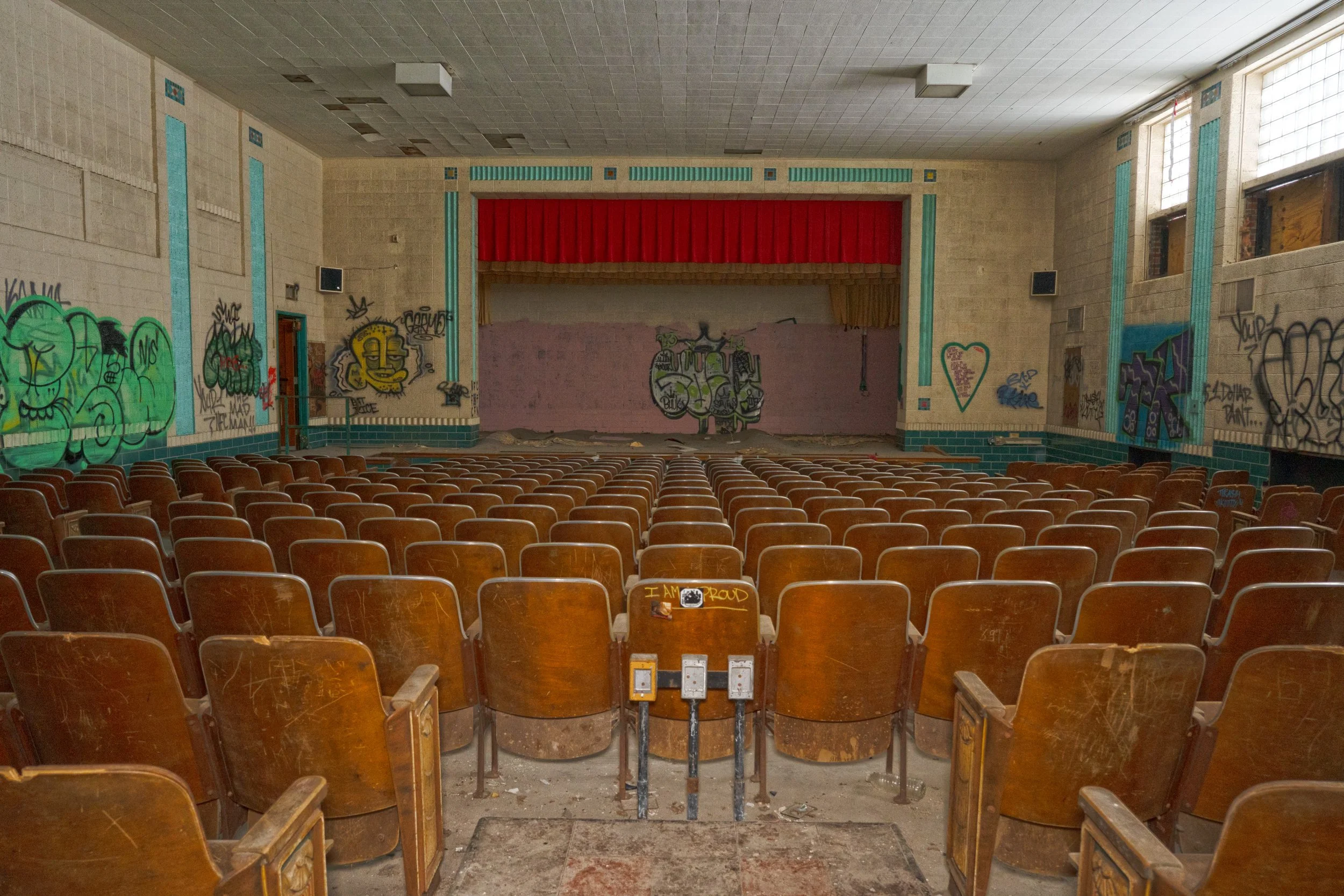
Recollection from the author
Holcomb was a unique school with two interior courtyards and a total of 3 bay windows throughout the school. The layout was a bit strange with the auditorium and gymnasium being on opposite sides of the school from each other, however it makes sense because of the way the additions were built onto the schools. The Auditorium was the crown jewel of Holcomb because of its condition.
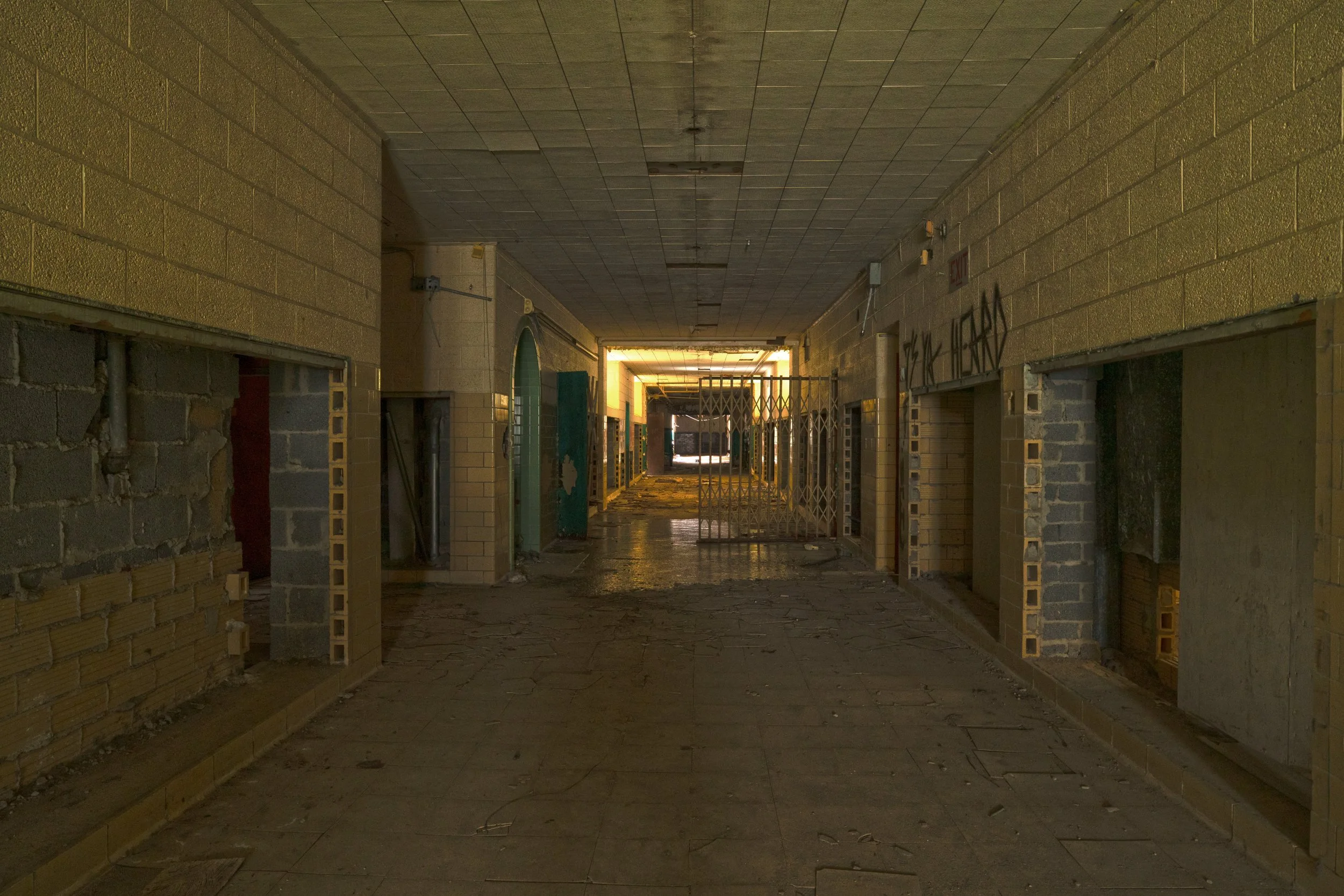
Hallway in Holcomb
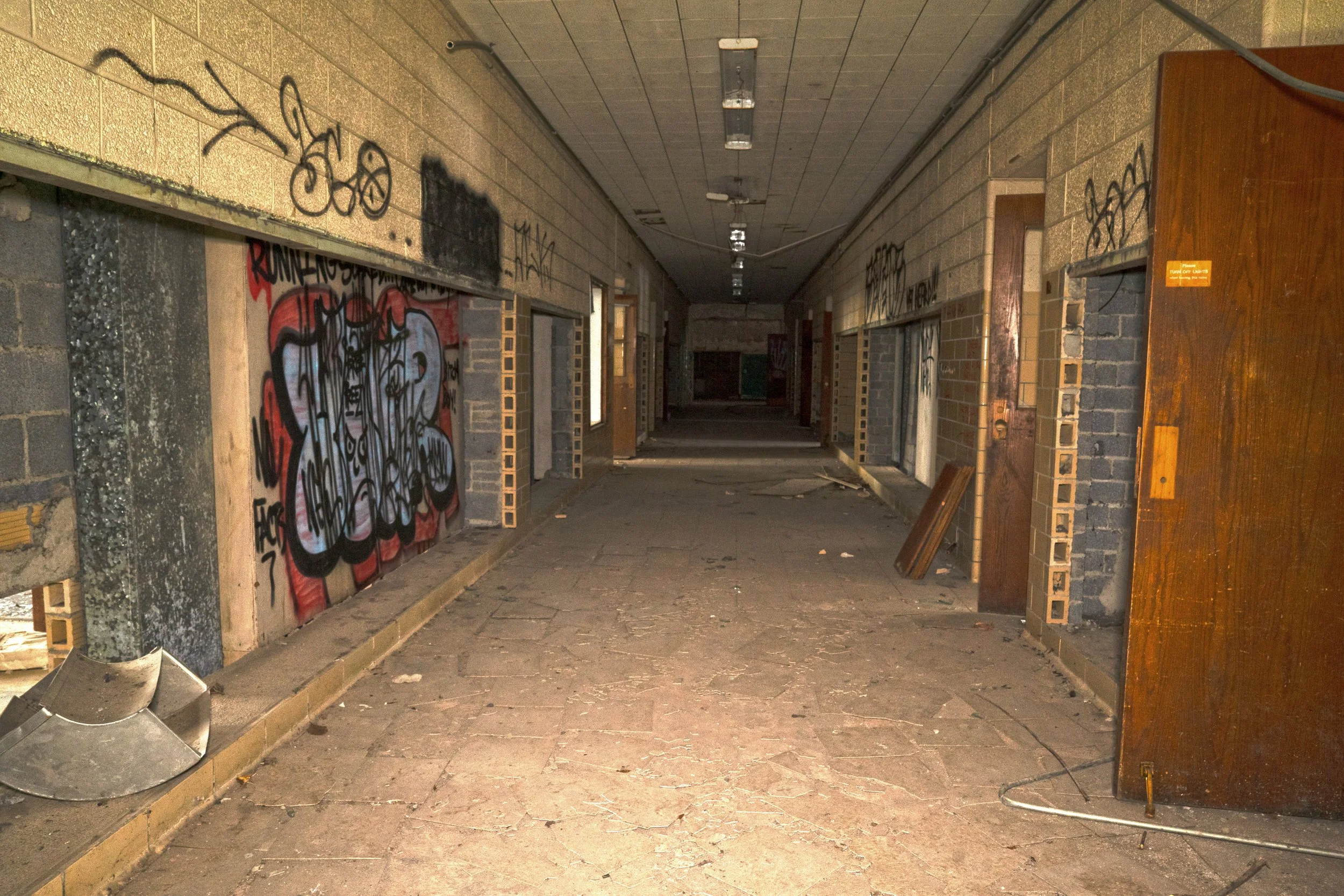
Another hallway in Holcomb
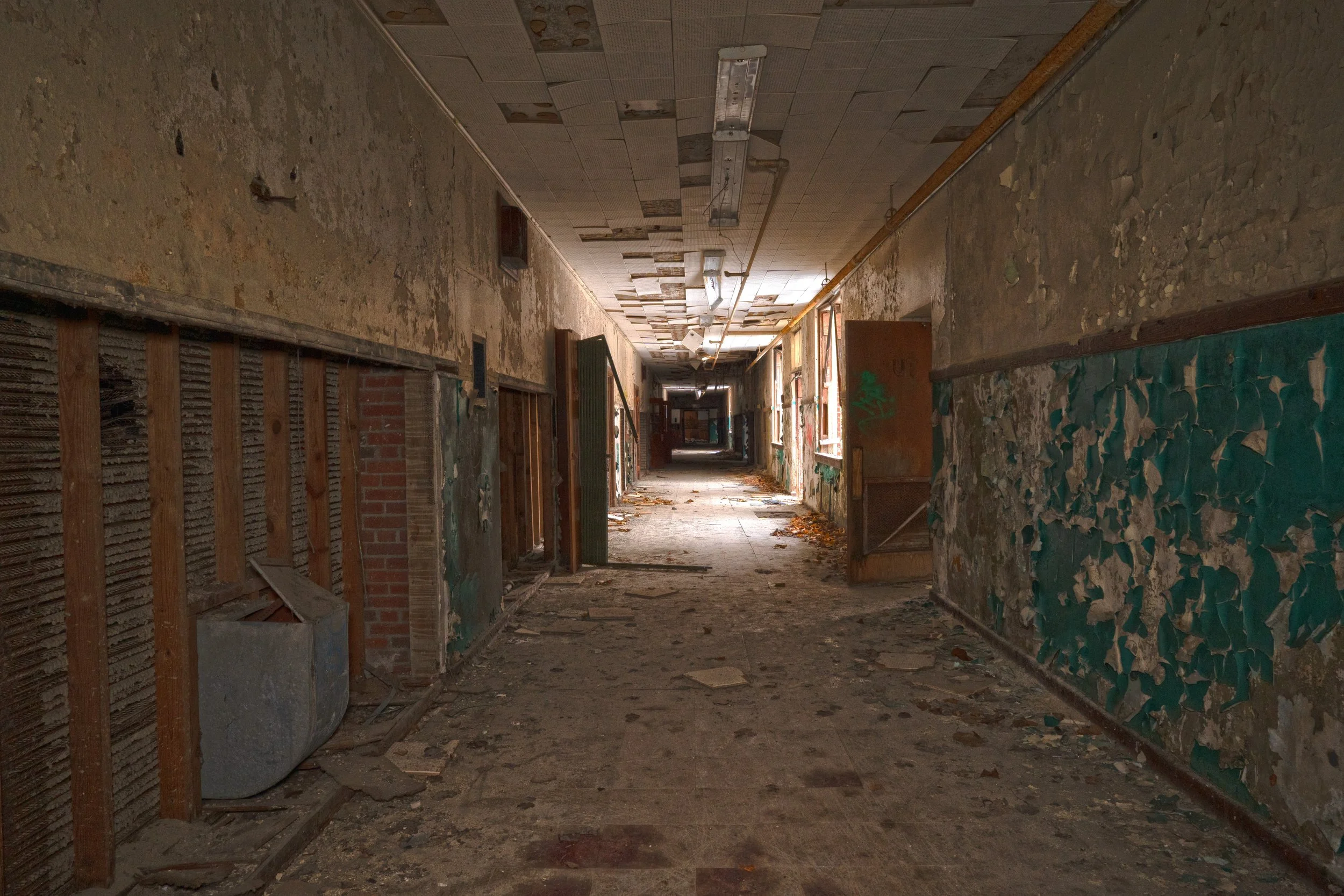
A hallway in Holcomb that has faced major scrapping
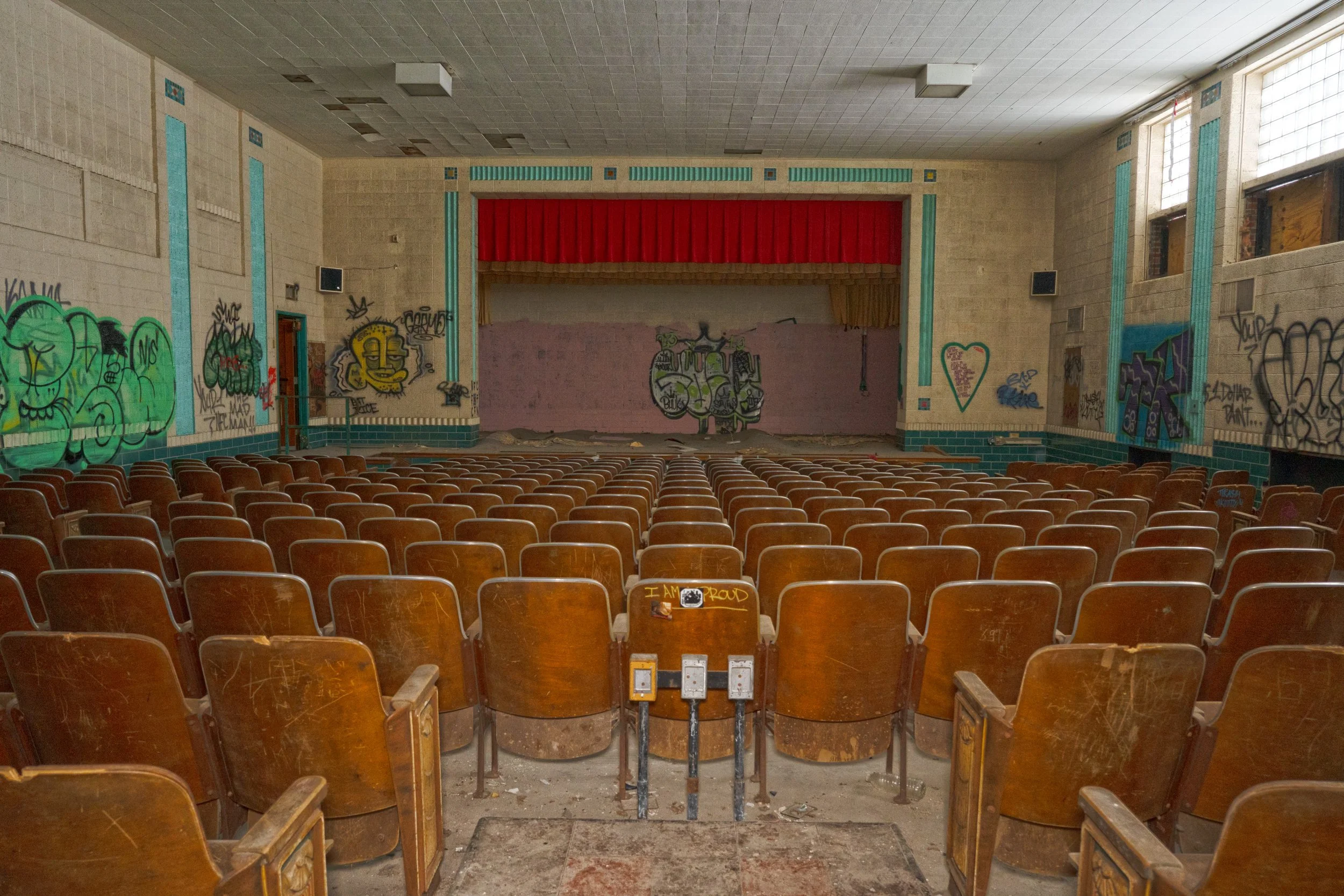
Auditorium shot 1
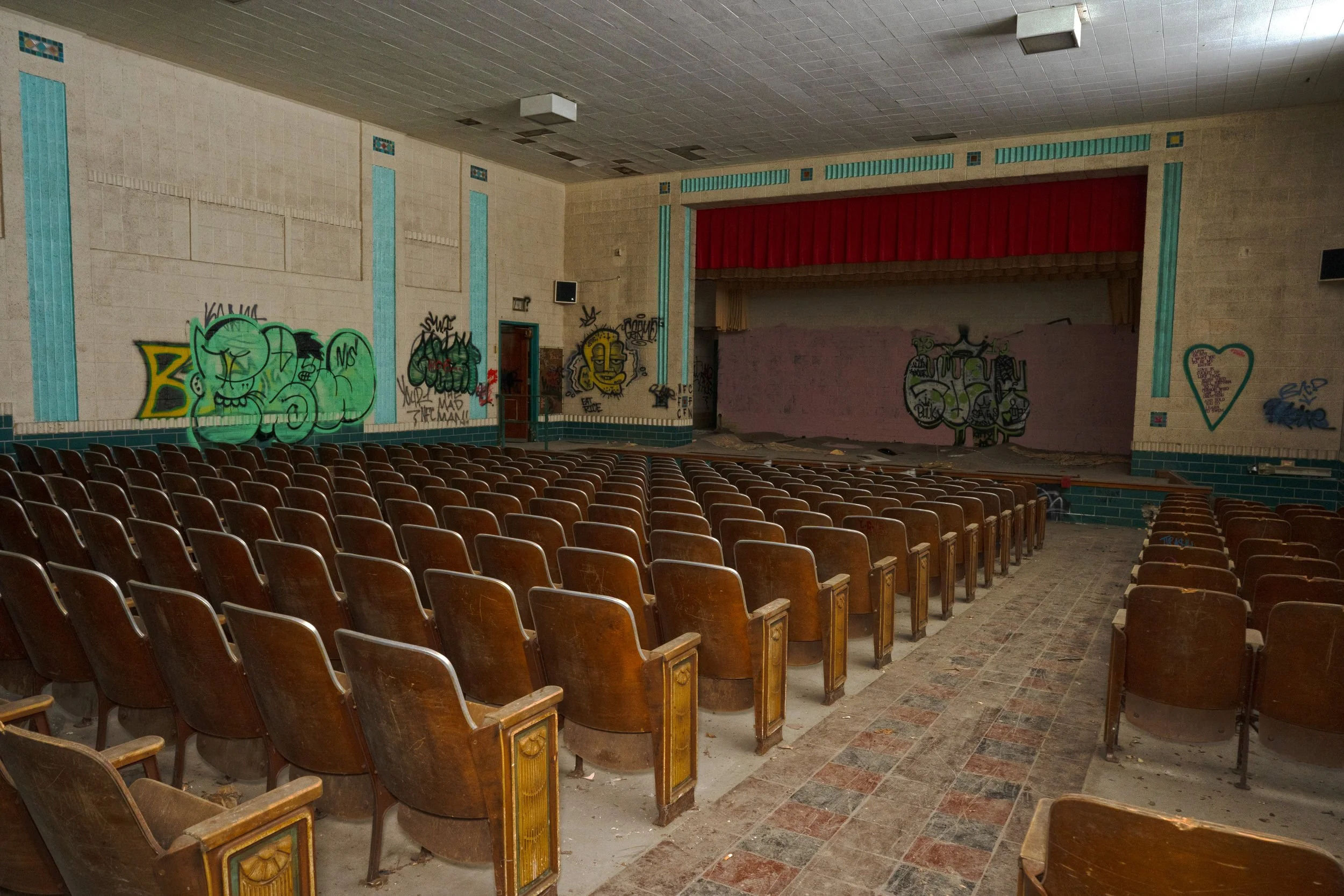
Auditorium shot 2
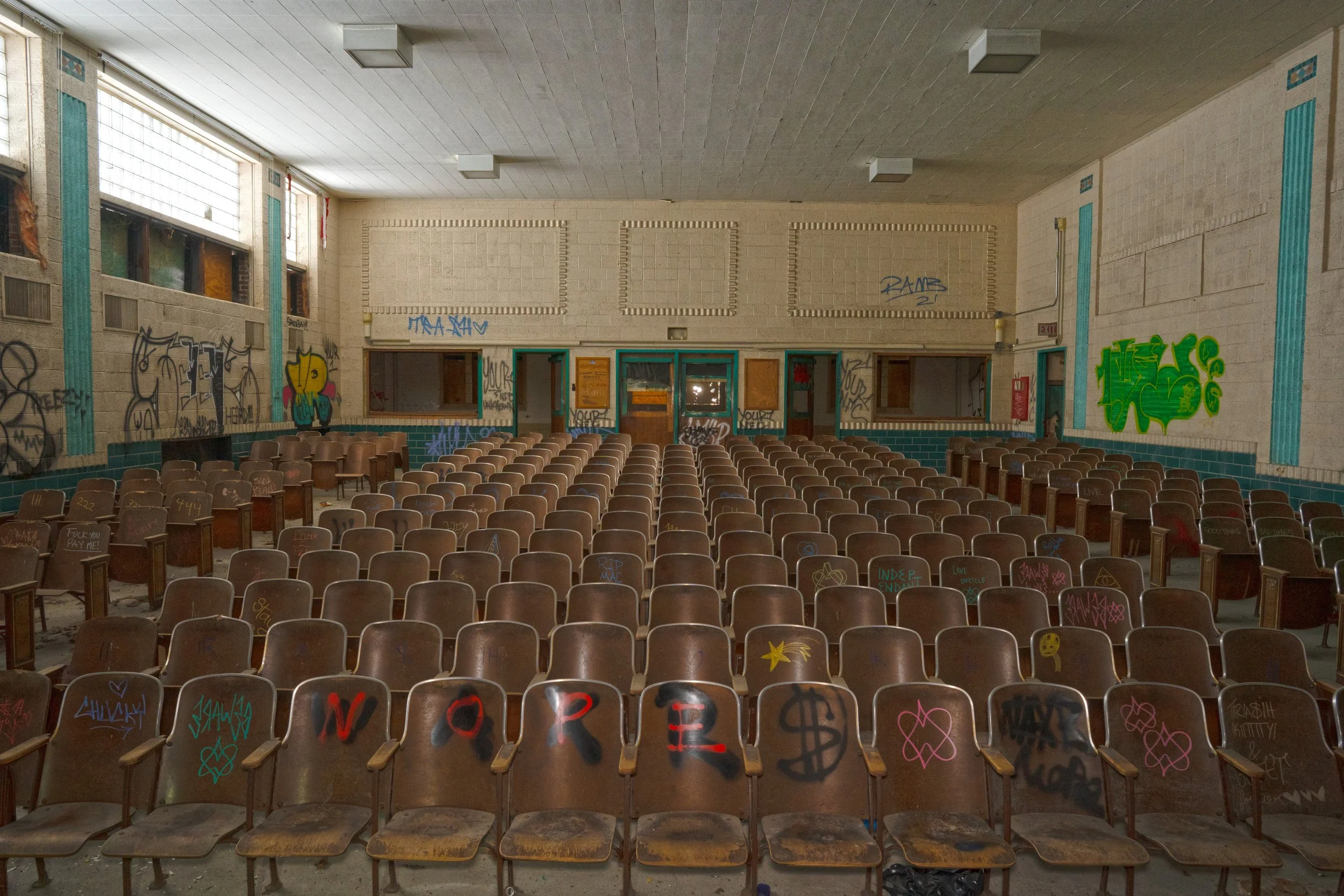
Auditorium shot 3
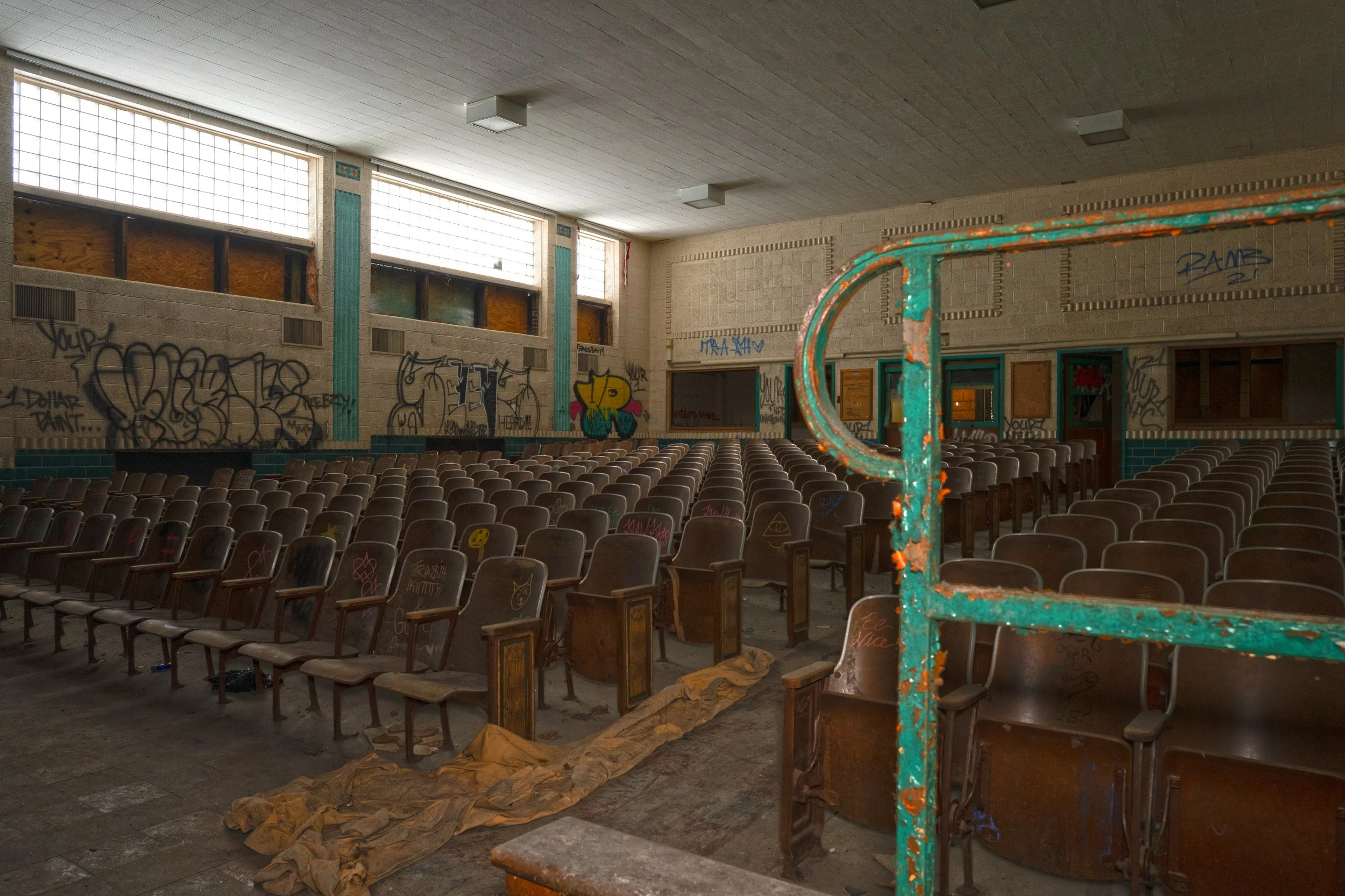
Auditorium shot 4
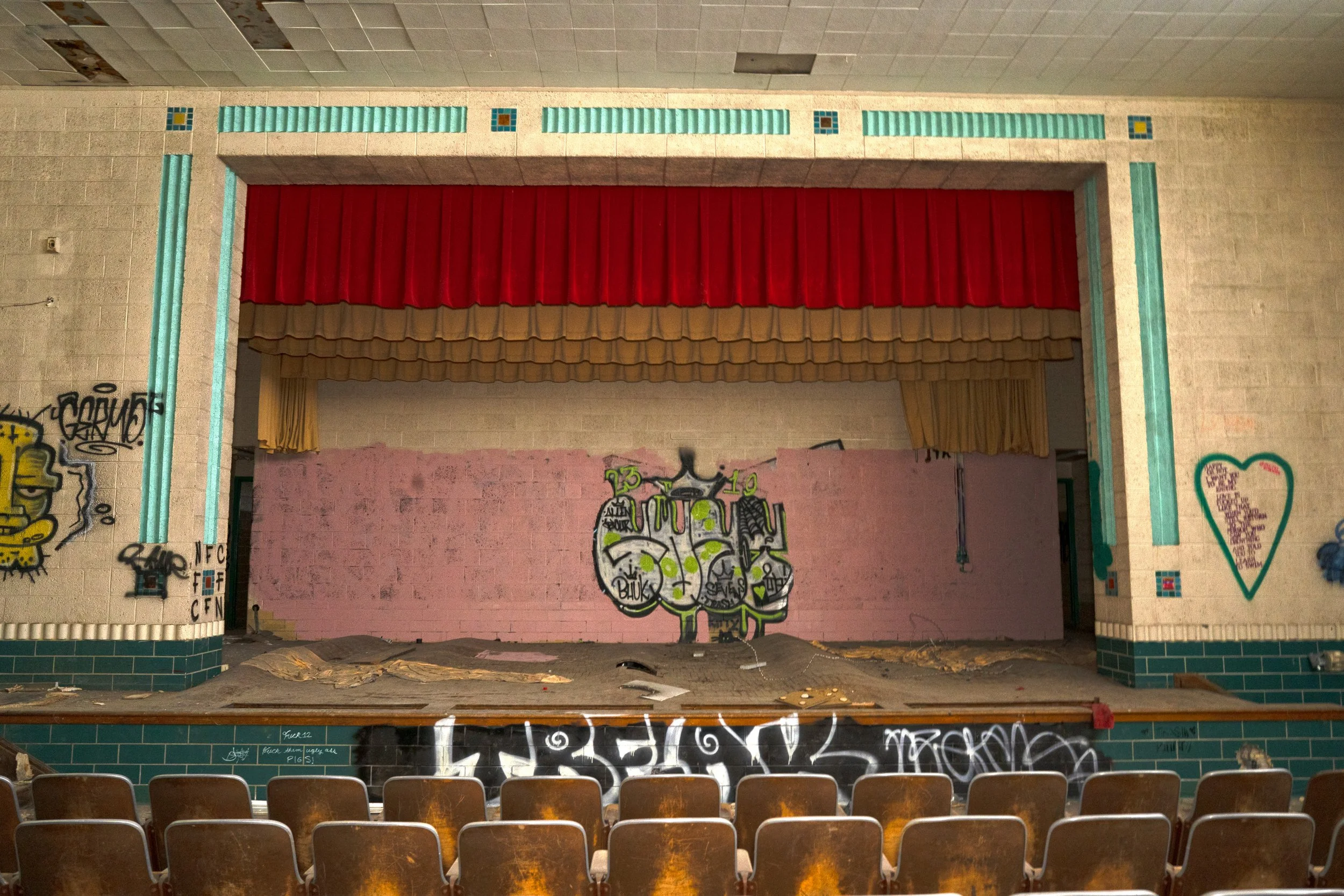
Auditorium shot 5 (The stage)
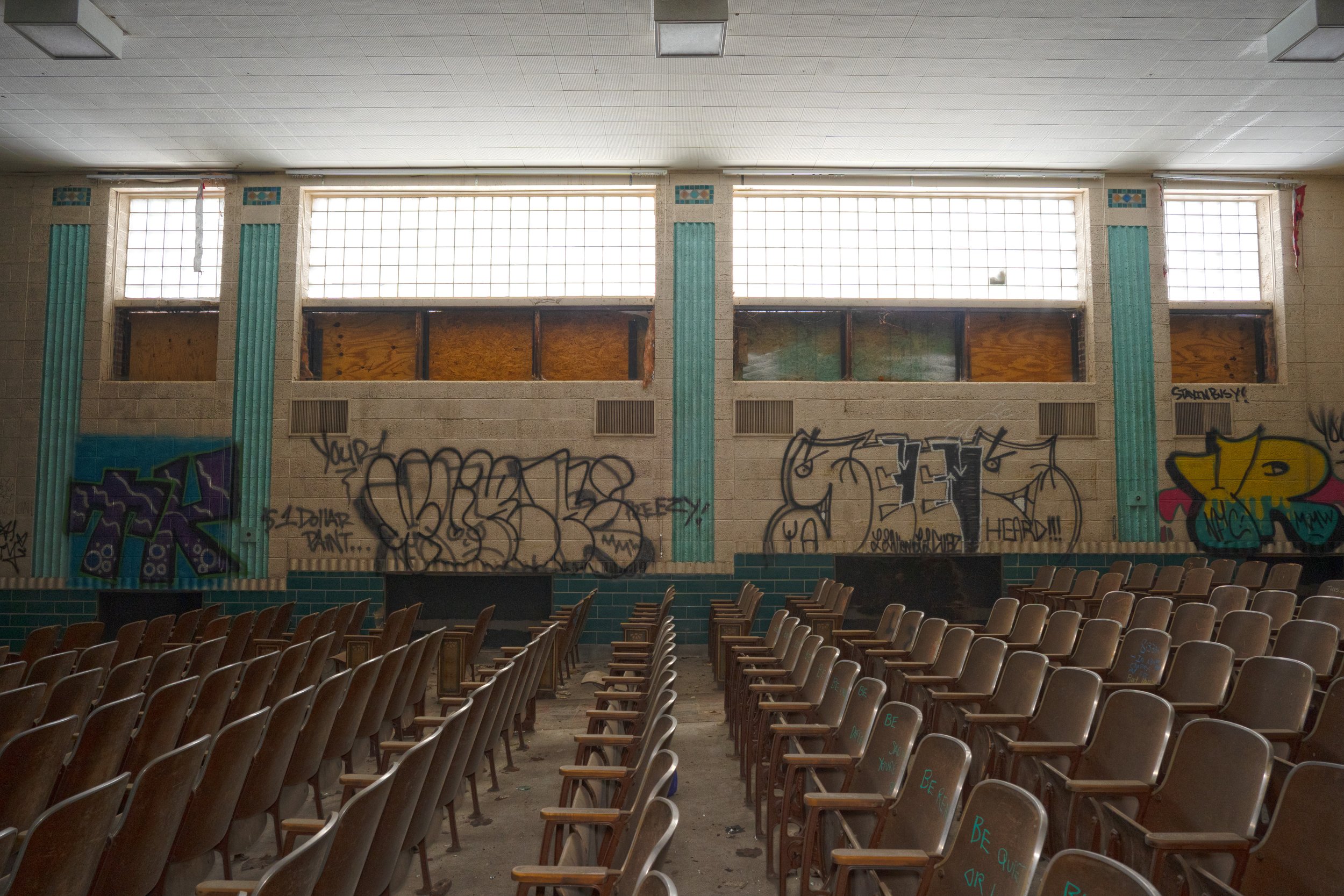
Auditorium shot 6 (Details of Auditorium walls)
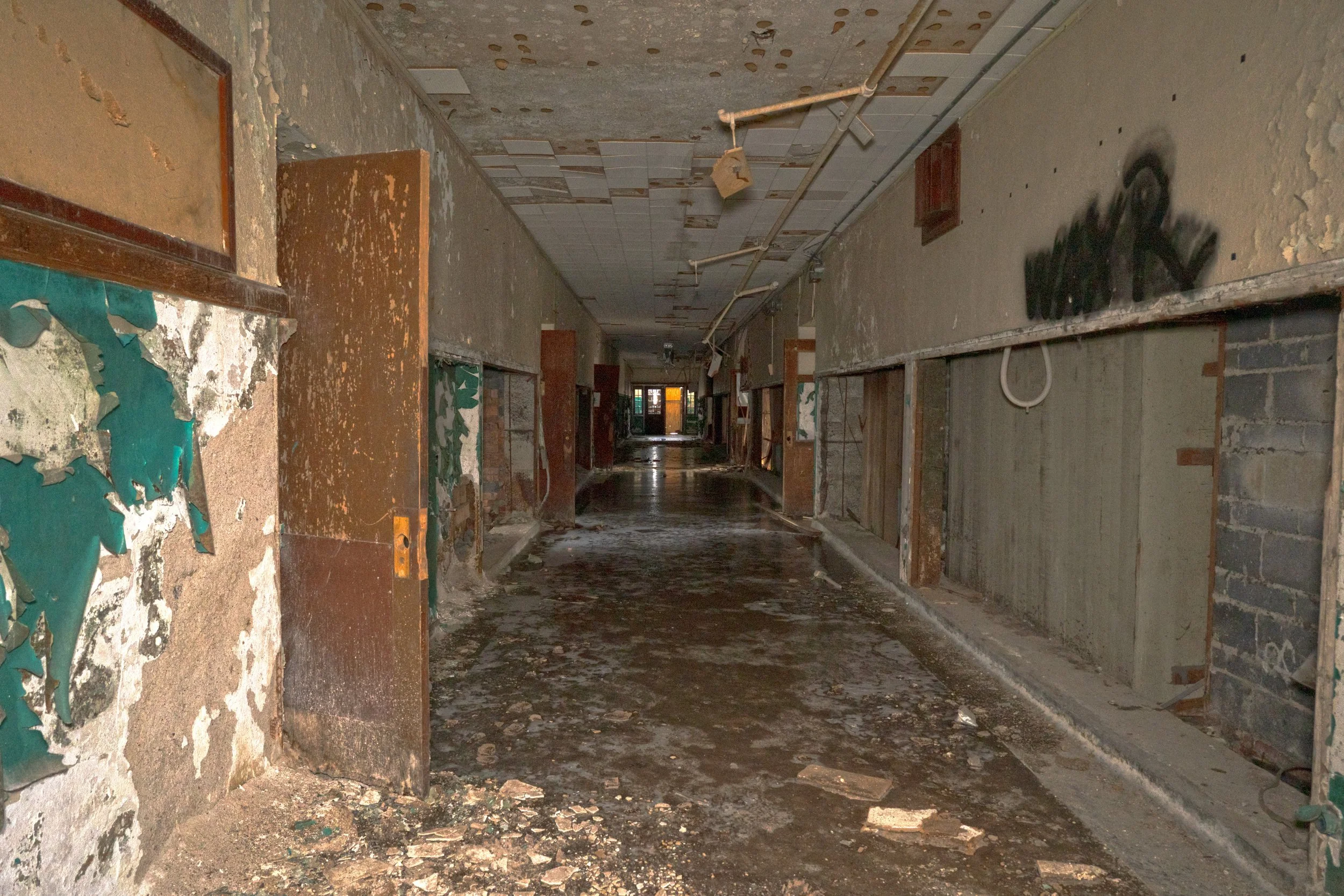
The Gymnasium corridor has had water intrusion that causes the floor to freeze in the winter
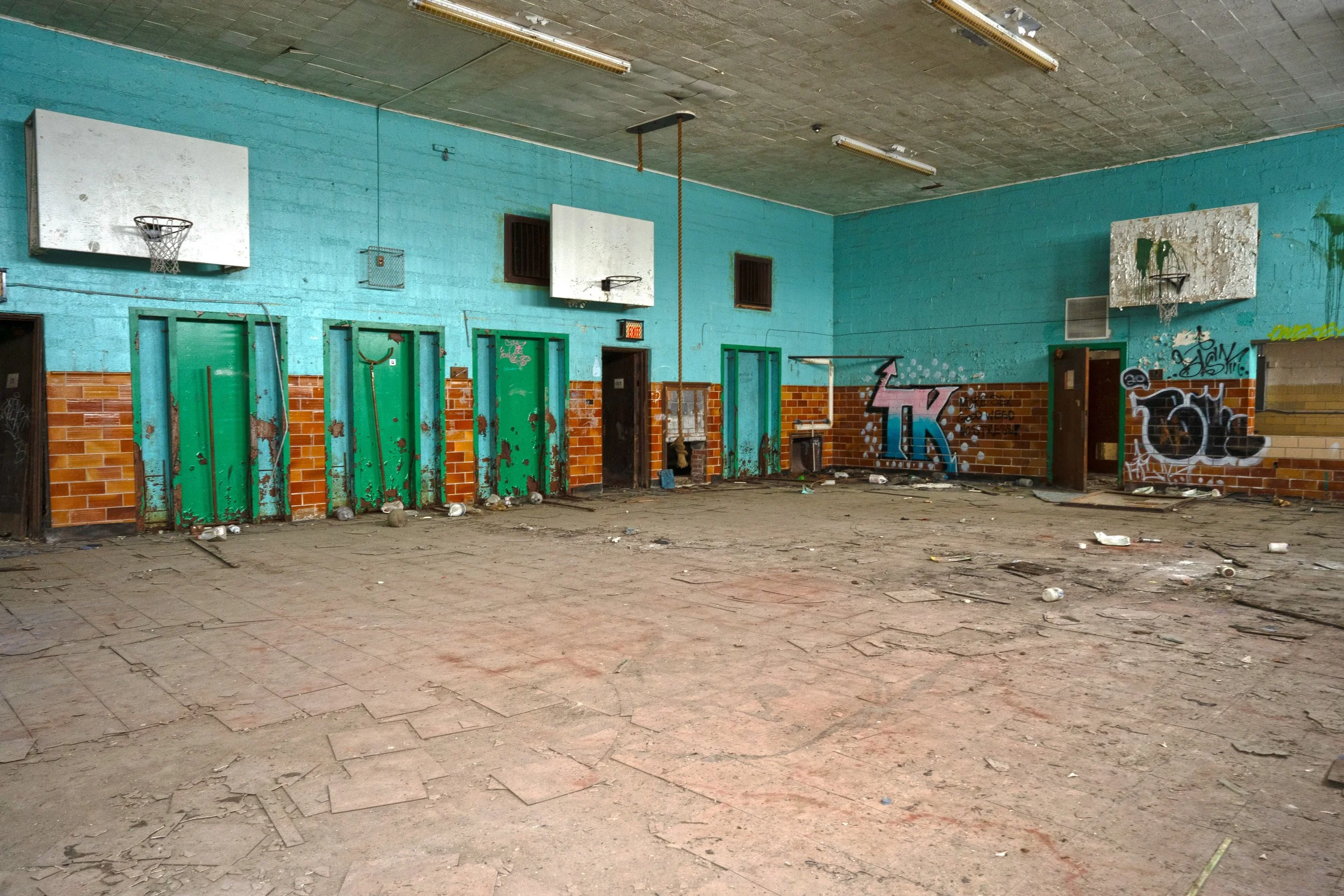
Gymnasium shot 1
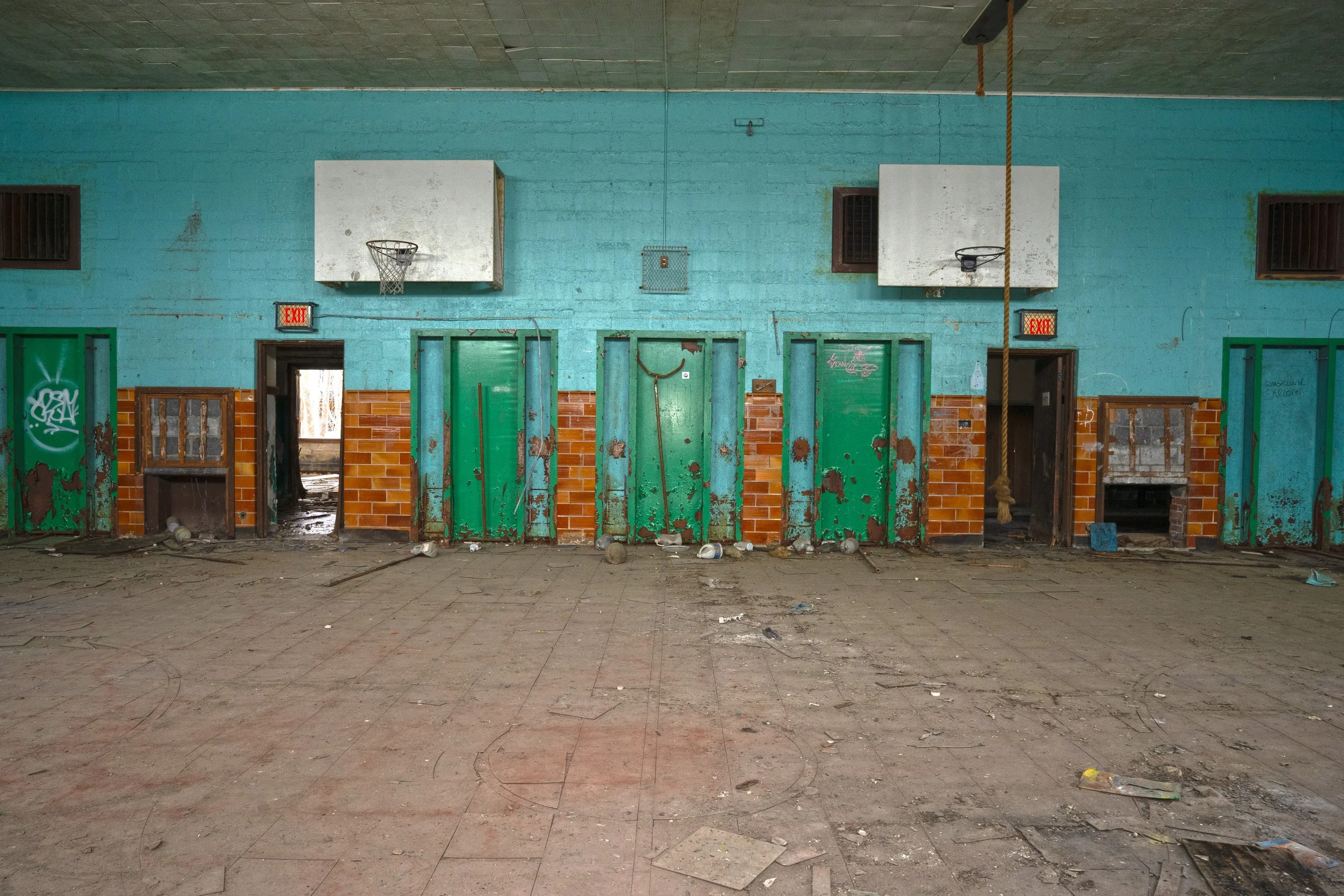
Gymnasium shot 2
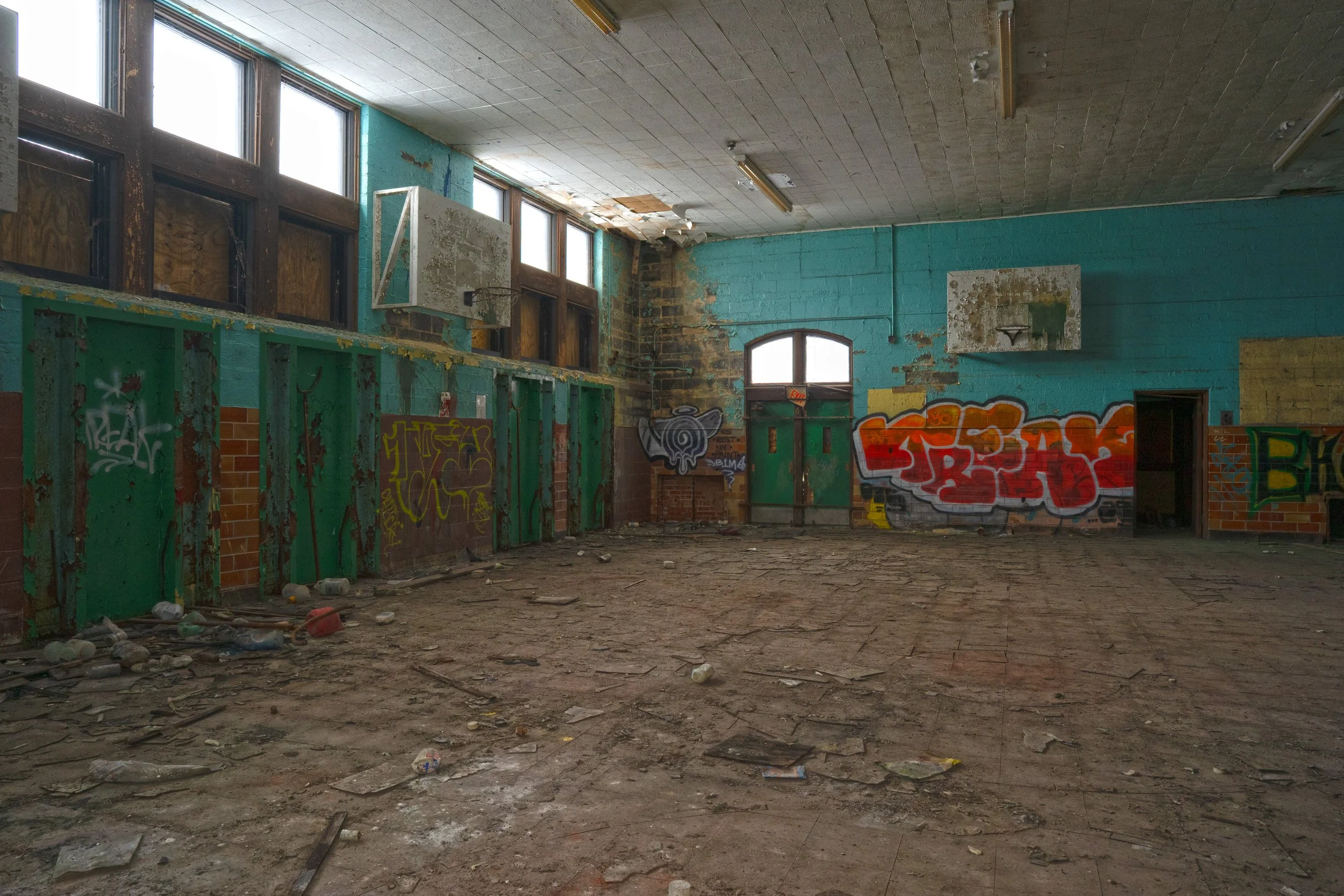
Gymnasium shot 3
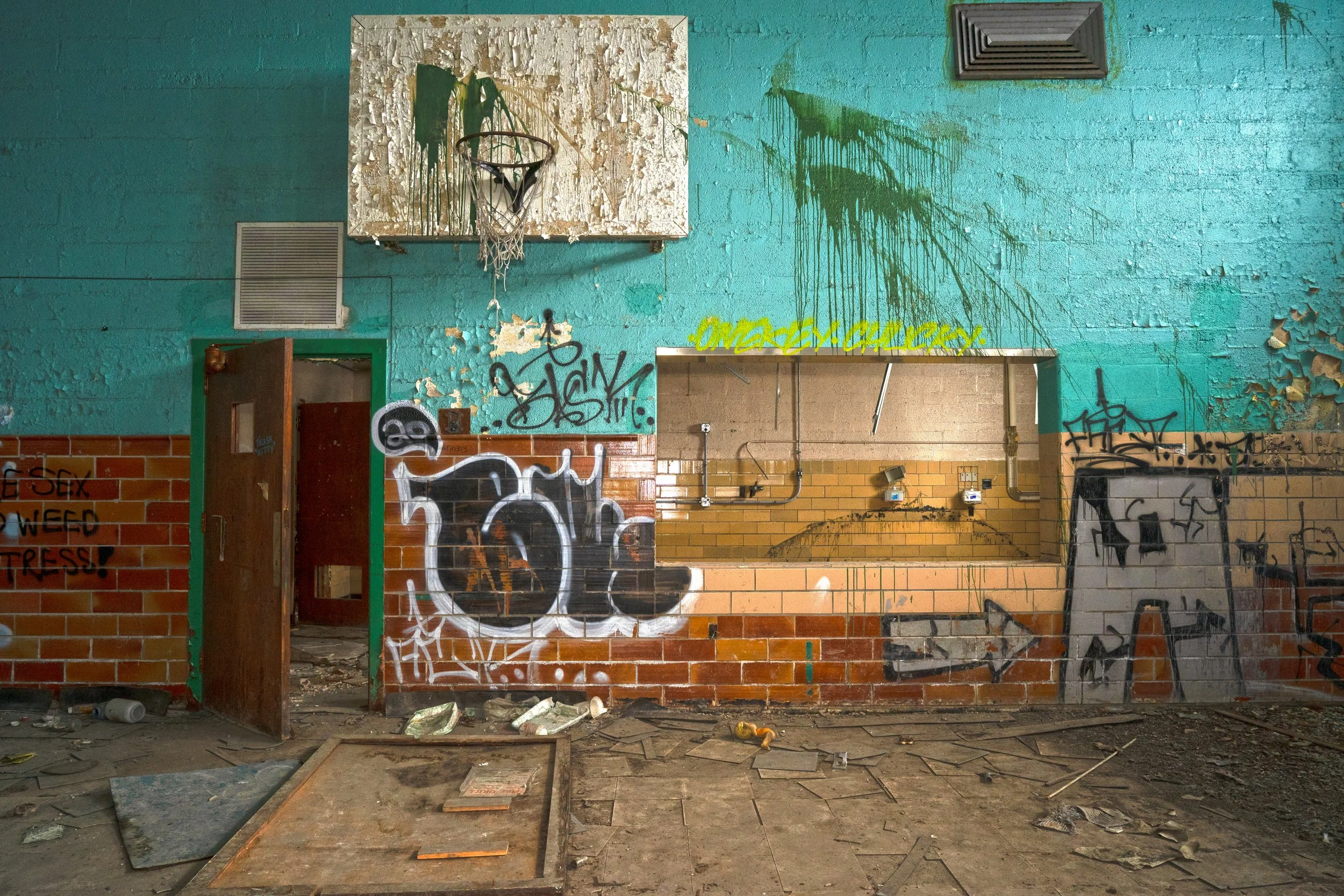
Kitchen serving window
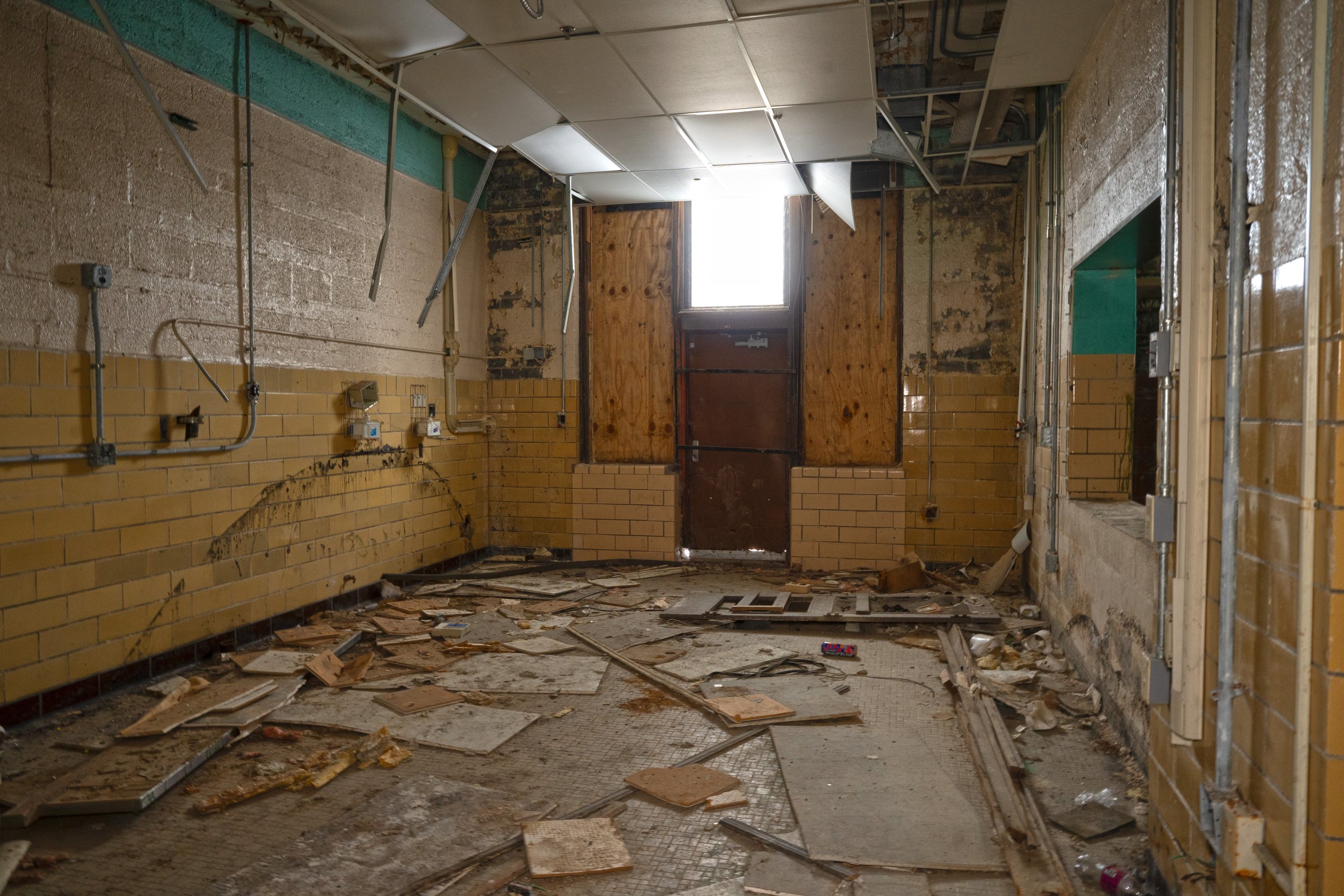
Kitchen area
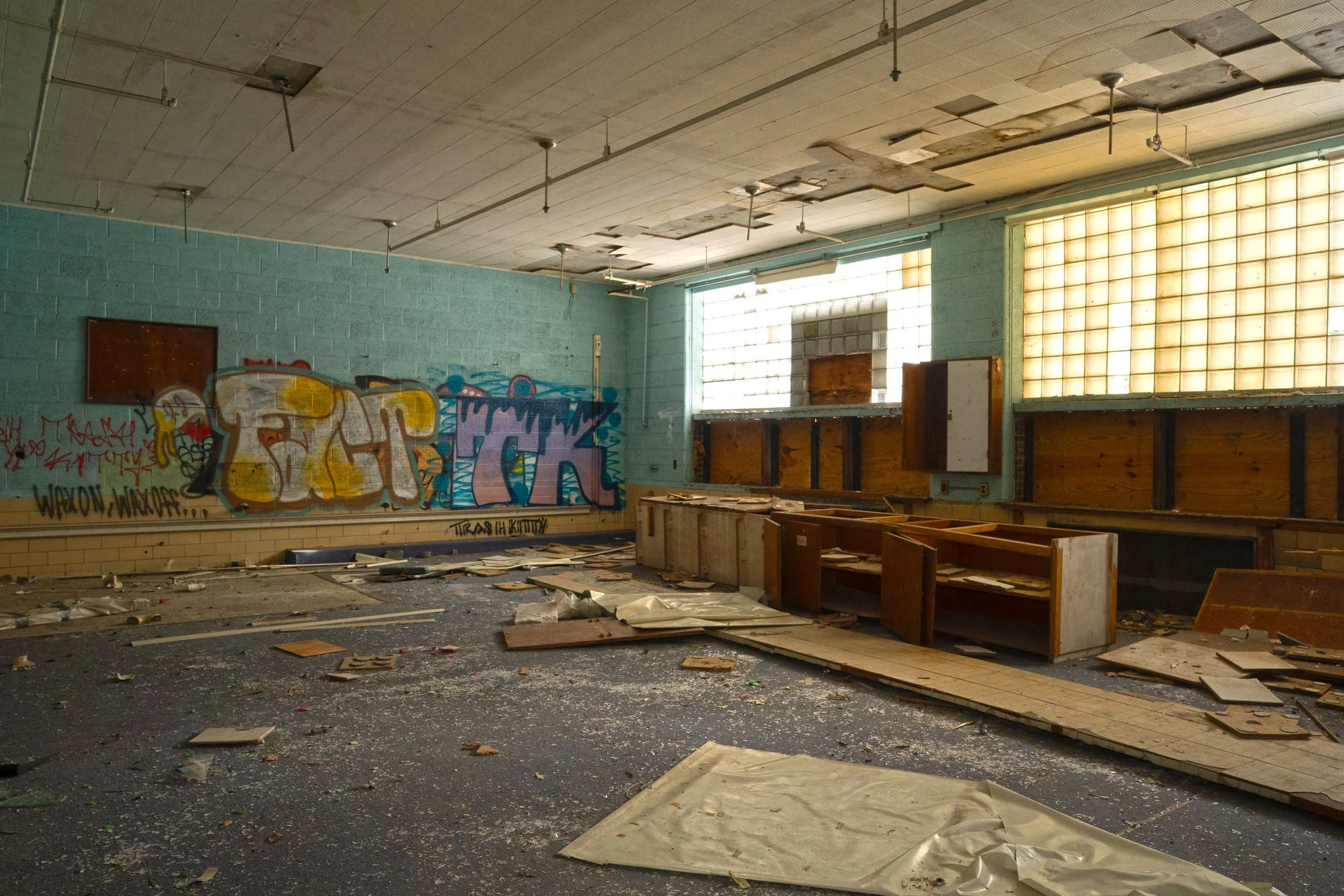
A Classroom
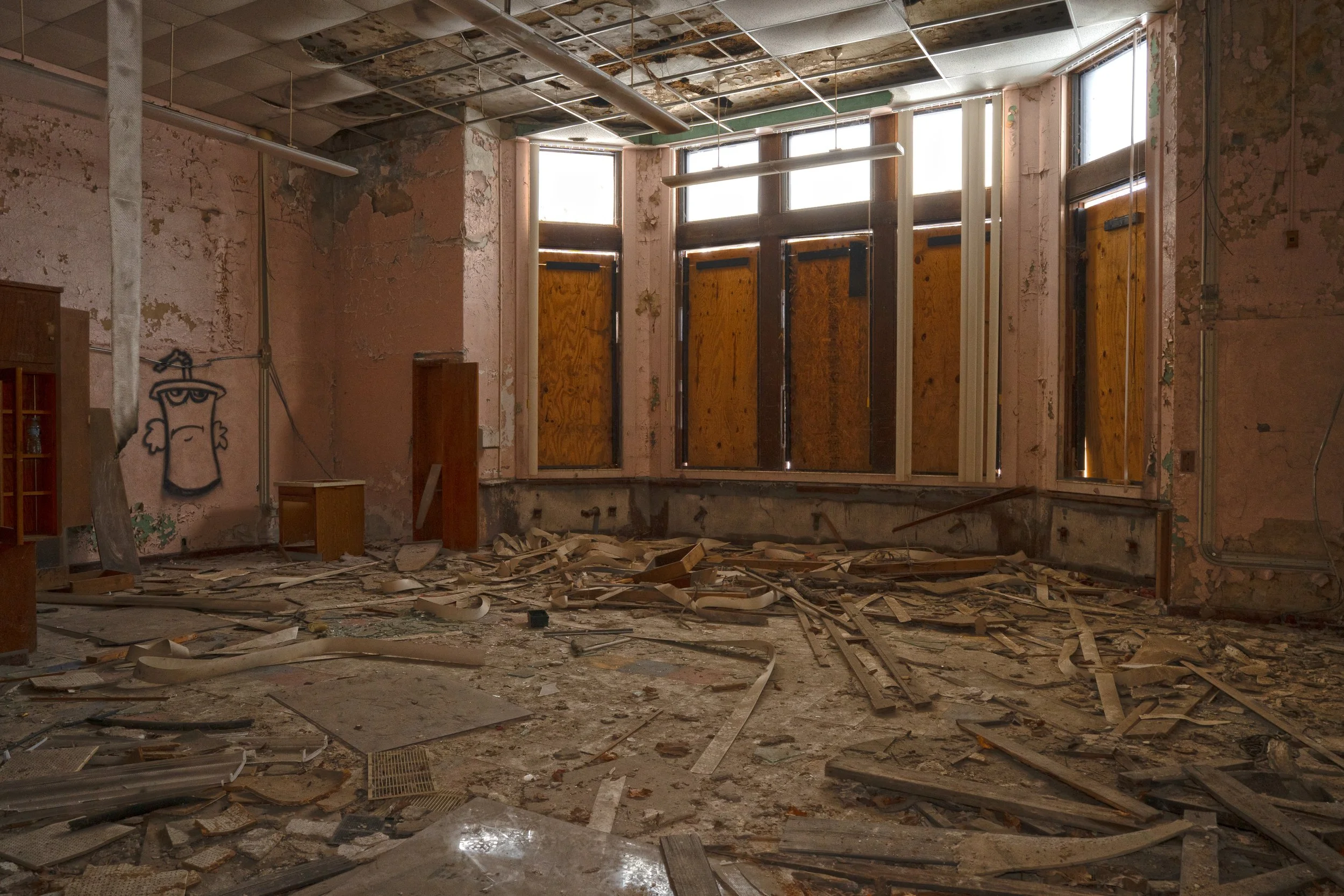
The art room
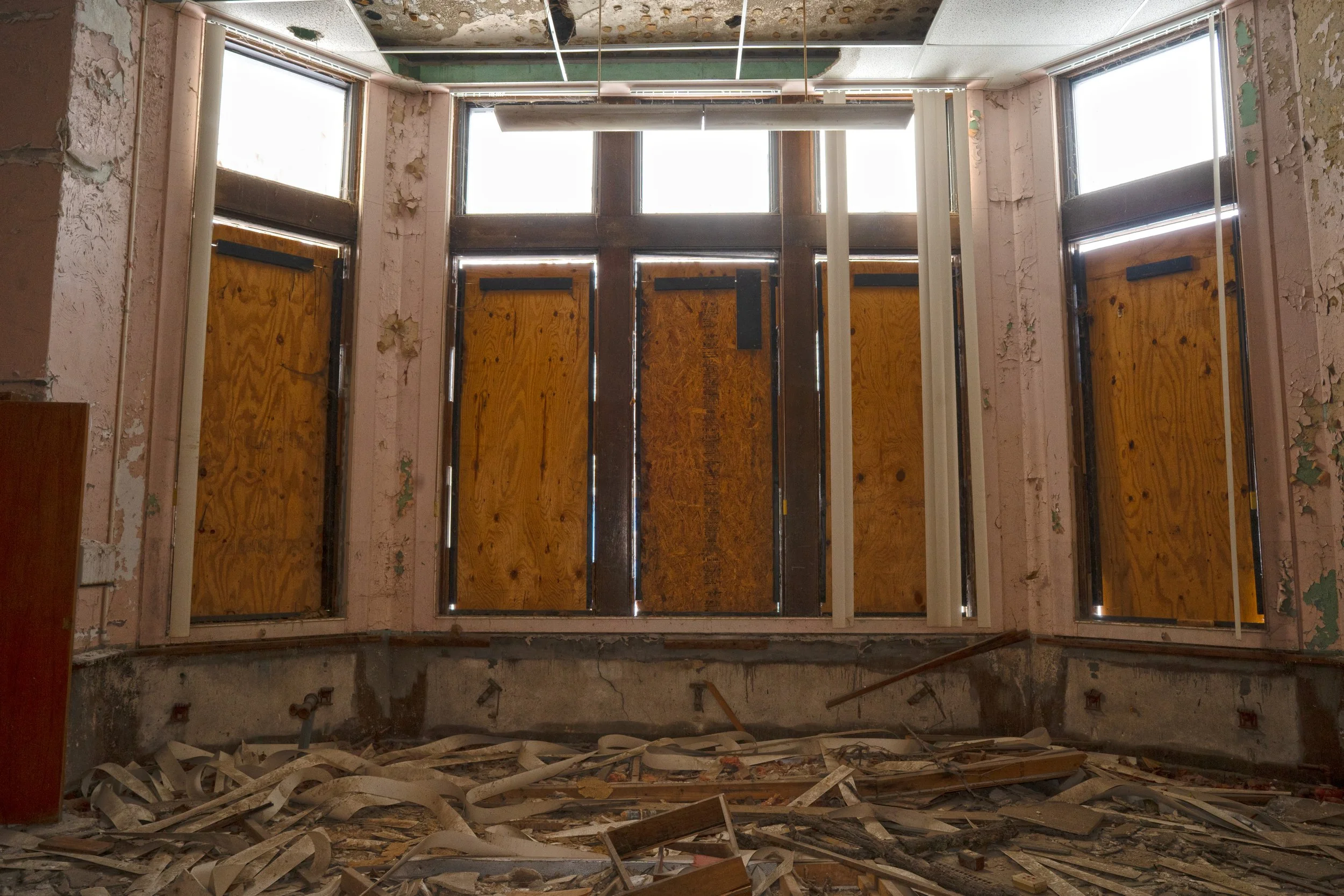
Art room bay window
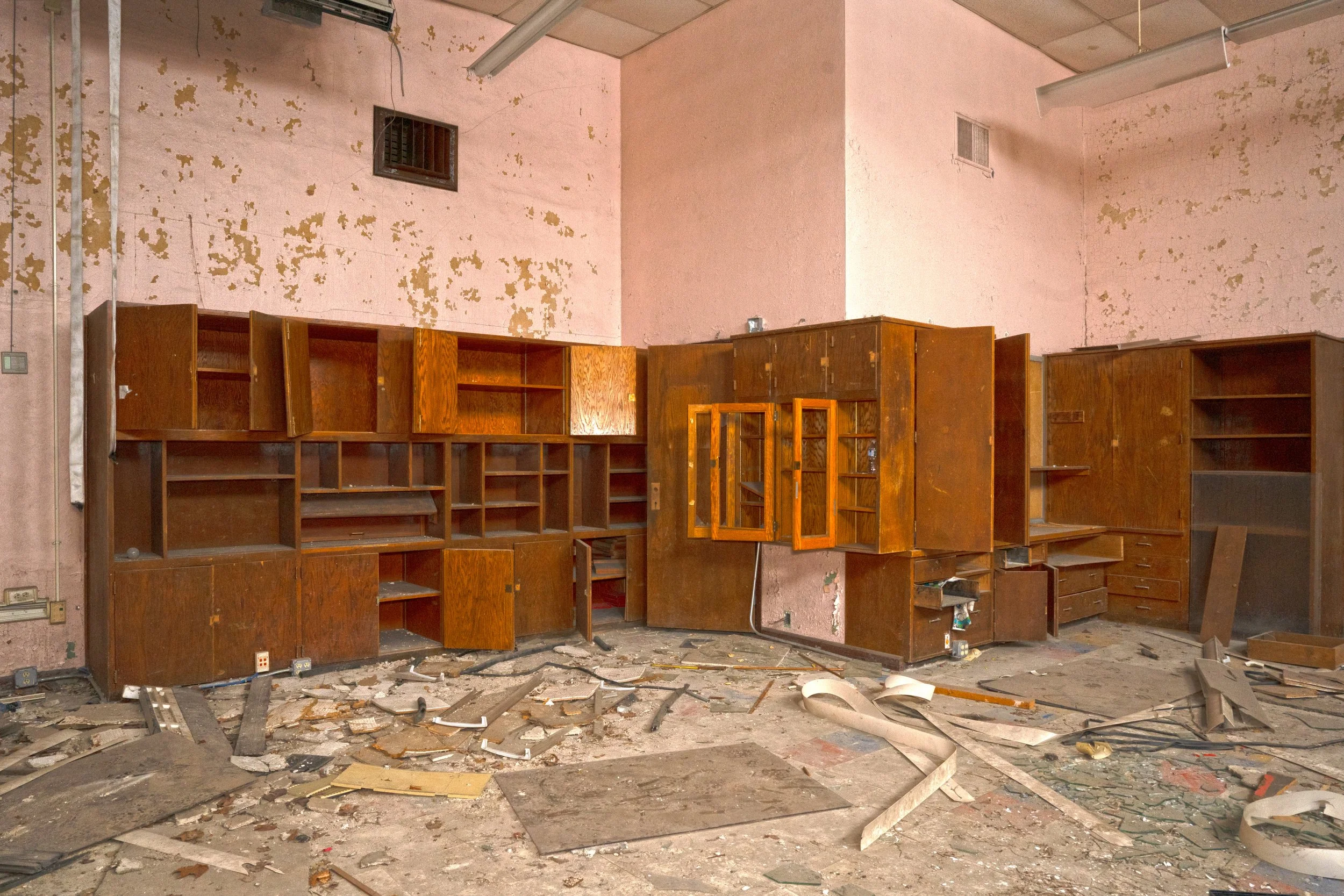
Art room cabinets
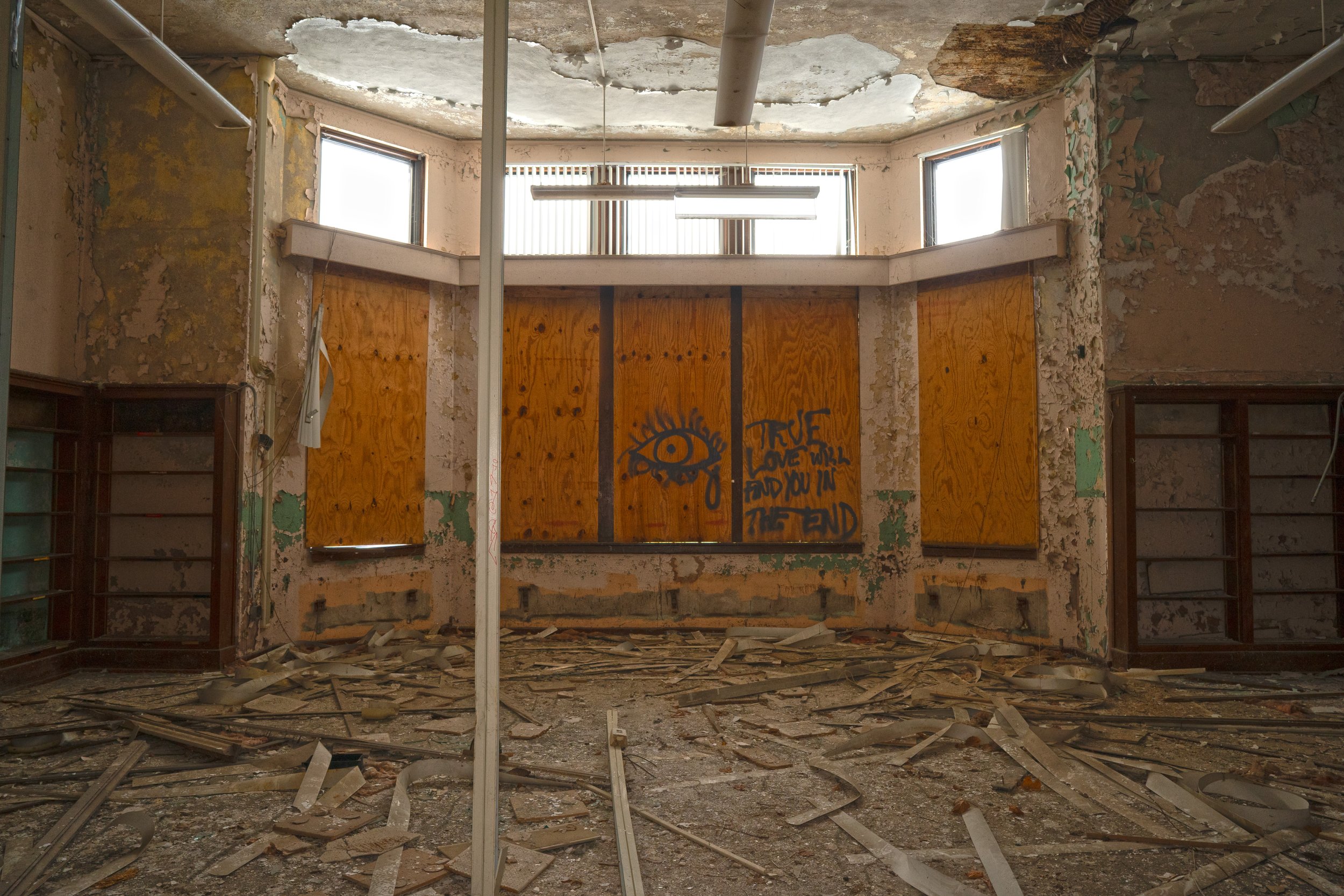
Library shot 1
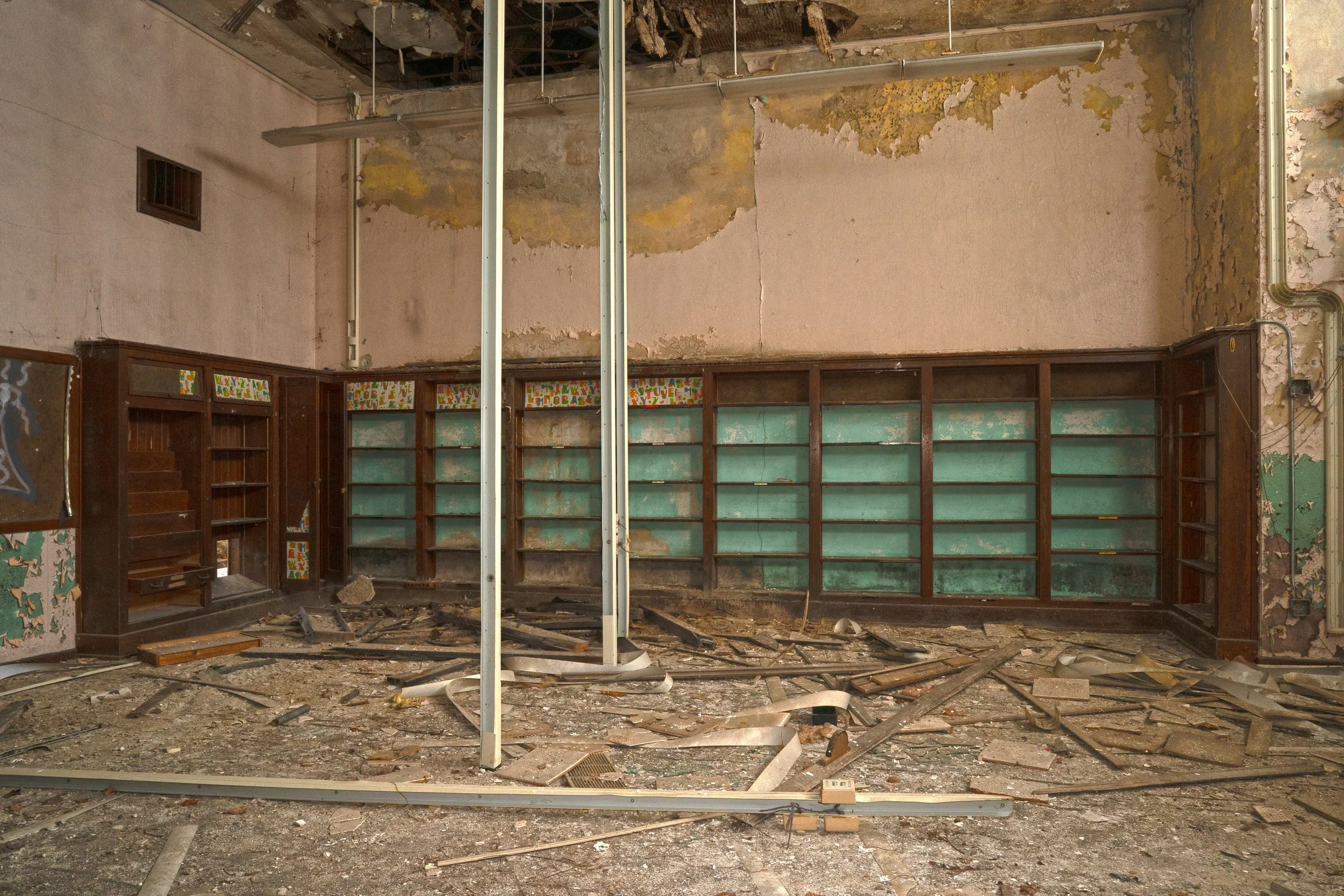
Library shot 2
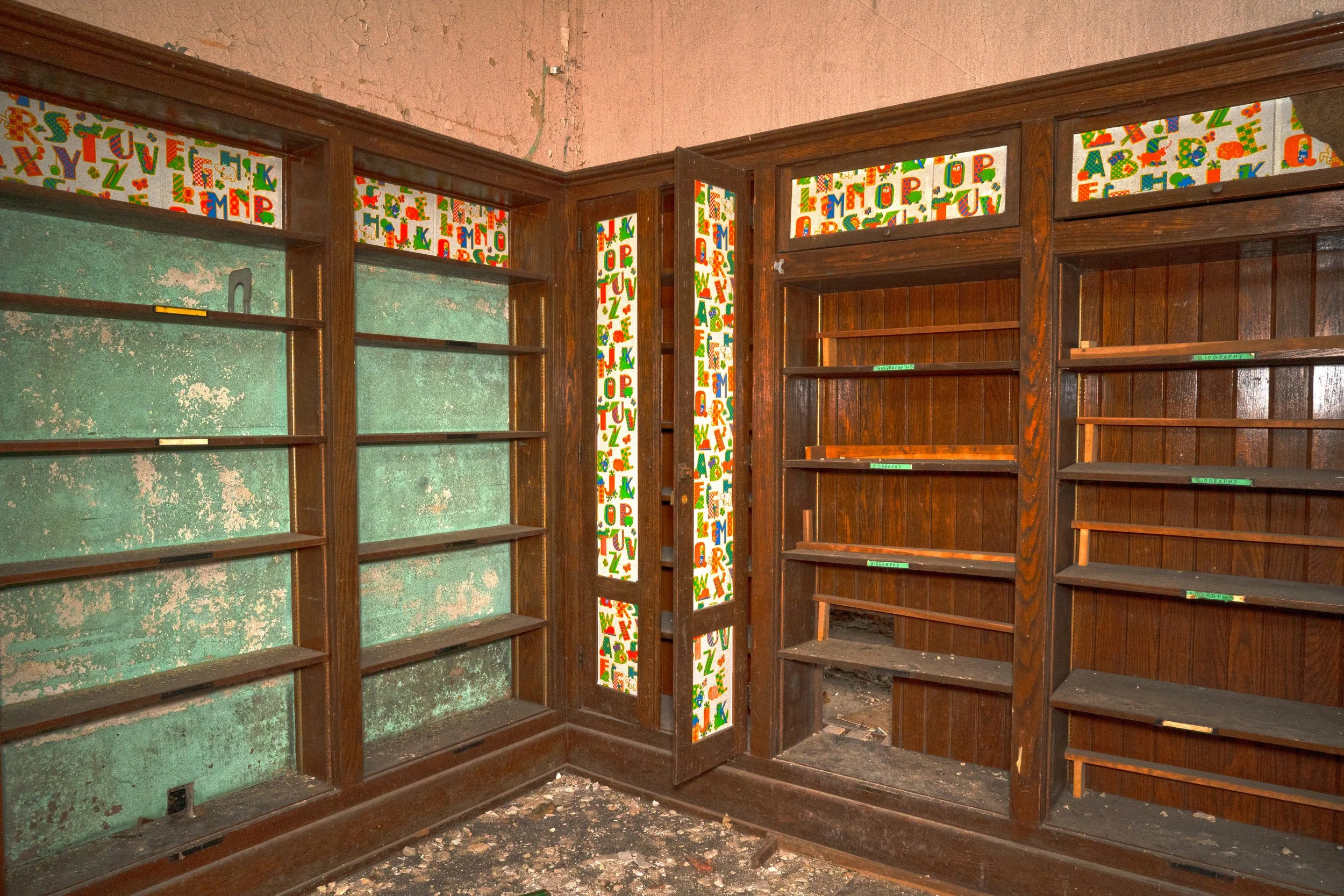
Library shot 3
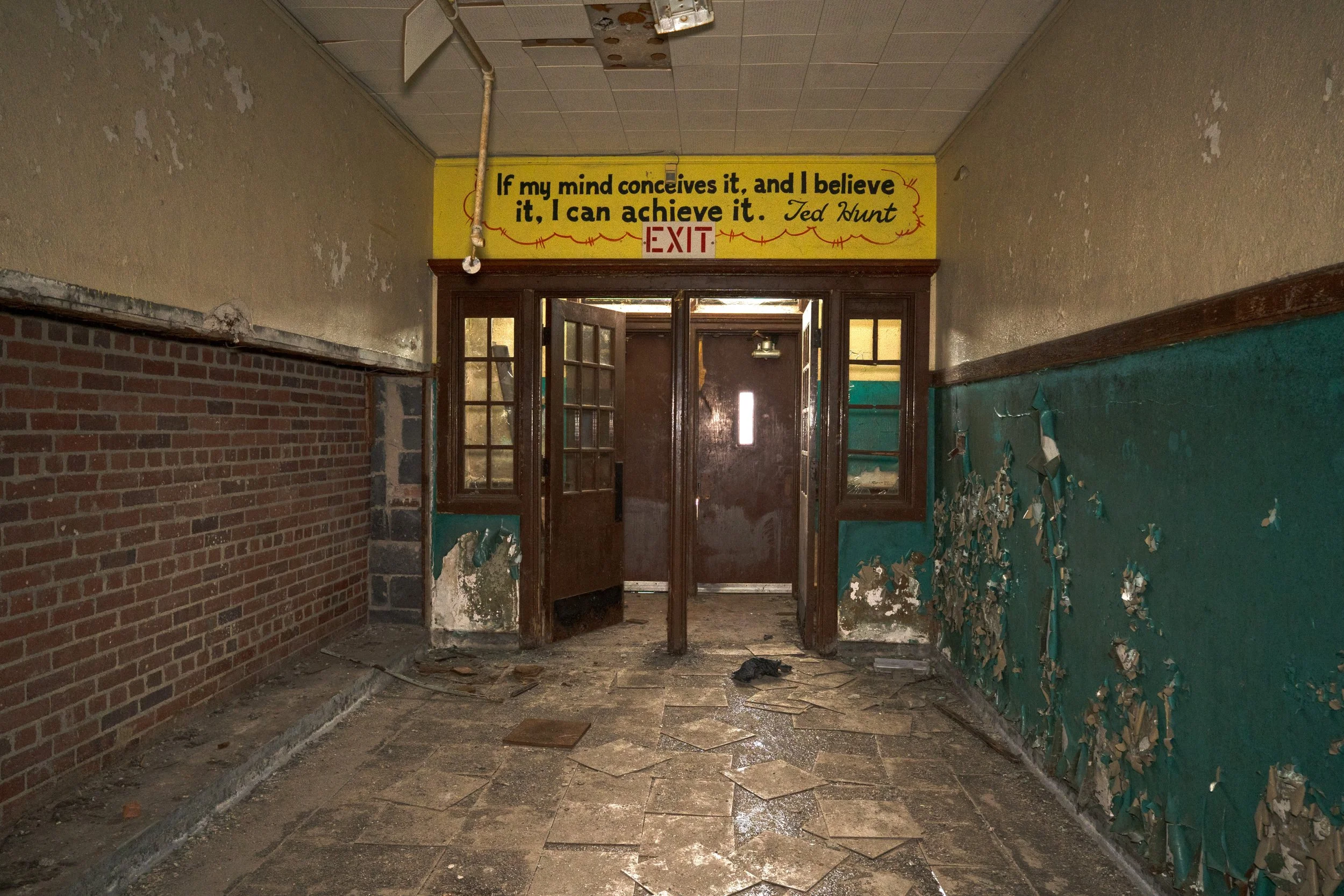
Entrance to Holcomb with Mural still intact
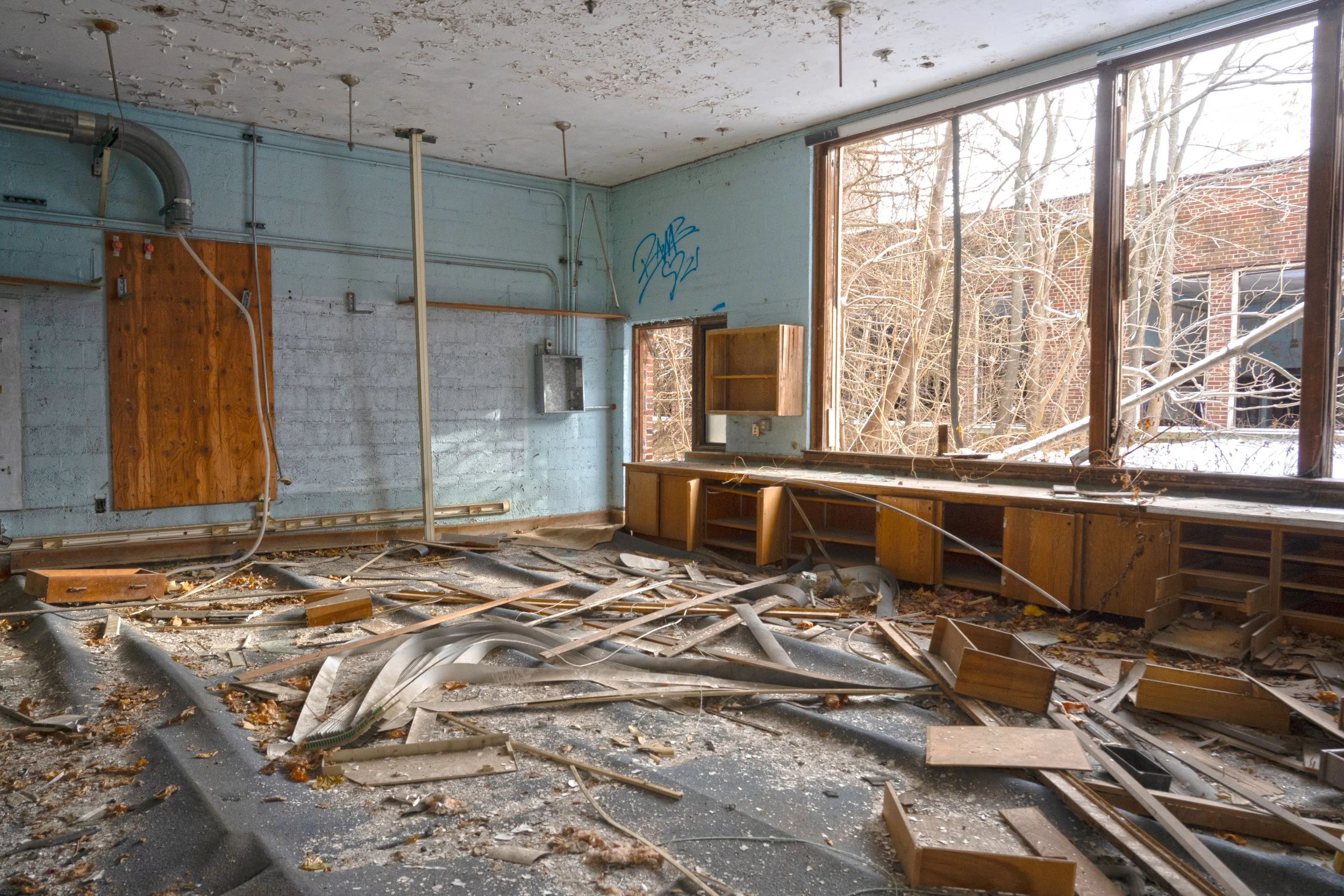
A classroom that faces the courtyard
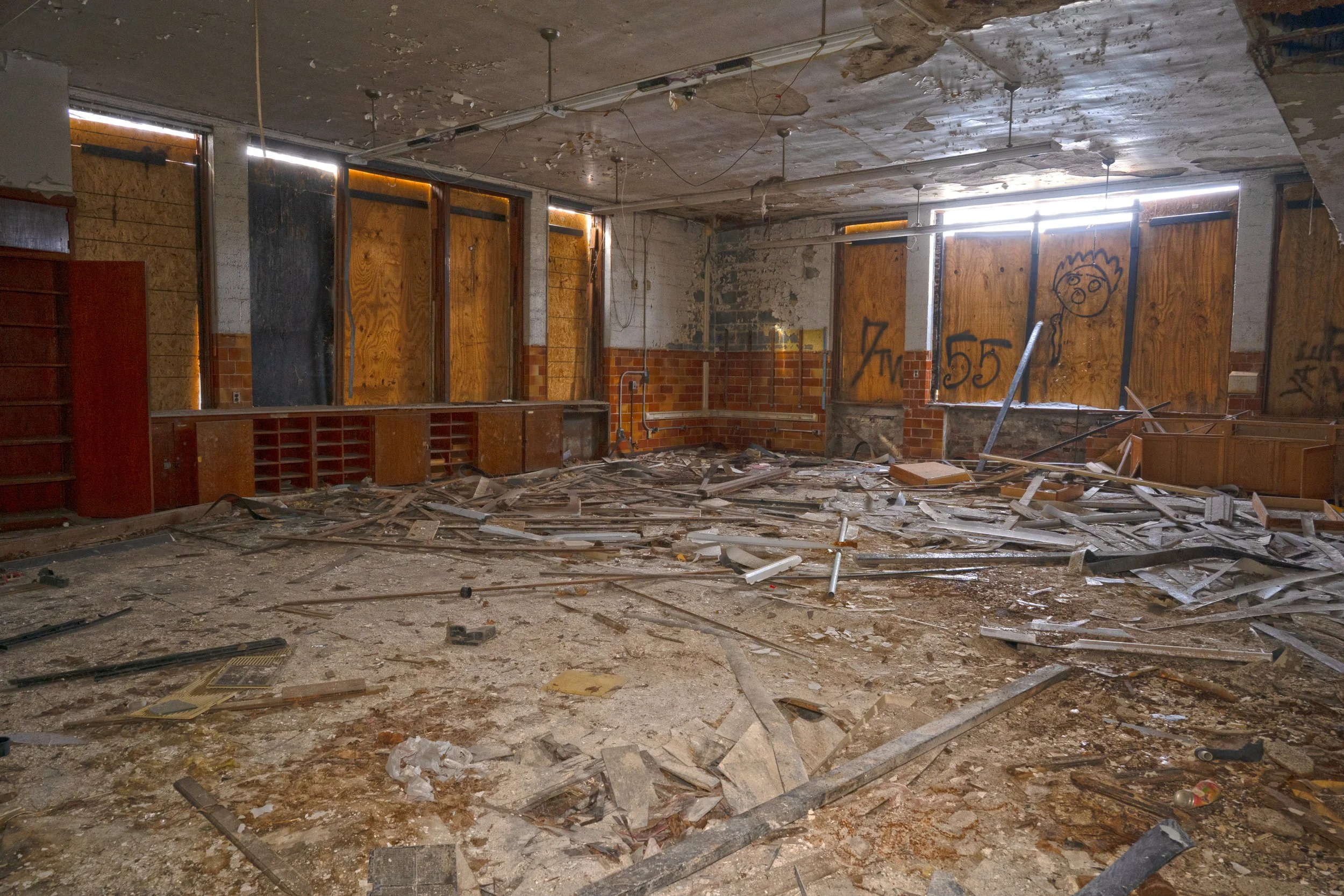
Homemaking room in Holcomb
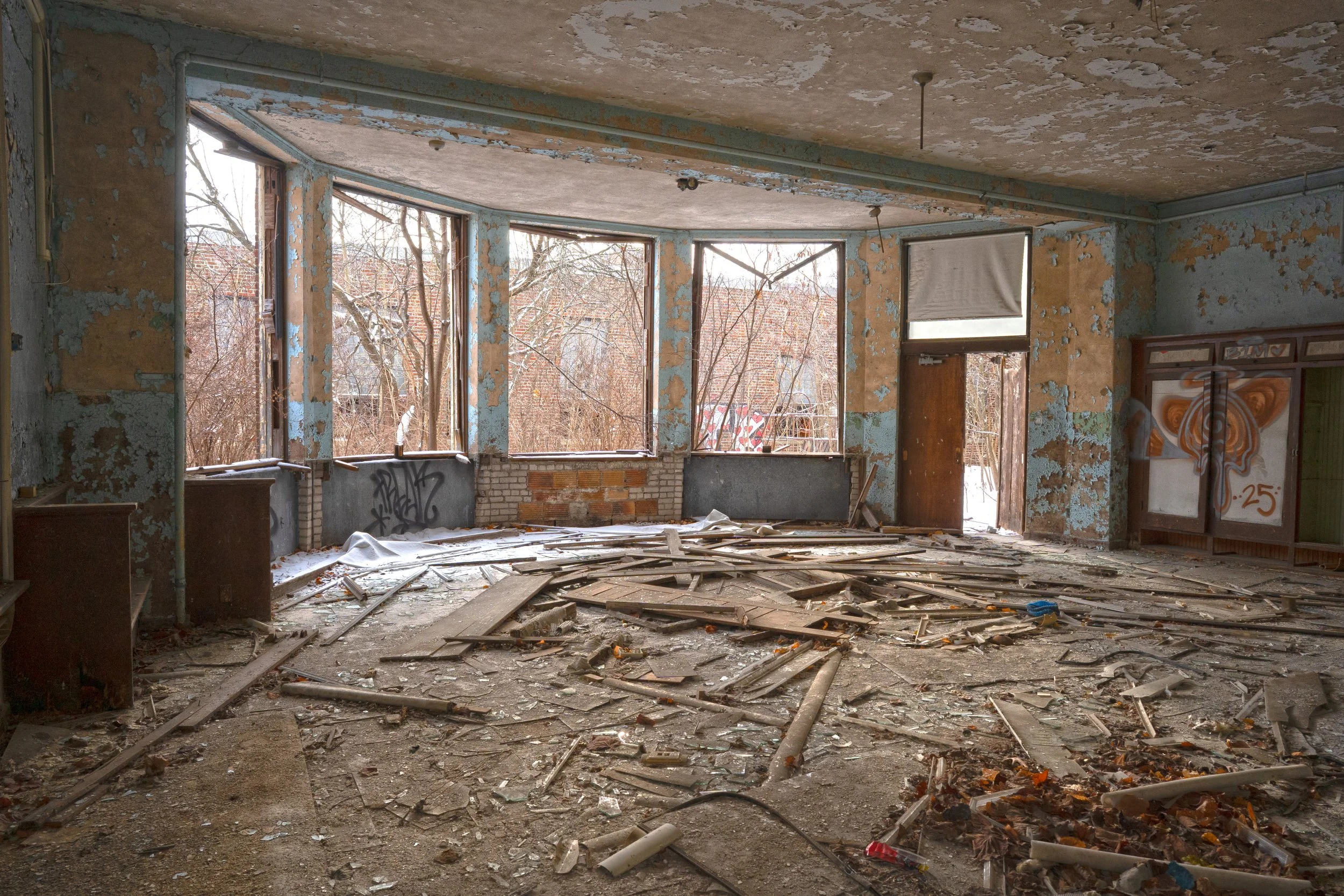
Kindergarten room
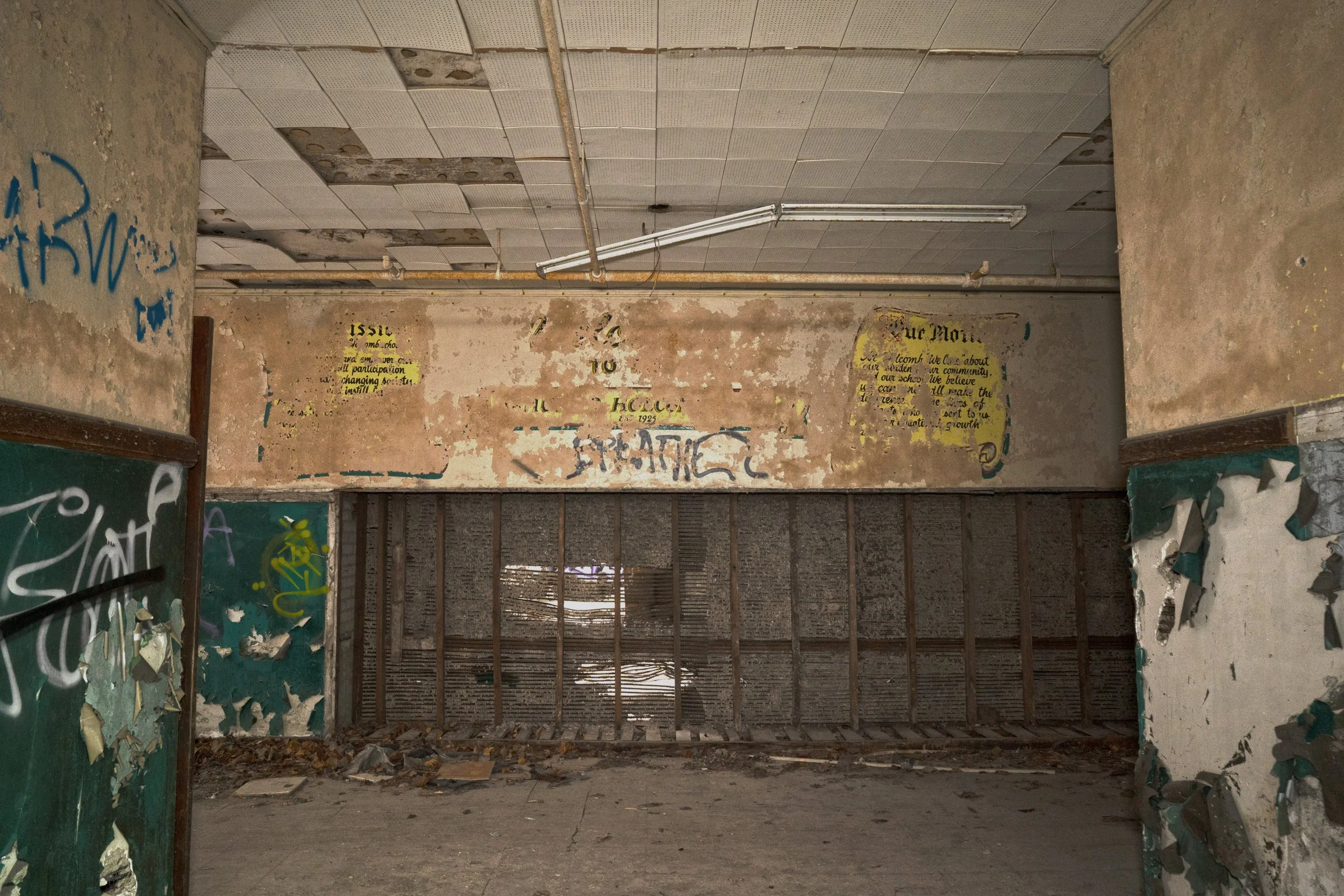
Once a nice mural introducing the school has faded over 15 years