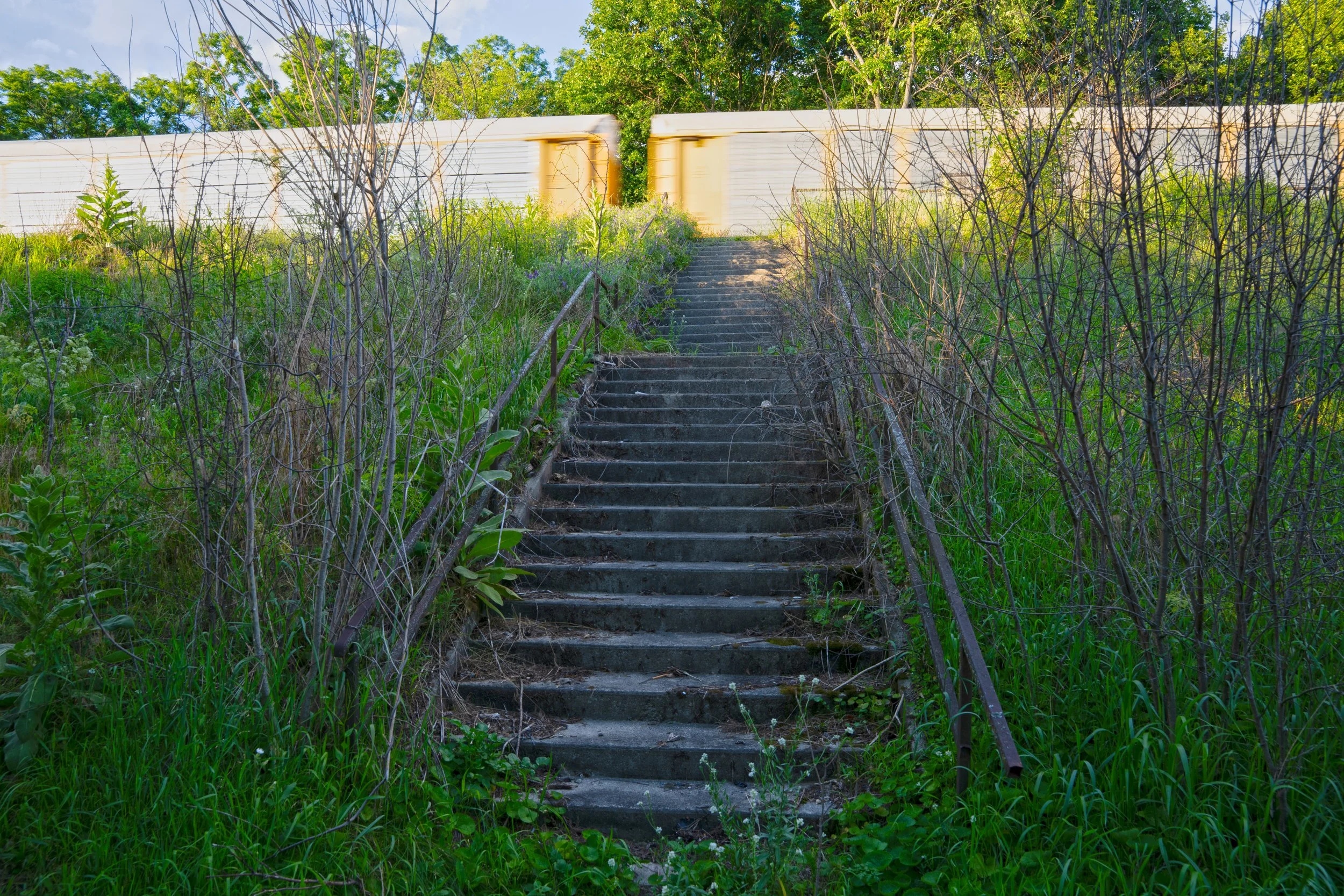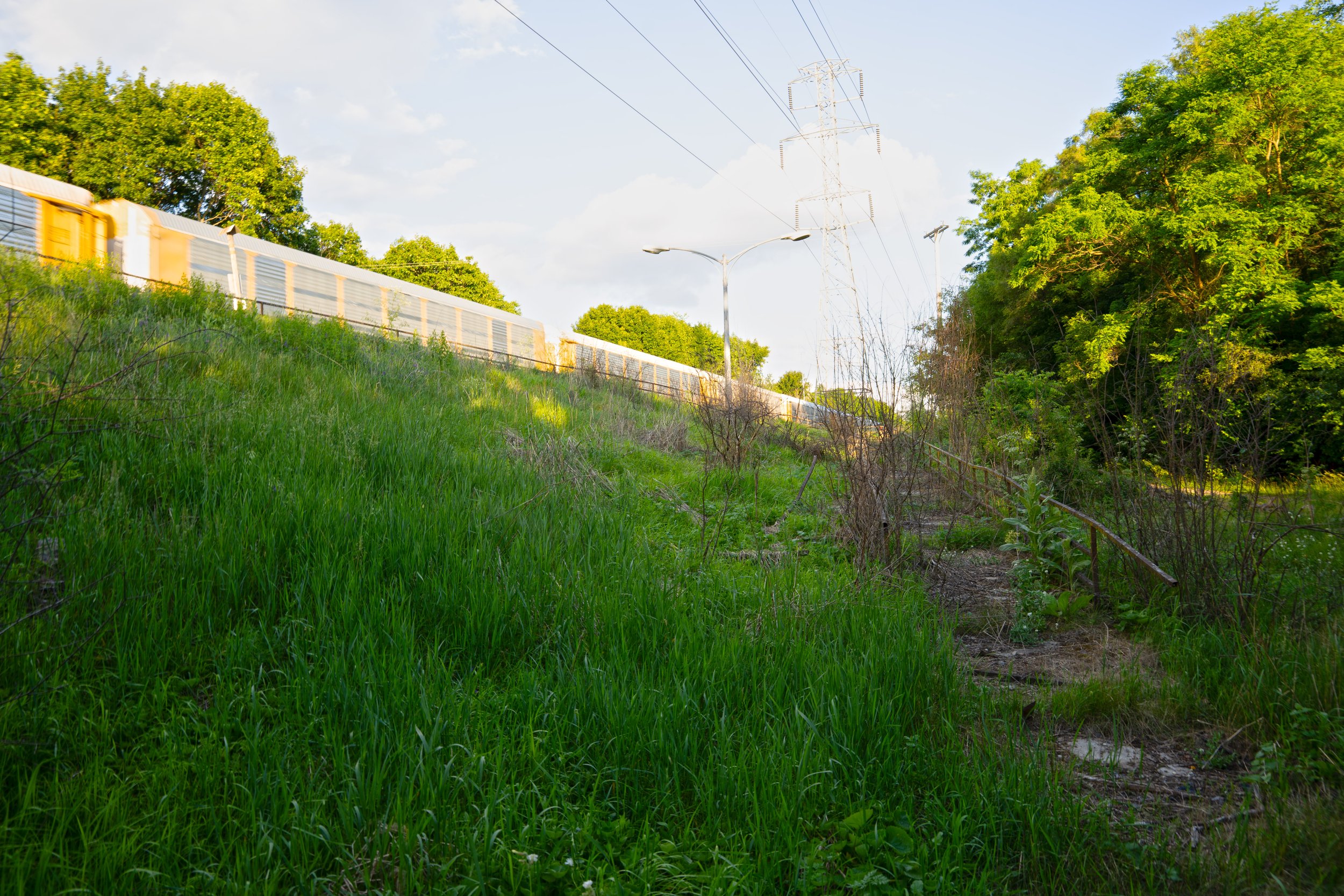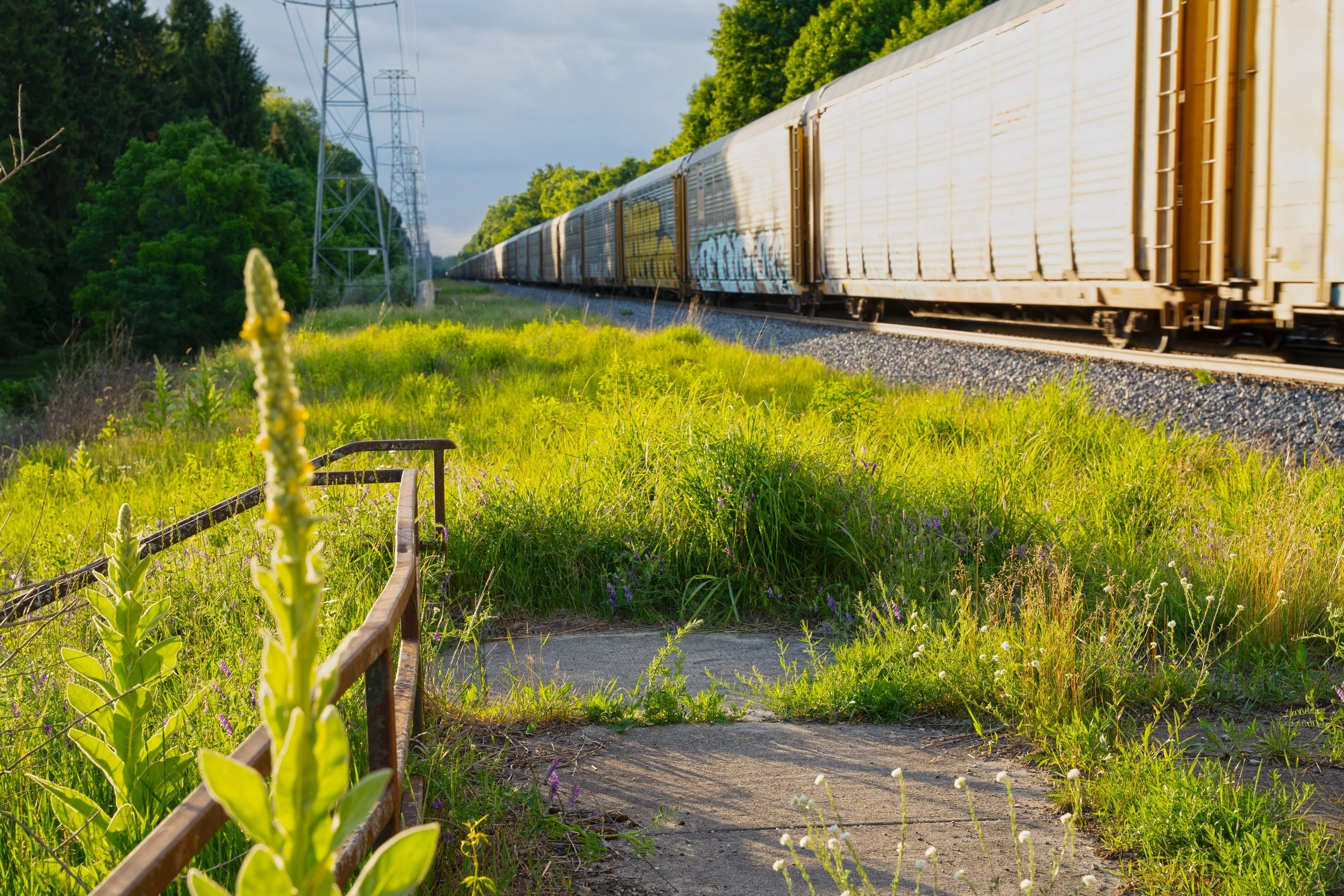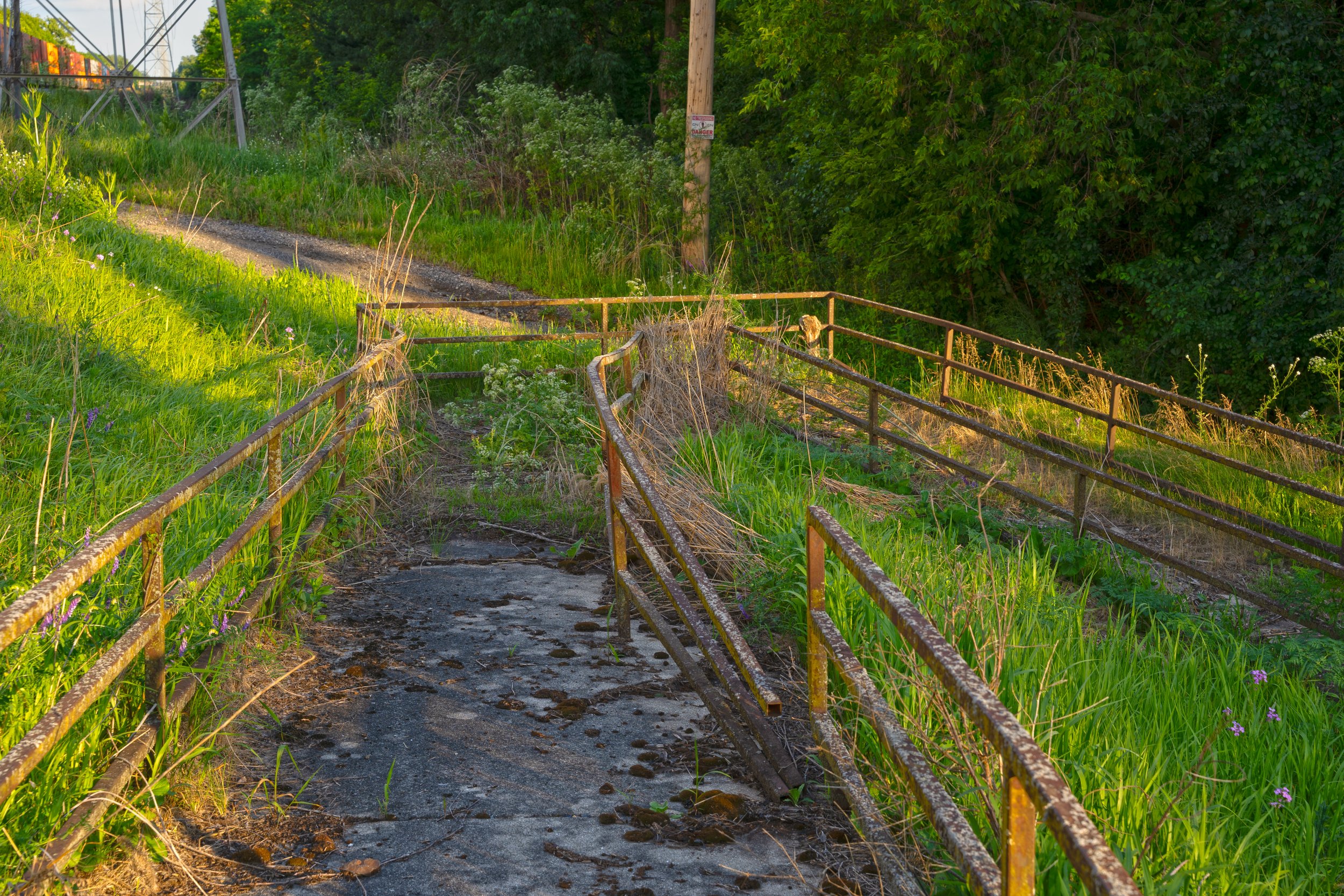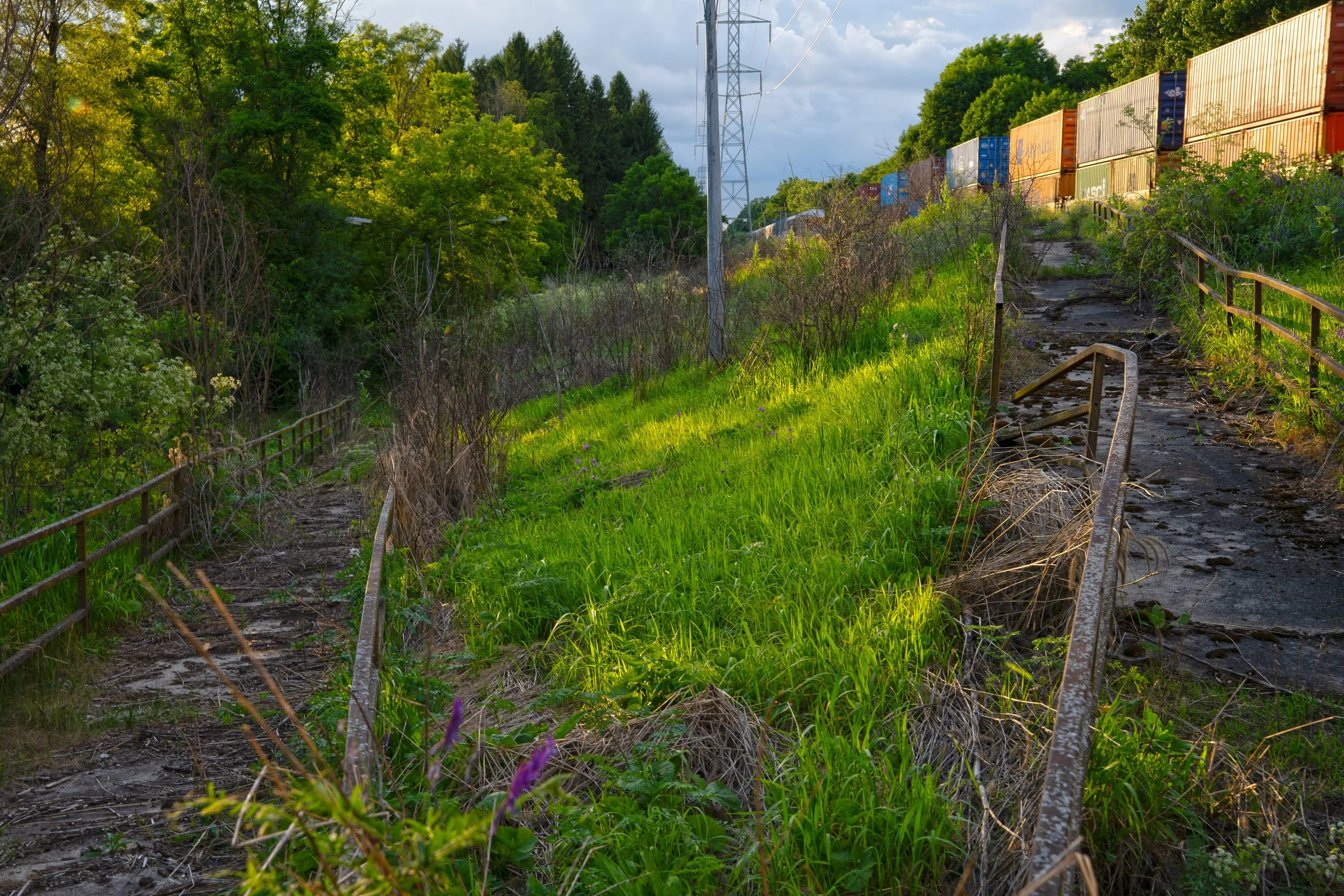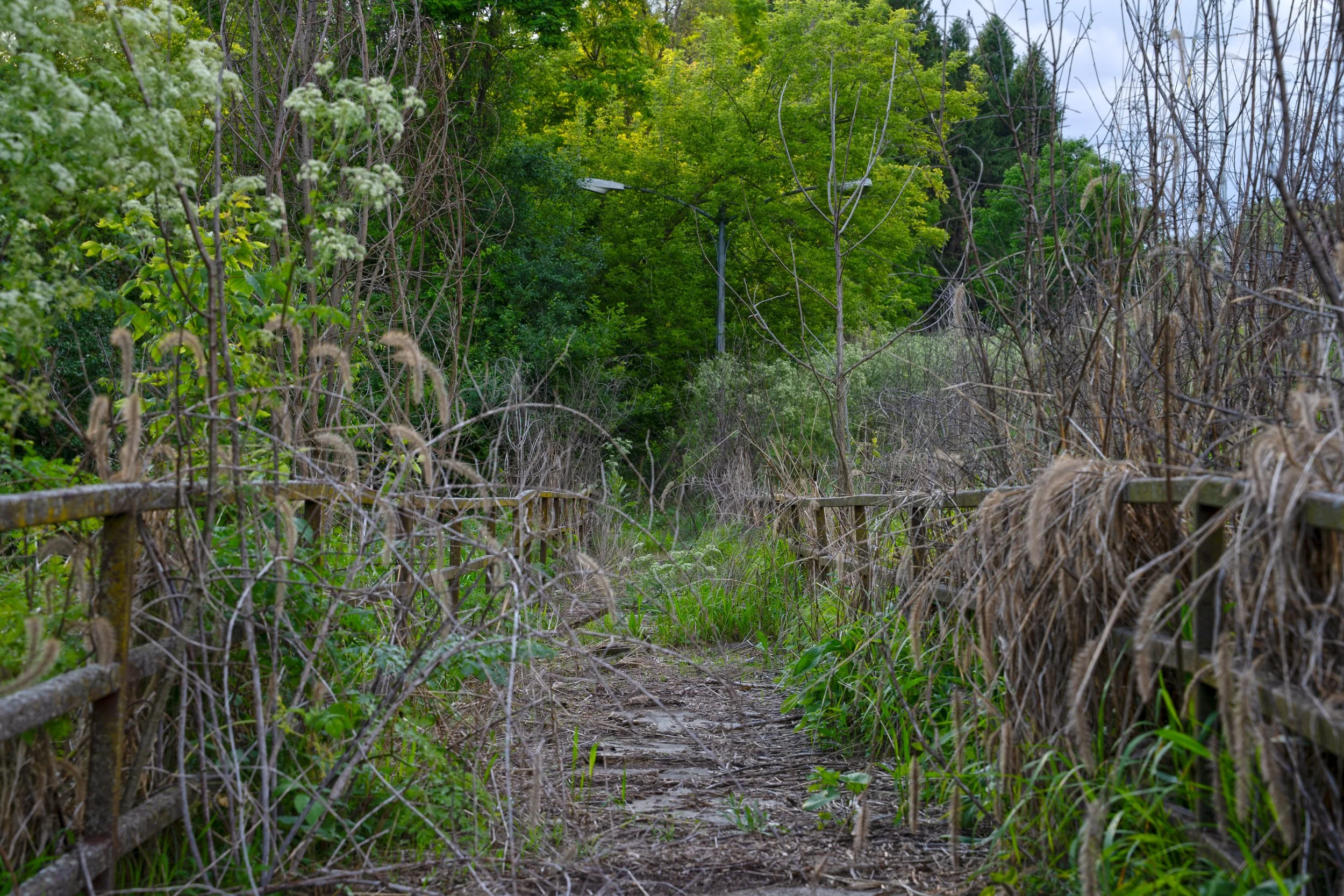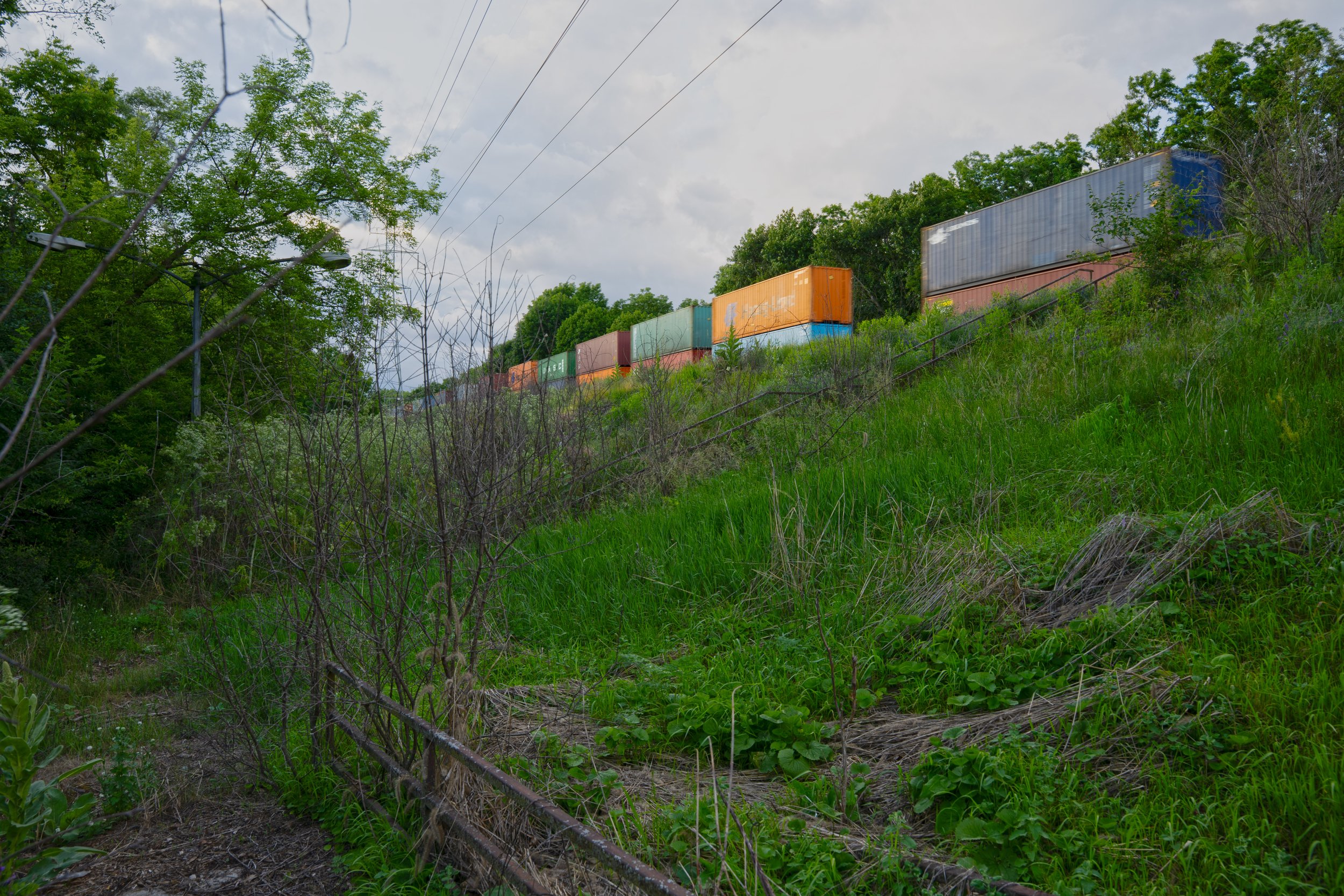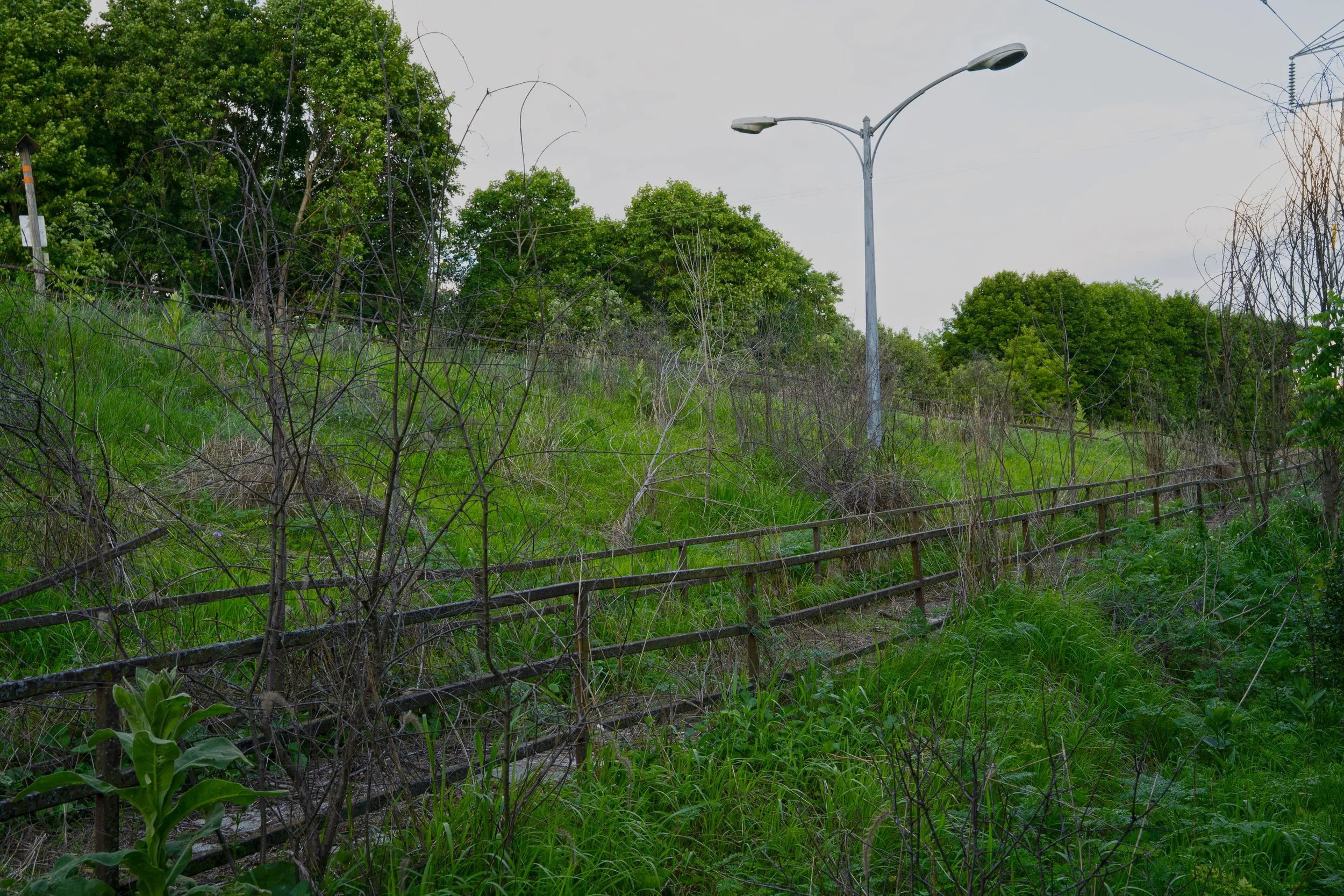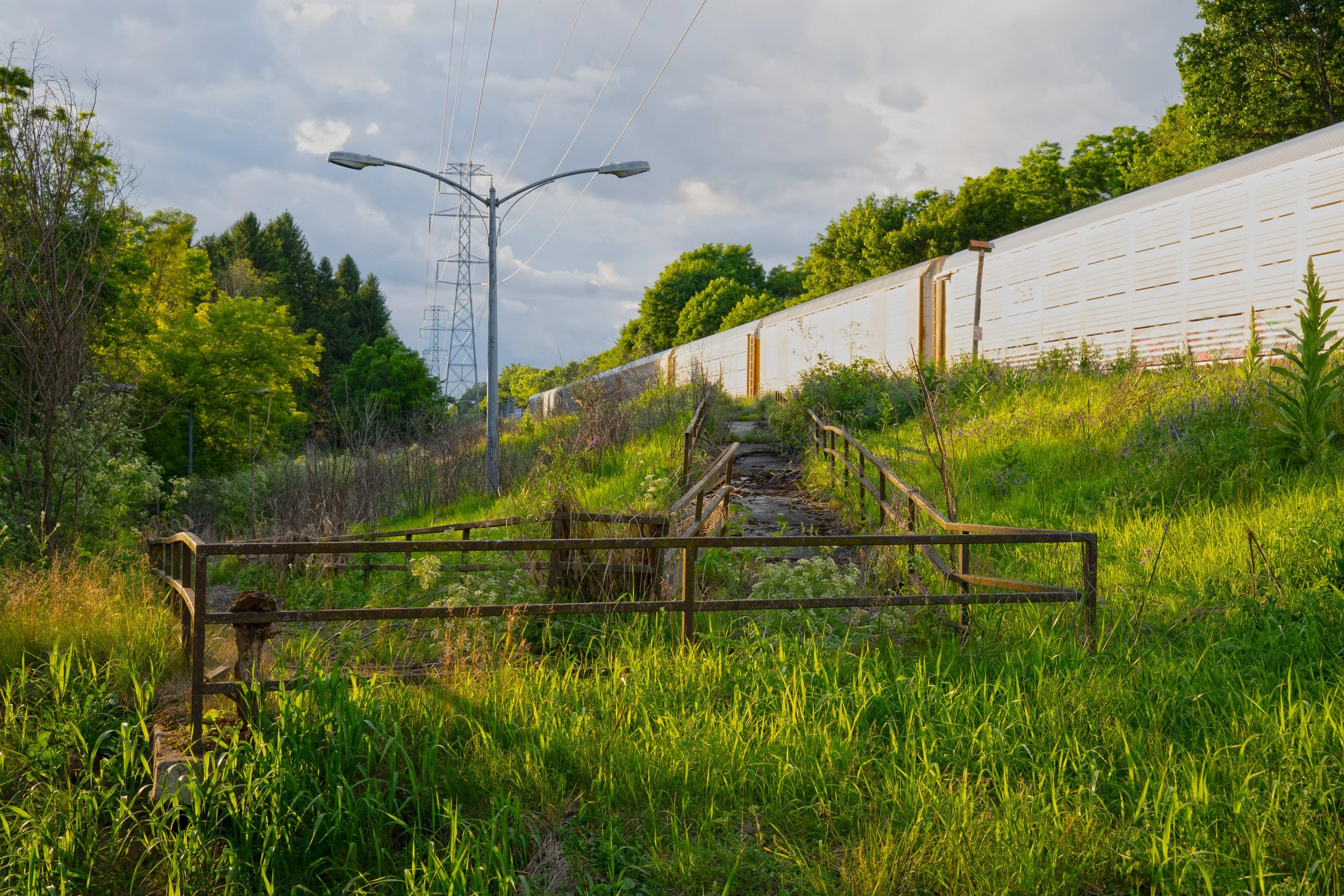
Charing Cross SEMTA Commuter Rail Station
4801 Charing Cross Rd, Bloomfield Township, MI 48304
-Abandoned 1983
|High Resolution Page S+Tripod|
Locate it!
History of Charing Cross SEMTA Commuter Rail Station
Today the Charing Cross station remains in a hidden plot of land that driving by you would think nothing of, but this station is the last remaining piece of its history of the long discontinued SEMTA Commuter Rail system that once served Detroit. On August 1, 1931, the Grand Trunk Western Railroad began commuter service between Detroit and Pontiac, with stops in Ferndale, Royal Oak, Birmingham. The Charing Cross Station serving Bloomfield hills was also a original stop of the service. Up until March of 1960 the service was ran with steam locomotives, however was replaced with GP9 diesel locomotives. While they look like normal GP9’s in photos they actually were boiler equipped, allowing for heat inside train cars during service. Into 1968, Grand Trunk still ran 6 trips (3 round trips) daily. However as was the case with most freight railroad carriers. Passenger trains in the US began to lose money gradually. By the early 70s the federal government was forced to step in as many railroads were close to bankruptcy due to the financial strain of lost revenue per passenger. This created Amtrak which began service on May 1st, 1971. However Amtrak only applied to long distance and intercity routes, not commuter routes. However many states began passing legislation to allow the state to take over the operations starting in 1966, in Michigan this took place in 1967 with the Metropolitan Transportation Authorities Act of 1967. It would still be years until a agency would be put in charge of operating transit services in Metro Detroit and the greater region. The act created which included the creation of Southeastern Michigan Transportation Authority (SEMTA). SEMTA was charged to take over the ownership and operations of the fractured regional transit systems in Wayne, Oakland, Macomb, Washtenaw, St. Clair, and Monroe county. The service early on was still operated by Grand Trunk, however SEMTA would take 1/3 of losses Grand Trunk acquired. This would be increased to 2/3rds by 1977, with SEMTA acquiring the rolling stock and taking full responsibility for losses in 1978. By the time SEMTA had taken over the service the southern most station at Brush St. Station had been demolished in 1973, for the construction of the Renaissance Center. By the time SEMTA took over the service a small improvised station was built at the foot of the Renaissance Center. Average commuter numbers stood at around 3,000 daily riders by the late 70s. SEMTA’s ambitious plans throughout the 70s to improve transit options, would not end with funding, during the same era SEMTA rolled out a transit plan for rapid transit, bus rapid transit, people movers, and improved commuter rail. It included improvements for existing services on the Grand Trunk route to Pontiac and the Penn Central route to Ann Arbor, but not the Chesapeake and Ohio Railway (C&O) route via Plymouth. The plan would cost $6.2 billion. However by 1977 it would be reduced to a $1.2 billion in transit projects, to be partially funded by the federal government. This plan included two rapid transit lines, three bus rapid transit lines, the Detroit People Mover, and upgrades to existing bus routes. For commuter rail SEMTA allocated $42 million, both for the existing Pontiac route and to create service from Detroit to Ann Arbor and Port Huron. Of the projects only the Detroit People Mover would come to be a reality, however was cut short from its original plans of 1974, that would have seen it go all the way to various suburbs in the north such as Southfield, Sterling Heights, Warren, and Highland Park, along with Southern and western suburbs such as Wyandotte, Romulus (Metro Airport), Lincoln Park, Taylor, and more. Today the only sections of this plan exist as the Detroit People Mover, due to a serve cost overrun due to mismanagement under the Coleman Young administration. The People Mover that stands today was so cost overrun that it almost stood as merely concrete pillars in the city of a failed transit system, with no train at all. However the organization known today as the Detroit Transportation Corporation (DTC), took over the project and created the system as it stands today with it’s many flaws, single track, and one direction at a time system. The reason the people mover goes in a loop like it does at it was the first section and loop section of the system that was supposed to have spurs into different lines, similar to Chicago’s L train. By the early 80s as Detroit continued to become one of the most car-centric cities in the US, local tax revenue did not allow funding for the commuter rail system and in 1983 it was ended, causing the stations along the line to become abandoned. For years nearly all stations remained unused as Amtrak service still used the Michigan Central Station, however in 1994 with the opening of the New Center Detroit station all Wolverine based services were renamed to the Wolverine branding. Previously the Lake Cities and Twilight Limited, alongside the Wolverine service (Only the 1 round trip) operated on the line, that is today known as the Amtrak Michigan Line. The Lake Cities operated down to Toledo up until 1994, before that it was seen as a very unpopular way to connect due to the very slow track speeds on the line, causing trips to be over 2 hours long from Detroit to Toledo. The Twilight Limited acted as a evening into night service of the Wolverine. When Amtrak rebranded the 3 services into the Wolverine branding in 1994 it allowed for commuters to use the Amtrak as a replacement at select former stations, when service was restored on the Holly Sub, of which the SEMTA Communter Train operated on. 3 of the original 10 grand trunk stations, were reused and rebuilt by Amtrak. During the era of SEMTA many stations had a dedicated building to go along with the platform however in the 10 years of abandonment most of them were demolished, however the platforms remained. This is why today many Amtrak stations along the Holly Sub have smaller enclosures as opposed to buildings. Up until 2014 the original Birmingham station platform of the SEMTA commuter rail remained in use until Amtrak closed it in favor of a new building just south named the Troy Transit Center. Making Pontiac and Royal Oak the final remaining stops of the SEMTA commuter rail still in use. However some locations of the former SEMTA stations still retain very small details if you know what your looking for. The Ferndale Station at 9 mile rd and Vester st still retains a staircase leading to the former footprint of the station building, that was turned into a parking lot after 2012. The 12 mile rd Royal Oak station retains a railing leading to the tracks on the known today as Forestdale. The remaining stations have been built over or serve new non railroad purposes. However still the Charing Cross Station remains as the last unused platform of the SEMTA commuter rail of Detroit that still has never been reactivated since 1983. Still retaining its original Grand Trunk and SEMTA era, styling, over 40 years later.
Recollection from the author
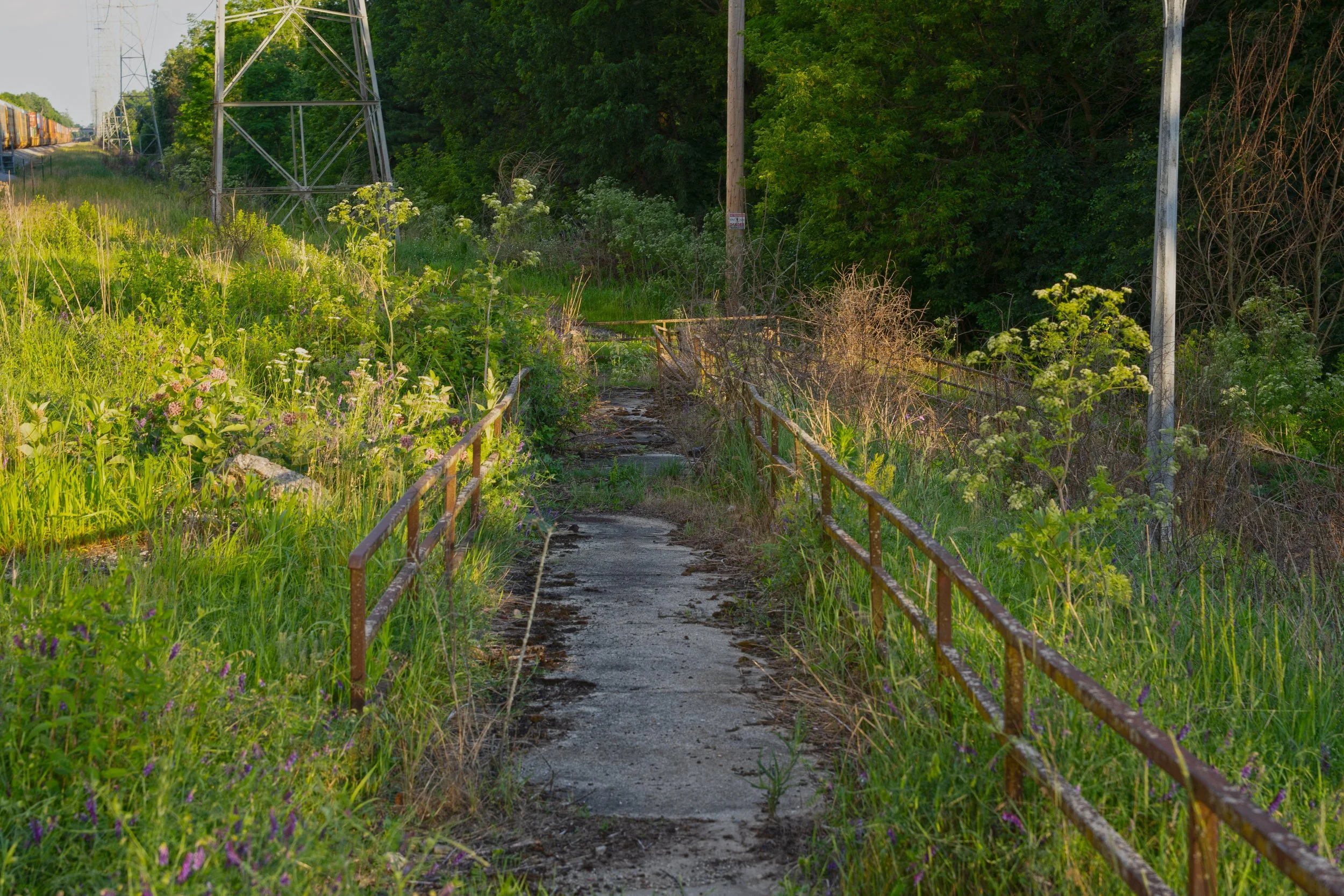
The remains of Charing Cross has always been a cool thing to revisit. My first visit was in 2022, while it doesn’t feel like a typical abandoned building, but it still has that charm of something that Detroit lost many years ago. The stairs leading to nowhere and the railings still in place waiting for another set of commuter that will never return.